



Among detainees at Eloy Detention Center, 79-year-old Julia Benitez is known as "la abuela," the grandmother in Spanish.
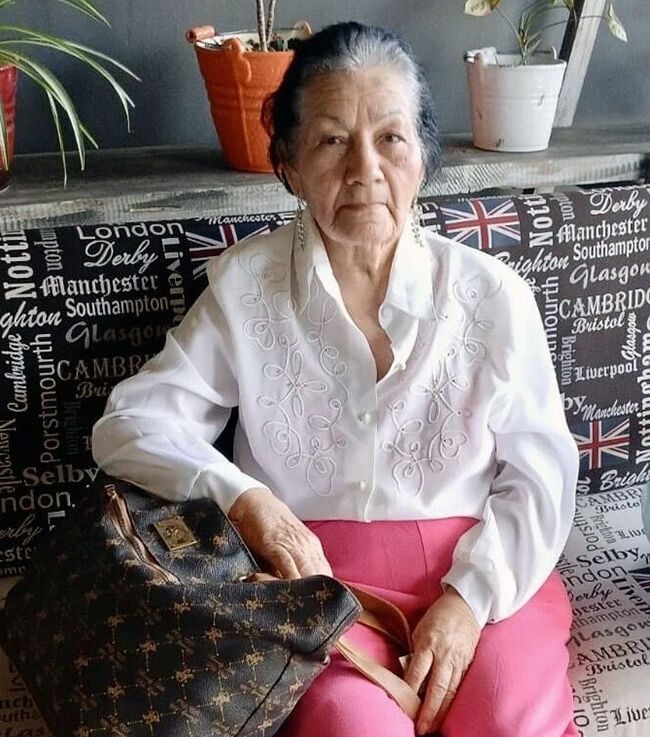
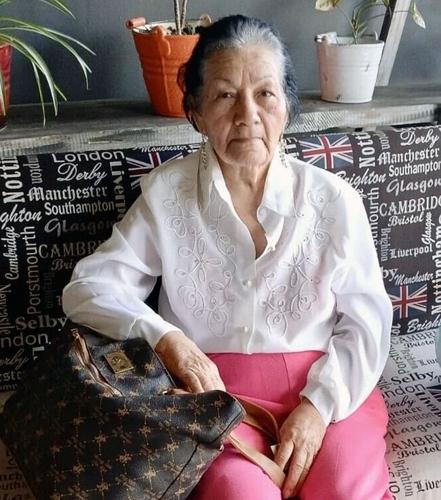
Cuban asylum seeker Julia Benitez is pictured last year in Mexico, then 78 years old, two days before crossing the U.S.-Mexico border near Lukeville, Arizona to surrender to border agents and request asylum. Benitez was released Thursday night after nine months in immigration detention in Eloy.
The Cuban asylum seeker was only having occasional memory lapses when she first surrendered to U.S. border agents last year, after crossing the southern border near Lukeville, Arizona, her family says. Julia was sent to Eloy, about 50 miles northwest of Tucson, in May 2025.
But after nine months detained in an unfamiliar setting, without individualized attention or care, Julia's early-stage dementia has progressed to the point that she doesn't know where she is, said her daughter, Dayana Cosme Benitez, a lawful permanent resident who lives in Miami with her two sons.
Sometimes in video calls, Julia appears happy "to the point of tears" to see her daughter. But in other conversations, Julia is confused about who Dayana is, mistaking her for her mother instead of her daughter, and talks as if she's still in Cuba, said Dayana, who is 46.
Mostly, "she just keeps asking when she's going to be released," Dayana said, speaking in Spanish.
New detainees are coming and going each day, contributing to Julia's disorientation, Dayana said. Witnessing her mother's confusion, and seeing her dressed in a prison-like uniform during their video calls, is painful beyond words, Dayana said.
"I talk to her about everyday life to help her not to lose context," she said tearfully. "I say, 'Don't worry, you'll get out soon. You'll hug your grandchildren, you'll kiss them because we're waiting for you here.' And she gets emotional, and I see tears in her eyes."
Julia Benitez is among a growing number of elderly or disabled immigrants being held in increasingly crowded and dangerous U.S. detention facilities as U.S. Immigration and Customs Enforcement has largely stopped using its discretion to release vulnerable people on a humanitarian basis, according to Arizona Daily Star interviews with legal advocates and a Lee Enterprises Public Service Journalism Team analysis of ICE detention data.
Julia has spent much of her time at Eloy in a wheelchair, which she never needed before her detention, relying on the kindness of other detainees who help her get to the dining room, assist her with making video calls to family and help her use the bathroom, her daughter said.
"The whole world knows her here. We call her la abuela," said Eloy detainee Arbella Rodriguez Marquez, a Phoenix woman with leukemia who has been in ICE detention since February 2025. She said she's in a different unit than Julia but has run into her as they've been waiting for medical care.
Rodriguez Marquez said she's met two other elderly Eloy detainees who arrived without obvious mental challenges but then devolved into serious symptoms of dementia.
"Sadly, there are many people here with this condition," she said in the phone call from Eloy.
Blanket denials
Julia was denied an immigration court hearing to determine if she could be released on bond because she is subject to mandatory detention, after entering the U.S. without authorization, according to court records her daughter shared with the Star.
But outside of immigration court, ICE always has the discretion to release people during their immigration proceedings, which is an administrative — not criminal — process, attorneys say.

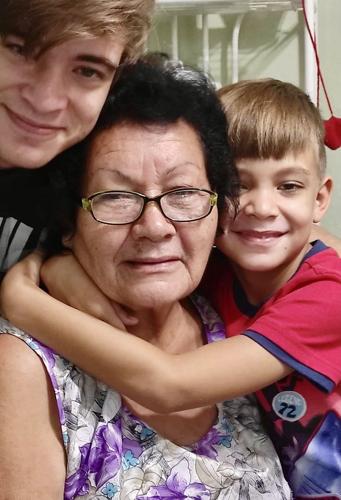
Julia Benitez is pictured in 2022 with her two grandsons, then 16 and 7 years old, when they lived together in Cuba. Her daughter Dayana said she tries to reassure her mother during her immigration detention through daily video calls. "I talk to her about everyday life to help her not to lose context," Dayana said. "I say, 'Don't worry, you'll get out soon. You'll hug your grandchildren, you'll kiss them because we're waiting for you here.' And she gets emotional, and I see tears in her eyes."
ICE has been issuing "blanket denials" in response to requests for release on humanitarian parole since President Donald Trump took office, said Liz Casey, a social worker with Arizona legal-advocacy group the Florence Immigrant and Refugee Rights Project.
"That’s ICE’s decision," Casey said. "ICE is not releasing anybody from detention, despite the increase in the number of deaths (in custody), despite mental health issues, despite medical issues, disabilities."
In the first 11 months of 2025, ICE "discretionary releases," such as release on humanitarian parole, fell by 87%, said a January report from the American Immigration Council, a research and advocacy group that promotes immigrant rights.
By ignoring humanitarian considerations, the U.S. is leaving more vulnerable people in inhumane detention conditions for no justifiable reason, said Casey, who routinely meets with detainees at Eloy to discuss their cases.
"This is unprecedented, the level of disabilities that (detained) people have right now," she said. "Just very egregious cases. There’s no reason these people should be in any type of detention center or congregate setting."
ICE response
ICE did not directly respond to the Star's query as to why ICE can't, or won't, use its discretion to release Julia on parole as her case proceeds.
ICE spokesman Timothy Oberle shared an emailed statement that said ICE detainees receive medical, dental and mental health screenings within 12 hours of arrival and have access to medical appointments and emergency care.
"This is the best healthcare than many aliens have received in their entire lives," the Feb. 3 emailed statement said.
Oberle appeared to misread the Star's email, which had said Julia doesn't know where she is, due to her dementia. In response, Oberle shared a link to the online ICE Detainee Locator.
"If it’s true her family doesn’t know where she is, maybe the media and her family should respect her privacy," the statement said.
The Star offered to extend its deadline to give ICE time to explain why Julia can't be released on parole. In response, an ICE spokeswoman implied, incorrectly, that only immigration judges have jurisdiction over such decisions.
"Fun fact," wrote ICE's Yasmeen Pitts O'Keefe, before copy-and-pasting from the Department of Justice's immigration court manual. Immigration judges "make determinations of removability, deportability, and excludability. ... Regardless, below is all we have to share on this specific detainee."
Private, for-profit prison company CoreCivic owns and operates Eloy Detention Center. In response to the Star's questions on accommodations for elderly or disabled detainees, spokesman Ryan Gustin referred the Star to ICE.
ICE's medical arm, ICE Health Services Corps, "is responsible for contracting, staffing and oversight of any medical and mental health services, including accommodations, provided at" Eloy, Gustin said in a statement.
Persecuted in Cuba
In Julia's declaration in her asylum petition, she said she and her daughter were persecuted and harassed by the Cuban government for publicly denouncing the killing of Julia's husband at the hands of Cuban border guards as he tried to flee to the U.S. in 1991. Dayana was 12 at the time.
Julia became active in pro-democracy groups in Cuba after her husband's killing, and she's suffered deeply over the decades since, under the stress of government surveillance as she raised her daughter alone, Dayana said.
"Since my father died, she played the role of both mother and father," she said. "She is the best mother, who always protected me."
When traveling to the U.S., Julia had intended to use the Biden-era "CBP One" phone application to request asylum through the officially recommended pathway, Dayana said. But Julia realized too late, when she was already in Mexico, that the Trump administration had canceled the program, forcing her to cross the border outside a port of entry, Dayana said.

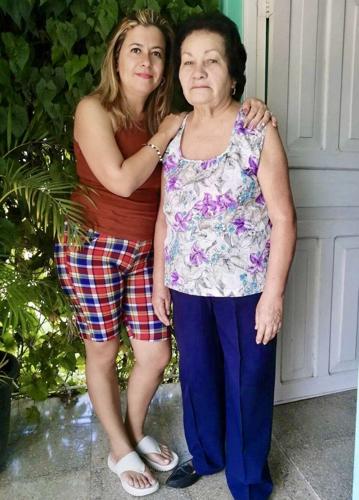
Julia Benitez is pictured in 2022 with her daughter, Dayana Cosme Benitez, in Cuba. Dayana said growing up, her mother Julia was gentle and protective, sewing her daughter new dresses for her birthdays and getting involved in her daughter’s school and church activities. "She always cheerful. Even if she had a problem, she never showed it," Dayana recalled. Julia was a devoted grandmother, helping to raise her two grandsons, who are now 20 and 11, Dayana said. "When I had my children, she was an unconditional grandmother. She loves her grandchildren madly, with devotion. She helped me raise them. She worried about everything."
U.S. leaders, including Trump, have long criticized the Cuban government for authoritarianism and human rights abuses, even as advocates say the Trump administration has dismantled nearly all legal pathways established for Cubans to seek refuge in the U.S., or reunite with family.
Dayana said she never imagined her mother's asylum request could result in her imprisonment for so long — especially not in the United States, "a country of human rights," she said.
"I didn't perceive the risk as being so great and how harmful it can be to be undocumented in this country. I have always trusted the laws of this government," Dayana said. "As a daughter, I apologize to the United States government that my mother entered (the U.S.) without knowing the laws well, violating the laws. But it's not fair that in this country, which has always defended human rights, she finds herself in this situation. ... Her only offense was crossing the border."
Not an isolated case
Legal advocates say they're seeing more detained clients who are elderly with dementia or other disabilities for which detention facility staff are not trained to handle.
The latest ICE detention data shows the Trump administration has been arresting and detaining more immigrants overall, and therefore, more elderly people are getting caught up in its immigration detention net.
Lee Enterprises analyzed national ICE detentions of elderly people over comparable five-month periods — Jan. 20 through June 30 — under both the Biden and Trump administrations.
The number of people age 65 and over who were detained by ICE during that window increased 150% under Trump, from 450 detainees in the first five months of 2024 to 1,114 detainees during the same period in 2025, according to ICE data obtained by the Deportation Data Project.
And more of those elderly people remained stuck in detention under Trump. Under President Joe Biden, 18% of elderly people were released on bond, supervision or parole compared to just 8% under Trump.
As of mid-October, fewer than 1% of elderly detainees from the Biden period remained in detention, while 17% of those detained during the Trump period were still being held.
In Arizona, the number of elderly people arrested by ICE had a fivefold increase under Trump: ICE arrested nine elderly people in Arizona from Jan. 20 to Oct. 15, 2024, under Biden, compared to 46 during the same period under Trump, according to Lee Enterprises' analysis.
Nationally, ICE arrests of elderly people have tripled, from 602 people during that 2024 window under Biden compared to 1,681 during that period under Trump in 2025.
"We've been hearing more and more people (detained) with dementia, where they are not able to confirm their own name," said Lisa Okamoto, Los Angeles-based program director for the Acacia Center for Justice’s National Qualified Representation Program. The program provides legal representation for people with severe mental and cognitive disabilities as they navigate the immigration system.
Okamoto said her father has dementia, and she understands how the condition worsens without social engagement.
"For me personally, this is outrageous," she said of Julia Benitez's detention, "but not surprising, unfortunately."
'Lives at risk'
Julia Benitez's diabetes has become uncontrolled at Eloy, due to the poor diet, and the stress of detention also appears to be exacerbating her hypertension, her daughter said. Julia also recently had to go into medical isolation due to a bad case of influenza, which can be deadly for elderly people, medical experts say.

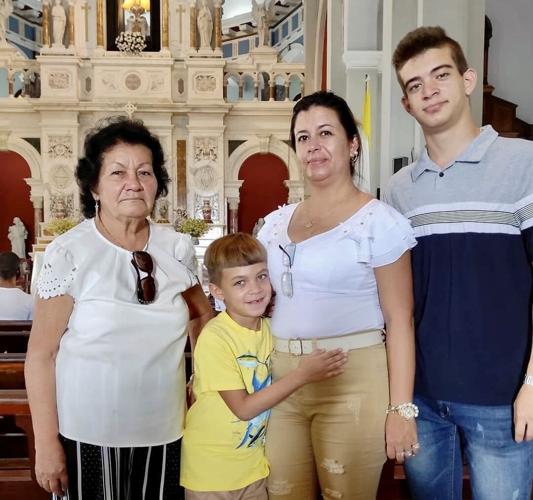
Julia Benitez, now 79, is pictured with her daughter Dayana and two grandsons in 2022, at a church in Cuba.
Dayana said she's desperate to take over care for her mother.
"By being with me, she could receive emotional support, which is very healthy for an elderly person," Dayana said. "I'd give her the conditions, both physical and psychological, for a better quality of life. And then the government wouldn't have to provide this. ... I think that her best medicine right now is the affection she can receive from her loved ones."
ICE detention facilities are supposed to abide by standards of detention based on the U.S. Bureau of Prisons standards, even though immigration detention is civil, not criminal. The standards include required assessments and "reasonable accommodations" for people with disabilities and serious mental illnesses, including dementia.
But the safeguards in the standards are "not well-defined," and there are no real mechanisms to enforce the standards, said Katie Siler, directing attorney for Immigrant Defenders Law Firm, in Los Angeles.
As more detention centers are now operating over capacity, required screenings for mental competency are being neglected, she said.
"Detention facilities aren’t sure what to do with people who they can’t provide adequate care to, so they're split off from general population in segregation units ... with even more limited communication to outside world, to loved ones and to (legal) counsel, importantly," she said. "That can cause a rapid deterioration of mental health."
Detainees with hearing or vision impairment are given brightly colored vests so guards can recognize them and assist in case of an emergency, but they often get no help with activities of daily living, Casey of the Florence Project said.
"We have seen people with medical and mental health conditions that completely deteriorate once they’re in detention," Casey said. "And especially people with mental health issues, who are left in segregation and who are constantly surrounded by guards with no training, or really any care for their well-being."
Detention center guards will "literally pair up people with disabilities" with another detainee to act as a caregiver, she said.
"A lot of (detainees) want to help as much as they can, but they don't have training to care for somebody with dementia, or a visual disability or a hearing disability," she said. "This isn’t a facility that's designed for them. ... They're really leaving people in there with no treatment, no accommodations, no help. It's putting people’s lives at risk, essentially."
Dayana said she's grateful to the detained women at Eloy who have been so kind to her mother.
"She has received affection and concern from them, but each of them has a case and an immigration situation that they are also suffering from," she said. "I thank God that there is at least a little light in the midst of the darkness. Without this help, she would suffer more."
Former Eloy detainee Nikita Osolodkin, who was released in January after five months in detention, said he saw five detainees in wheelchairs in his time at Eloy. One man from California, who told Osolodkin he'd been detained by ICE after going to court to contest a traffic ticket, was 75 years old and could no longer walk, Osolodkin said.

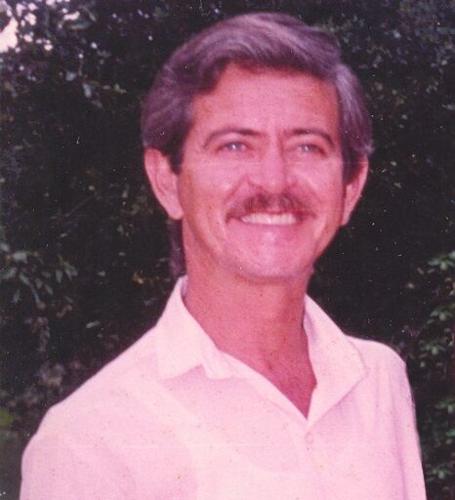
Julia Benitez's late husband, Daniel Cosme Ramos, pictured here, was killed at age 46 by Cuban border guards in 1991, as he tried to flee the country, according to an entry in the archive site Cuba Archive. Julia Benitez's asylum petition said she and her daughter Dayana, who was 12 when her father was killed, have been harassed and persecuted by the government since the public condemnations of her father's killing. The archive classified his death as an enforced disappearance. Archive co-founder Maria Werlau said she interviewed the mother of another man who was killed along with Cosme Ramos. The victims' families spent five years searching for their disappeared relatives, until one day, a member of the border guard, who was a distant relative of one of the families, said, "Stop looking. They were caught trying to flee and were shot," Werlau recalled to the Star.
Other detainees would help the man move around Eloy in his wheelchair and assist him in personal tasks like bathing, Osolodkin said. But some guards treated him with cruelty: Osolodkin said he heard a guard yelling at the man to move his wheelchair to another table in the dining area.
"There was absolutely no logical reason for it," Osolodkin said.
As the number of people detained by ICE has soared by 77% under Trump, ICE reports of in-custody deaths are rising. At least 30 people died in ICE detention last year, a 20-year record, and ICE has reported six deaths in detention already in 2026.
Eloy Detention Center is considered among the most deadly ICE detention centers in the U.S., recording 16 deaths, including five suicides, between 2005 and 2019, according to an analysis by USA Today.
In 2025, ICE reported two more deaths at Eloy, which currently holds about 1,330 detainees.
Asylum denial in appeal
For Dayana, the pain of seeing her mother incarcerated for seeking asylum has been compounded by an earlier trauma: Julia Benitez's husband, Dayana's father, was killed by Cuban border guards in 1991, as he tried to escape by boat, according to Dayana and her mother's asylum petition.
At the time, leaving Cuba without government authorization was illegal.
Dayana said she knew her father felt trapped by Cuba’s authoritarian government and that he admired the democratic, capitalist system in the U.S. From their home in Cuba, he could catch the radio signal from a Florida news station and listened every night, she said.
"Ever since I was a child, I heard him talking about coming to the United States," Dayana said. From the day her father disappeared until the day years later when they learned he’d been killed, Dayana said her mother waited for news that he had arrived in the U.S. or returned home.
"She would arrive home and always look at the door to see if she received a letter from my father," she recalled. "At night she couldn't sleep thinking that he was going to knock on the door, that he was going to arrive at any moment."
Julia also taught Dayana the value of human rights and democracy from an early age, Dayana said. She and her two sons lived with Julia in Cuba before Dayana and her kids came to the U.S. in 2022. They secured legal status through a petition by the father of Dayana's children, a lawful permanent resident.
Julia's asylum petition said her life will be at risk if she's deported to Cuba.
"I have been a direct victim of persecution and intimidation by the communist regime simply for thinking differently and for being part of movements in favor of democratic change," according to her declaration. "After the public denunciation of my husband's murder at the hands of the Cuban border guards, my daughter and I were monitored, harassed and discriminated against for years."
Cuban archivist Maria Werlau, executive director of the nonprofit Cuba Archive, immediately recognized the name of Julia's late husband, Daniel Cosme Ramos. She shared a link to an entry about Cosme Ramos in the nonprofit archive's growing database, which Werlau co-founded to chronicle the casualties stemming from the Cuban Revolution.
The Cuba Archive, launched in 2001, classified the death of Cosme Ramos and the two men he was traveling with as enforced disappearances carried out by the state.
The families of the victims spent five years searching for their missing relatives until a member of the border guard, who was a distant relative of one of the victims, told the family, "Stop looking. They were caught trying to flee and were shot," Werlau recalled to the Star, citing her interview with the mother of one of the victims.
Julia's story is credible, Werlau said, as families of victims of Cuban state violence are targeted to this day.
"This is not uncommon. This has happened systemically in Cuba for decades," she said. "A lot of these victims, because the government did not want people to talk about this stuff, a lot of these victims were harassed, intimidated and threatened. ... The government wants to silence them and make them afraid of talking to anybody about these crimes."
Legal challenges
The attorney representing Julia Benitez — Adam Dorsky, of Alex Hanna law firm in Miami — declined to comment for this story. Dayana said she's had trouble getting updates from the firm on her mother's case status.
Dorsky is appealing a denial of her mother's asylum petition, which was rejected due to lack of evidence, Dayana said. She was told ICE denied the petition for Julia's release on humanitarian parole, but Dorsky did not explain ICE's reason for the denial, she said.
The Star reviewed some of Julia's immigration court records, which show DHS's attorney filed a "motion to pretermit" in December, claiming Julia is ineligible for asylum because she should have instead sought asylum in Uganda or Ecuador, countries with which the U.S. has an "Asylum Cooperative Agreement."
Immigration Judge Andrew Fishkin agreed with Julia's counsel that she'd face harm or persecution if deported to Ecuador or Uganda, "based on her age, dementia and mental incompetence," the court decision read.
Immigration lawyers say DHS has flooded the immigration courts with these motions in recent weeks.
The motions are "boilerplate" on DHS's part, but require extensive time for lawyers to respond to them individually in immigration court, said Ravi Arora, a Phoenix immigration lawyer who often represents immigrants detained at Eloy.
"It's double or tripled our workload in every single asylum case," he said. "Aside from turning our workload into a psychotic mess, I believe it's part of an effort to drive attorneys out of practice."
DHS did not respond to the Star's query asking if the motion was filed as part of a routine strategy, or whether the DHS attorneys truly believe Julia should be deported to Uganda or Ecuador, where she has no family.
Dayana has struggled to find a legitimate attorney to file a habeas corpus petition for her mom. Habeas petitions were previously a last resort for people in detention, allowing them to challenge the constitutionality of their incarceration.
But habeas petitions have become a lifeline for thousands of immigrants facing long detentions under Trump's policies.
Dayana almost paid more than $2,000 to a man claiming to be an immigration attorney before the Star discovered he was impersonating a lawyer named Jose Garcia, who works in San Diego's City Attorney's office. The imposter's WhatsApp profile linked to Garcia's listing in the California State Bar.
The impersonator told Dayana he'd filed a habeas petition on her mother's behalf — which the Star found was untrue, after a search of federal court filings — promising to travel to Arizona and get Julia released within days, if Dayana paid him thousands for her mother's "bond."
A habeas petition is filed in federal court and must be received and adjudicated by a federal judge before the petitioner could be released.
The Star reached out to Garcia to ask if he was corresponding with Dayana; he was not. A spokesman in Garcia's office said they had reported the fraud to authorities.
"Thank you for bringing this matter to our attention. Impersonating an attorney to take advantage of someone in immigration detention is deplorable and unlawful," spokesman Ibrahim Ahmed said in an email. "The San Diego City Attorney’s Office does not provide direct legal assistance to individuals, nor do we provide legal services outside of California. We have reported this incident to the appropriate authorities."
Dayana said she and her sons are heartbroken. She thinks about her mother constantly and struggles to reassure her during their phone calls.
"I don't want my mother to go through this. The greatest force that drove her was love for her daughter, love for her only family, and fear of being abused and tortured in the country she came from," she said. "All I want is to have her with me, with a dignified life, of love and peace like she deserves, so she can enjoy the time she has left to live."

