

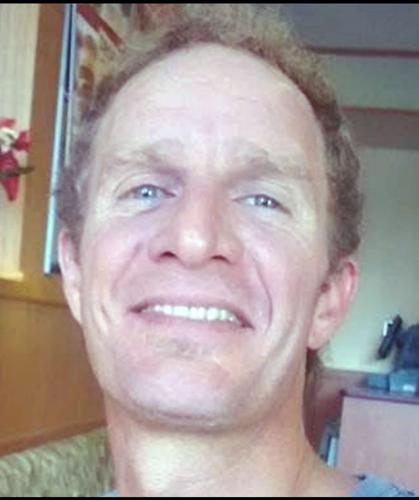


The body found in the desert near Tucson months ago now has a name, thanks to a determined detective thinking outside the box.
Using a hand-drawn sketch, Pedro Carranco, a homicide detective for the Pima County Sheriff’s Department, used the drawing combined with artificial intelligence to create a startlingly life-like image of the blue-eyed, blond-haired man whose body was found near the San Joaquin Trailhead west of Tucson.
He fed the sketch description into an online AI program and out popped an image, which was swiftly disseminated to local media outlets.
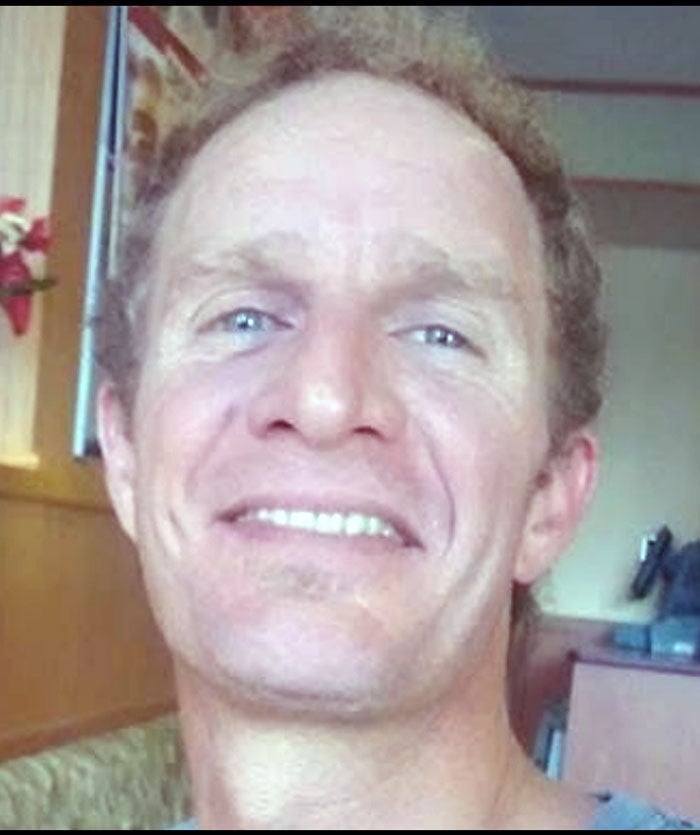
Ronald Woolf
Watching the news from somewhere was the family of Ronald Woolf, 55, who immediately recognized the image as that of their missing loved one.
The case to identify Woolf began last December after a passerby located his partially decomposed body. Detectives attempted to identify Woolf through fingerprints and DNA, but were unsuccessful.
“What’s clear is that without that AI generated photo, I don’t know that we would have ever identified Mr. Woolf . . . we had no hits in 10 months,” PCSD Sheriff Chris Nanos said Friday at a news conference. “And in less than five, 10 hours (after releasing the AI photo to the media) we got the call.”
Carranco called this technology a potential “game changer” and said he was surprised how well it worked. He credited the sketch artist for providing him with enough detail to feed into the AI program.
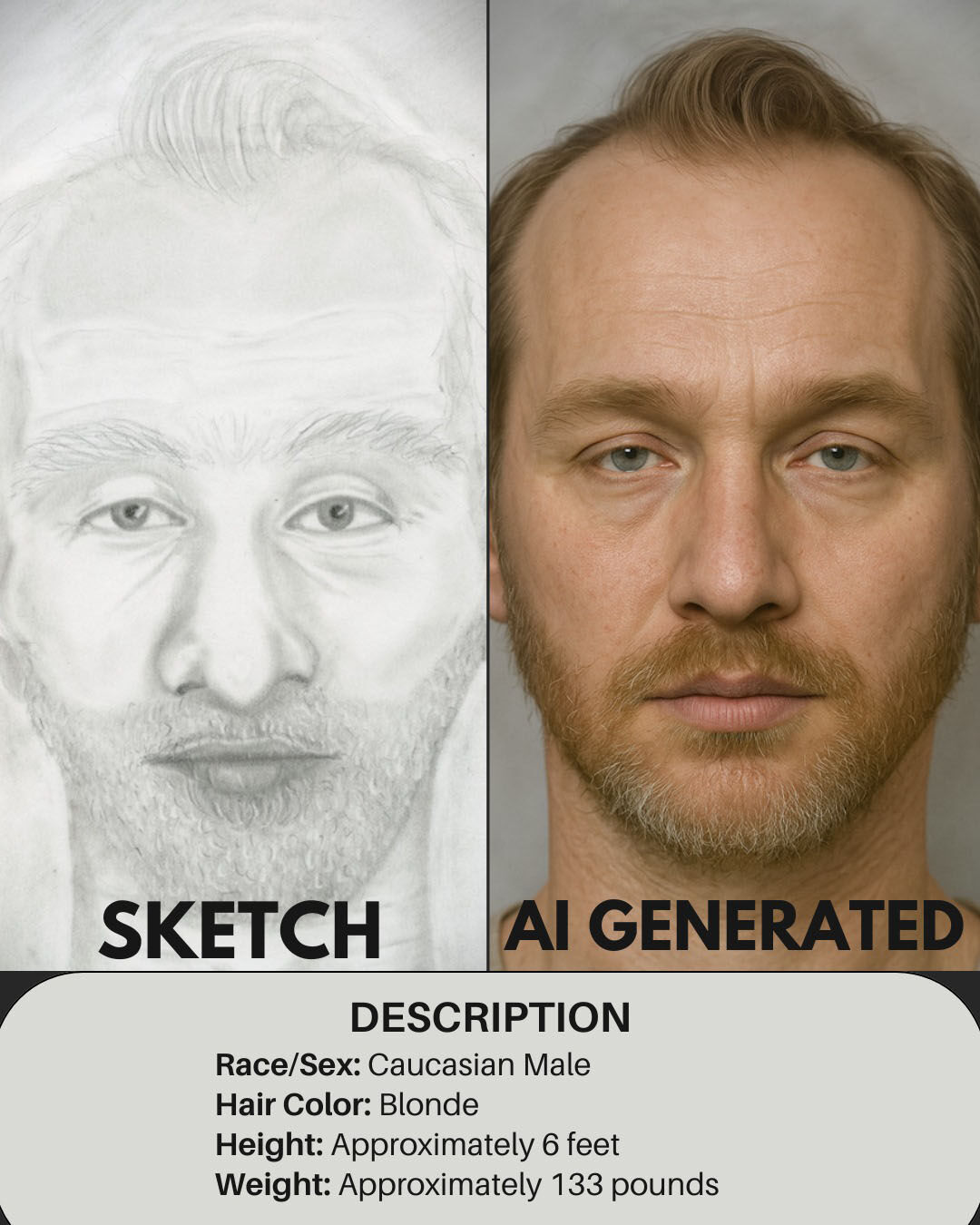
Investigators used an AI-generated image to help identify the body of a man found near Tucson Mountain Park in December 2024.
There are currently 1,600 unidentified remains waiting to take back their identities, according to the Pima County Medical Examiner’s Office.
And for the first time in nearly 10 months, Ronald Woolf has found his identity again.
His family wished for better news, but were grateful to know Woolf was found.
Woolf’s death is still being investigated.
The Pima County Medical Examiner’s Office ruled the cause of death as inconclusive.
Carranco said homicide has not been ruled out.
“It’s the first time I’ve ever known anyone to use AI (for this purpose),” Nanos said, praising the detectives’ effort to identify the remains.
“The key here for me is Detective Carranco, on his own with his own initiative said, ‘There’s got to be something I can do with this case.’. And he took it outside that box and this is what he came up with. And literally within hours (of the media having the image), we made an identification.”

