



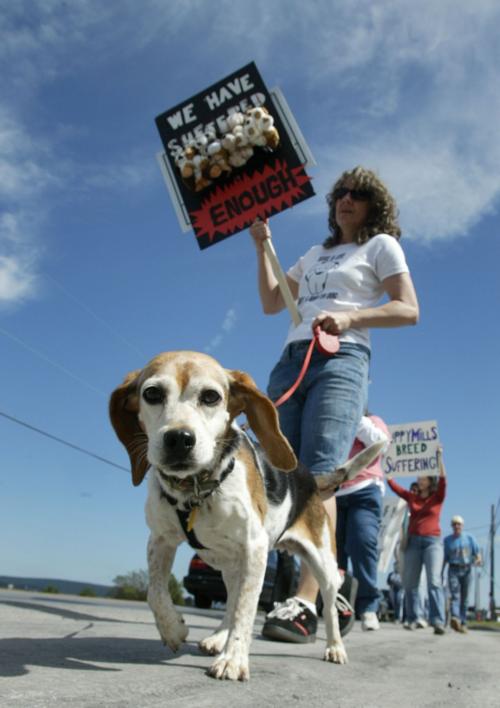
PHOENIX — Gov. Doug Ducey signed legislation Thursday to stop cities from telling pet stores they can’t sell commercially bred animals.
The new law that takes effect on Aug. 6 most immediately voids existing regulations in Phoenix and Tempe, which allow pet stores to sell only rescue and shelter dogs and cats. Those laws are designed at least in part to reduce the number of shelter animals that have to be euthanized.
But it also overrides such an ordinance already adopted in Tucson, which had been placed on hold awaiting a federal appellate court decision on the rights of cities to enact such rules. Ducey, with his signature, makes the outcome of that case legally irrelevant — and the Tucson measure permanently unenforceable.
While overriding local regulation, the measure does have some concessions for animal-rights activists. Those include requiring pet stores to ensure they are obtaining their dogs and cats only from breeders who comply with standards set by the U.S. Department of Agriculture.
But Sen. Steve Farley, D-Tucson, who opposed the new law, said those standards allow breeding animals to be kept in cages round the clock that are only six inches larger than the dog or cat itself. Those cages also can be stacked three high, he said, and need be cleaned only once a week.
Tucson City Councilman Steve Kozachik was more blunt, calling the standards “an absolute farce,” and blasting the Legislature and governor for relying on that agency to ensure humane treatment of animals.
“The USDA is in business to inspect meat in Safeway, not to protect the welfare of dogs in stores,” Kozachik said. “The governor needs to understand that by signing this bill he’s embracing ‘puppy mill’ standards that the USDA has admitted in its own documents that they are unable to enforce.”
Ducey issued a letter citing his own dog ownership.
“Animal welfare is an issue that is close to my heart and of great personal importance,” the governor wrote. “Animal cruelty is disgusting and morally reprehensible.”
But Ducey said he agreed to sign the legislation because it imposes new penalties on pet store owners who do not take steps to ensure that their animals are from breeders that the USDA considers acceptable.
He said he sees no purpose in telling legitimate pet store owners that they can sell only animals that came from shelters or were rescued.
“Shutting down the good guys will do nothing to stop the bad actors,” Ducey wrote. “Rather, it will open the doors for more puppy sales through unregulated sources, where abuse and inhumane conditions are more likely.”
Kozachik also had harsh words for the Humane Society of the United States, which agreed not to oppose the measure. “It’s an absolute sellout,” he said.
But Kellye Pinkleton, the organization’s state director, said that decision simply reflected the political reality that there were the votes to override local ordinances. That left her group to negotiate the best deal it could.
“Disclosure was a big thing to us so that consumers could know what breeder the dog was coming from so they can look up that breeder,” she said.
The new law requires dealers to put information on each pet’s cage and in any marketing materials about the name of the breeder, the USDA license number and the federal website where would-be buyers can look up information about that breeder, including disciplinary action.
It also spells out that cities and counties can go after pet stores that sell dogs or cats that they knowingly or should have known came from an unlicensed breeder or a breeder with multiple violations of USDA regulations.
A first-time offense carries a maximum $1,000 penalty, with a $2,500 cap for a second within five years. Any store with three violations within that five years can be fined $5,000 and can be prohibited from selling anything but rescue and shelter dogs for up to three years.
But there is a defense: A pet store can argue that it conducted a search of USDA inspection reports and did not find violations.

