

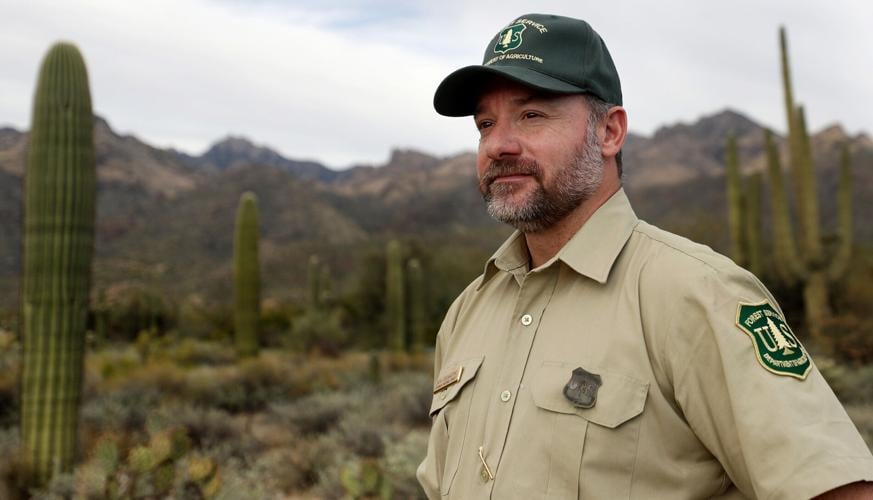

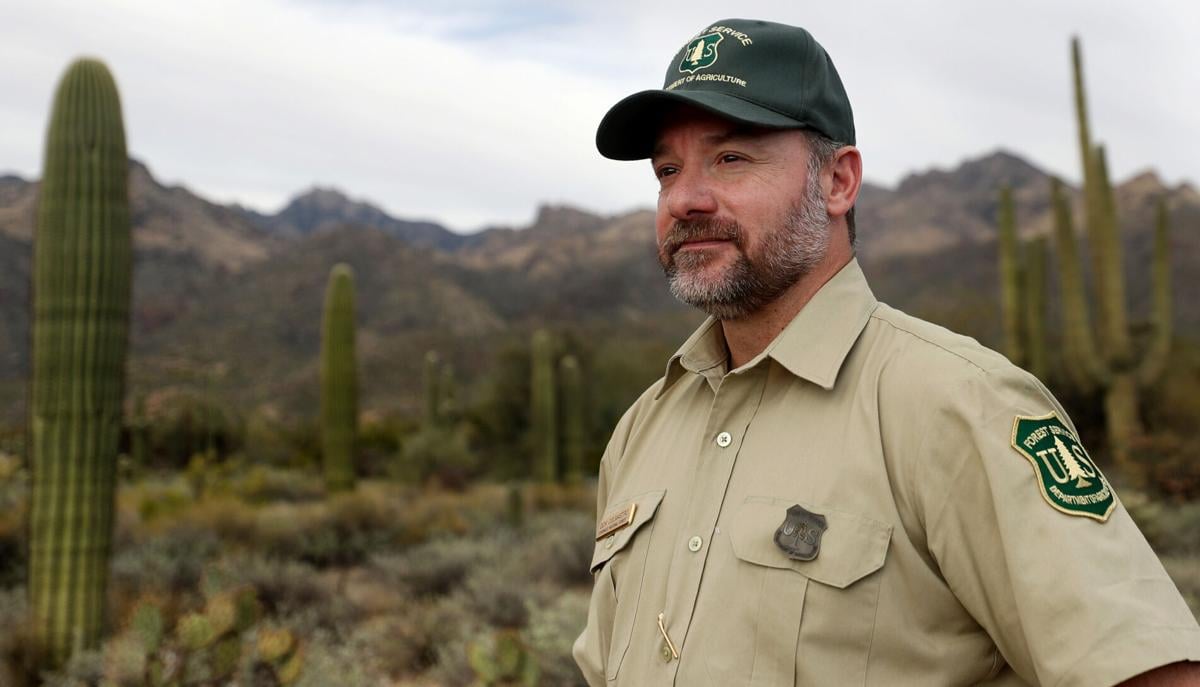
Abrasive behavior by Santa Catalina District Ranger Donato “Don” DelMastro prompted dozens of volunteers to quit patrolling, former officials of the Santa Catalina Volunteer Patrol (SCVP) claim in a complaint letter to DelMastro’s boss.
Due to DelMastro’s alleged “hostile and combative” interactions with volunteer patrollers, more than one-fifth — 38 patrollers — left the organization or quit active patrolling, according to the June 7 complaint letter from former SCVP officials Richard Cyr and Gary Youngling. The patrollers who stepped down averaged more than seven years’ service each, the letter noted.
The drop in volunteer hours from January through May from resignations, plus a voluntary six-week “stand-down” by all patrollers (temporarily ceasing operations) from Jan. 9 through Feb. 17 was 3,274 fewer hours than the same period in 2023, the complaint letter alleged and, with fewer patrollers, projected a loss of volunteer support for the entire year of more than $206,000 based on valuating service at $32.69 per volunteer hour.
The complaint — which was filed with the Coronado National Forest and shared with U.S. Sen. Mark Kelly, U.S. Rep. Juan Ciscomani, Pima County Supervisor Rex Scott, other local elected officials, as well as Forest Service regional and national leadership — prompted a Coronado National Forest supervisor to request a Forest Service Harassment Reporting Center investigation.
The Coronado National Forest declined the Star’s request for comment on the investigation, which is expected to take about 30 days, and did not make DelMastro available for an interview.
The United States Department of Agriculture (USDA) anti-harassment policy says that conduct “that creates a work environment a person would consider intimidating, hostile or abusive” is considered harassment. USDA, the parent agency of the Forest Service, requires a management inquiry into harassment allegations within 10 calendar days of the initial report.
What happened with the volunteer patrol?
The complaint letter details a declining relationship between ranger and patrollers from November 2023 to January after DelMastro requested changing the SCVP’s long-standing “inform do not enforce” policy partly due to visitor complaints.
Cyr was SCVP president and Youngling on the SCVP board when it agreed to voluntarily “stand down” — suspend patroller activities — on Jan. 9 until all members could be trained in new procedures for public interaction as required by DelMastro.
The former SCVP leaders did not oppose DelMastro’s policy changes but how the ranger interacted with the board and patrollers.
Last November, DelMastro told Cyr he wanted to shorten hours of the SCVP bike patrol (in Sabino Canyon) and change how patrollers interacted with visitors over rule violations. Under SCVP’s “inform not enforce” policy, patrollers could approach visitors and explain violations but not enforce them. The ranger said just approaching violators was “enforcement.”
The SCVP officers of the board met with DelMastro Dec. 7 to discuss the new interpretation. DelMastro said “if even one patroller creates a problem by ‘informing,’ the Forest Service has the authority to revoke the SCVP charter. It has happened before with other partners.” He explained that he “settled a bar fight” between two trail organizations last year and terminated their volunteer service agreements (VSAs). “He wanted the organizations to change their board leadership as a condition of getting reinstated. The group that did as he demanded was reinstated,” the complaint letter stated.
The second group that refused to change leadership and could not guarantee further “verbal conflict” had its VSA permanently terminated. The complaint letter notes several times when DelMastro mentioned banning this group.
The groups were Tucson Off-Road Cyclists and Activists (TORCA) and Friends of Santa Catalina Trails (Friends), both working on a trail near Summerhaven. TORCA’s president criticized trail work done by the Friends and an argument ensued. The TORCA president felt bad for his part in the spat and was burned out with politics so he resigned, he told the Star.
The Friends, a trail group with about 70 people on its mailing list, incorporated two years ago and adopted and maintained the first 2 miles of Pima Canyon and Butterfly trails. Its attempts to get a new volunteer permit have been rebuffed by DelMastro and the forest supervisor.
After the “inform not enforce” meeting with DelMastro, Cyr sent an email to patrollers explaining “we will no longer be able to approach visitors who are in violation of a USFS policy to inform them of the violation. This applies to every situation we may encounter.” Approaching violators puts the patroller’s safety at risk and puts the entire organization at risk of having its charter suspended, Cyr’s email added.
In December, DelMastro “invited himself” to a SCVP social holiday event, complained about Cyr and said he had spoken to some SCVP members about taking over leadership positions so he could terminate the group’s VSA and reinstate one with an organization led by board members he chose, according to the complaint letter. (Forest Service policy states its employees “cannot participate in internal matters of non-federal organizations.” Demanding leadership changes violates this policy, the complaint letter states.)
When Cyr called DelMastro the next day, the ranger “ripped into me” for an hour. “He told me that several SCVP members were talking to anyone who would listen and were planning a conspiracy to usurp his authority.”
On Jan. 9, the board invited the ranger and patrollers to discuss changes; more than 40 patrollers attended. From the audio recorded transcript, patrollers asked DelMastro how to handle visitor rule infractions such as bringing dogs to Sabino Canyon (pets are banned) or bighorn sheep areas (where predator scent disrupts reproduction). DelMastro said approaching a visitor to point out an infraction is law enforcement, and that’s illegal. Forest Service policy only allows trained law enforcement personnel to handle this.
DelMastro mentioned complaints from visitors about patrollers. One visitor had parked in a handicap space and was unloading a Segway, but was told by a patroller that Segways were not allowed in Sabino. He asked to speak to a Forest Service employee and was directed to the Sabino Canyon visitor center where he got the same message. He then filed an Americans with Disabilities complaint, which brought an inquiry from Forest Service Civil Rights and legal counsel in Washington D.C. to DelMastro.
DelMastro also mentioned a visitor with a service dog who felt “harassed” after several patrollers asked her if it was a service dog. In an ensuing debate about number of dogs in Sabino, DelMastro told a patroller who questioned him, “if you want a confrontational (sic), if you, you wanna do this? Let’s do this, man.” The patroller, who had more than eight years of service, logging 3,457 volunteer hours, resigned after the meeting.
SCVP board members offered to temporarily “stand down” until new procedures could be implemented and DelMastro said that was agreeable. The ranger terminated SCVP’s volunteer service agreement Jan. 12 and assigned his recreation officer to work with the board on a new one covering new procedures.
On Jan. 26, Cyr and other officers were discussing a new VSA with the district recreation officer. DelMastro burst in, saying, “I’m going to derail this meeting.” He railed against patrollers who had complained to visitors and said he held Cyr accountable for the behavior of all 189 patrollers. Could he guarantee the behavior of each patroller?
“No one could make that guarantee,” Cyr said. DelMastro replied, “If you cannot guarantee the behavior of your members, I cannot trust you...and if I cannot trust you, I do not ever see myself reinstating the VSA,” according to the complaint letter.
The next day, Cyr resigned. DelMastro signed a new VSA the next week, Cyr said. The SCVP resumed patrolling Feb. 18.
New patroller protocols
SCVP training materials obtained by the Arizona Daily Star mandated a new style of presence for patrollers: “we only answer questions or refer to the Forest Service info desk.” Patrollers could offer “simple non-confrontational greetings: i.e.. ‘Where are you headed?’ Or ‘Can I be of any help?’”
Patrollers should not engage with visitors with dogs, on bikes, using drones, seemingly “under the influence,” armed, or hostile, but should file a report with law enforcement, according to the materials.
All patrollers had to sign agreements that they would follow the new policy or face termination.
The district’s new rules don’t change Forest Service policy, which has always limited law enforcement actions to trained personnel. Non-law enforcement Forest Service employees and volunteers — who are considered unpaid “employees” when doing Forest Service work under a volunteer agreement — were never allowed to do law enforcement.
In February, Coronado public affairs officer Starr Farrell said the policy had not changed, but the new emphasis was on deescalating conflict.
Current SCVP president Mark Wright said the changes were also meant to protect patrollers from aggressive responses from visitors.

People walk into Sabino Canyon for an afternoon of hiking on Jan. 27. The Sabino Canyon Recreation Area is open for visitors daily with shuttle services open from 8 a.m. to 4:30 p.m.
Volunteer response mixed
The SCVP patrol “stand down” in January generated letters to the Arizona Daily Star, some praising the patrollers, some decrying ranger behavior, and some claiming good support from DelMastro.
John Marinaro wrote that after patrolling for 10 years on the west side of the Catalinas (near Catalina State Park), he resigned over the new requirements. “What good can I do if I can’t inform someone that they shouldn’t have a dog in a bighorn sheep area?”
Marinaro had made up his own cards, “Why Dogs Are Not Permitted” with reasons such as “panic bighorn sheep, attract mountain lions, drink stagnant water.” Hikers are generally glad to see someone in uniform, he added. “Maybe half a percent get confrontational over their dogs.”
He has helped people with injuries, called 911 and walked lost hikers back down the trail. “That’s the kind of things we do.”
One patroller who is still patrolling said, “the way the ranger handled things gave us a sour taste. The instruction has come down that you are not to address a guest in the canyon unless they ask you a question,” he said. “Don’t offend the perpetrator.”
“It used to be an honor and fun to put on the uniform to go help people; now it’s an embarrassment,” he said. Why is he still patrolling? “We see the bigger picture,” he said. “We’re going to go out and help people.”
But many patrollers feel they cannot even talk to the public unless they are approached, he said.
Another patroller did not feel gagged and still approaches visitors with “how’s it going?” and “are you going to be OK with flip flops and no water?” Pointing out the rules created a tension, the patroller added. “I love the fact that I don’t have to be the enforcement.”
Cyr, who had more than five years of volunteer service with SCVP, logging 4,548 hours, said he decided to resign to get the patrol back in operation and its VSA reinstated.
Youngling resigned because “my bottom line feeling was that I wasn’t trusted by the ranger, I could not approach to educate the public about blatant violations, and my efforts and desire to protect both the (Sabino) Canyon and the public were no longer allowed or appreciated.”
Cyr, a retired corporate management consultant, joined the patrollers because he wanted to be part of Sabino Canyon. “Sabino and the Catalinas are much more than the people who support them. They are very special places.” He said that Sabino gets 1.3 million visitors a year.
Cyr had to wait 1½ years to be accepted on the patrol — “yes we had a waiting list, you didn’t just sign up. When I learned the history of the patrol, I was so humbled and honored to be part of an organization that helps steward this amazing place.”
The Santa Catalina Volunteer Patrol was started in 1997 by Forest Service staff and community members who were concerned about funding cuts to the Forest Service and wanted to ensure that Sabino and the Catalinas were protected. Patrollers have extensive training and assist with visitor contacts, wildlife protection, search and rescue and visitor safety during emergencies.
“Every time that Mr. DelMastro wanted a change in patrolling protocols, his demands were accepted and communicated to the entire membership,” Cyr said. “It is very unfortunate that a new District Ranger with no prior history with the Forest Service can cause so much harm and confusion to an organization that has supported the Forest Service for more than 27 years; an organization that has been nationally recognized by the USDA and Forest Service as one of the best volunteer organizations supporting the Forest Service in the USA.
“I hope the Forest Service will take steps to correct this problem and start to rebuild the trust that has been severely damaged by an inexperienced manager in only a couple of months.”
Other volunteer group leaders have a good working relationship with DelMastro, who took the ranger job in December 2023 after a career with the U.S. Army and Air Force.
Jo Eaton, former president of the Sabino Canyon Volunteer Naturalists, wrote a letter in February to the Arizona Daily Star, “time to hear the other side,” and noted great support from the Santa Catalina Ranger District for her large volunteer organization.
“I have had nothing but a fabulous working relationship with Don DelMastro,” Eaton said in a recent interview. “He has been supportive above and beyond.” She said DelMastro has taken the initiative to help Sabino Canyon Volunteer Naturalists apply for grants to extend its educational programs for students who are underserved and those with special needs.
Arizona Trail Association, which “co-manages” with every entity whose land is crossed by the Arizona Trail, has a good relationship with the Coronado Forest and Santa Catalina district, said director Matthew Nelson. “Our relationship with all the players, including DelMastro, has been very positive.”
Watch: Sabino Canyon is a great spot to cool down or watch the rains come in. Over the years, it has seen Tucsonans come and go for hiking, picnics and scenic rides. Here is a glimpse into Sabino Canyon's past. Video by Pascal Albright/ Arizona Daily Star

