


It’s another triple-digit July day in Tucson, and Dana Hemmenway could really use a knit cap and a parka.
The head of conservation for the Center for Creative Photography is about to step inside a cool new addition she is overseeing at the University of Arizona institution: a state-of-the-art cold storage facility where subfreezing temperatures will help preserve the work of some of America’s best-known photographers.
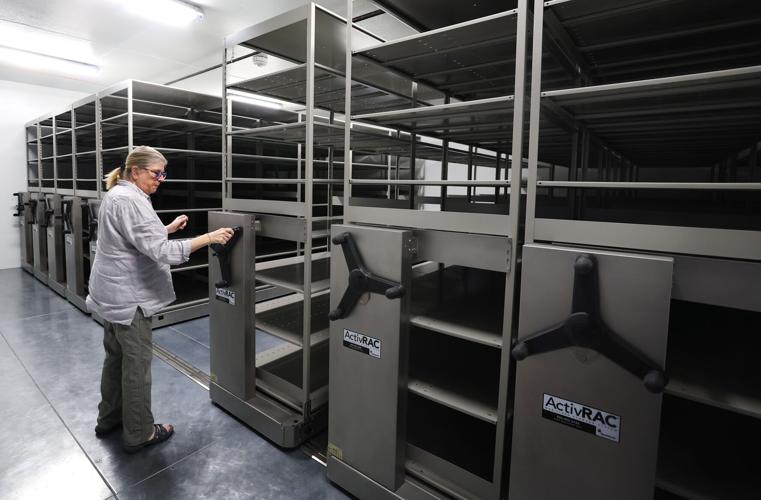
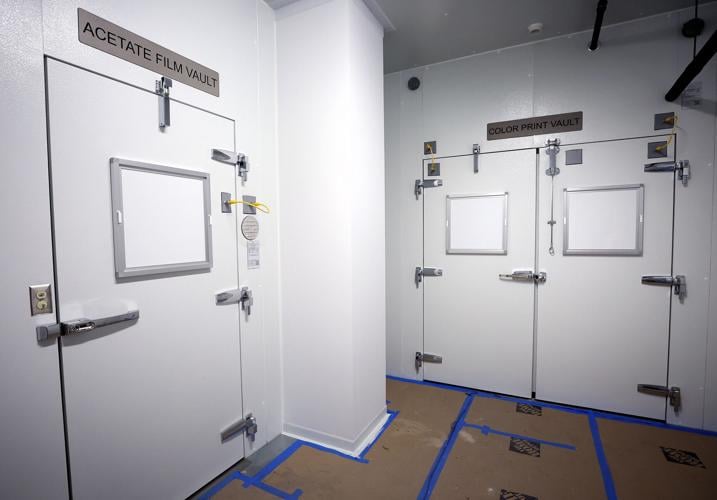
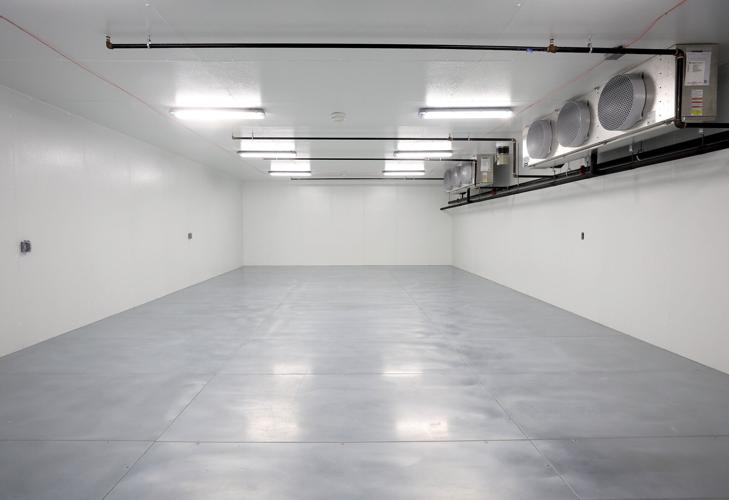
The 4,500-square-foot space on the center’s third floor includes three separate walk-in vaults for old negatives and color prints made with dyes and chemicals that gradually break down under normal, warmer storage conditions.
“If you put them in cold storage, that will slow down any deterioration that’s happening,” says Hemmenway, who joined the center in 2017. “It won’t stop it, but you slow it down.”
The first archival material will be moved into the vaults later this month.
Center officials are calling it the largest facility of its kind among similar collecting institutions, with enough room to accommodate the collection’s continued growth over the next 20 years.
The roughly $1 million project represents the center’s first expansion of archival storage space since its current building on the U of A campus opened in 1989 near East Speedway and North Park Avenue.
“There had been a much smaller freezer, and we just needed more room,” says CCP director Todd Tubutis. “With 4,500 square-feet, every single negative can go in. And we have tens of thousands of slides in the collection, so those will all go in there, too.”
Art at risk
The Center for Creative Photography is home to career-spanning archives by such legendary North American photographers as Richard Avedon, Lola Álvarez Bravo, David Hume Kennerly, W. Eugene Smith, Edward Weston, Garry Winogrand and Ansel Adams, who co-founded the research repository in 1975 with then-U of A president John Schaefer.
All of Adams’ negatives are now archived at the center.
Hemmenway says the earliest types of plastic film were made from nitrate or acetate, two flexible, transparent polymers that revolutionized photography but are unstable at room temperature. As the negative’s plastic base breaks down, it causes distortion and what conservators call “channeling” on the gelatin layer where the image is stored.
Nitrate film is also highly flammable, which is why it was phased out in favor of acetate, also known as “safety film.” Acetate has since been replaced by film made from polyester, an inert plastic that doesn’t deteriorate.
Storing the old film in the cold can extend its lifespan by hundreds of years, Hemmenway says.
For example, a negative kept at 92 degrees Fahrenheit and 5% humidity might last no more than a few decades. But if you drop the temperature to freezing and bump the humidity up to 35%, that same piece of film might survive for closer to 1,000 years, she says, pointing to a chart from a research study she keeps stuck to the side of a filing cabinet in the center’s conservation lab.
“That’s approximately what we’re dealing with: orders of magnitude,” she says.
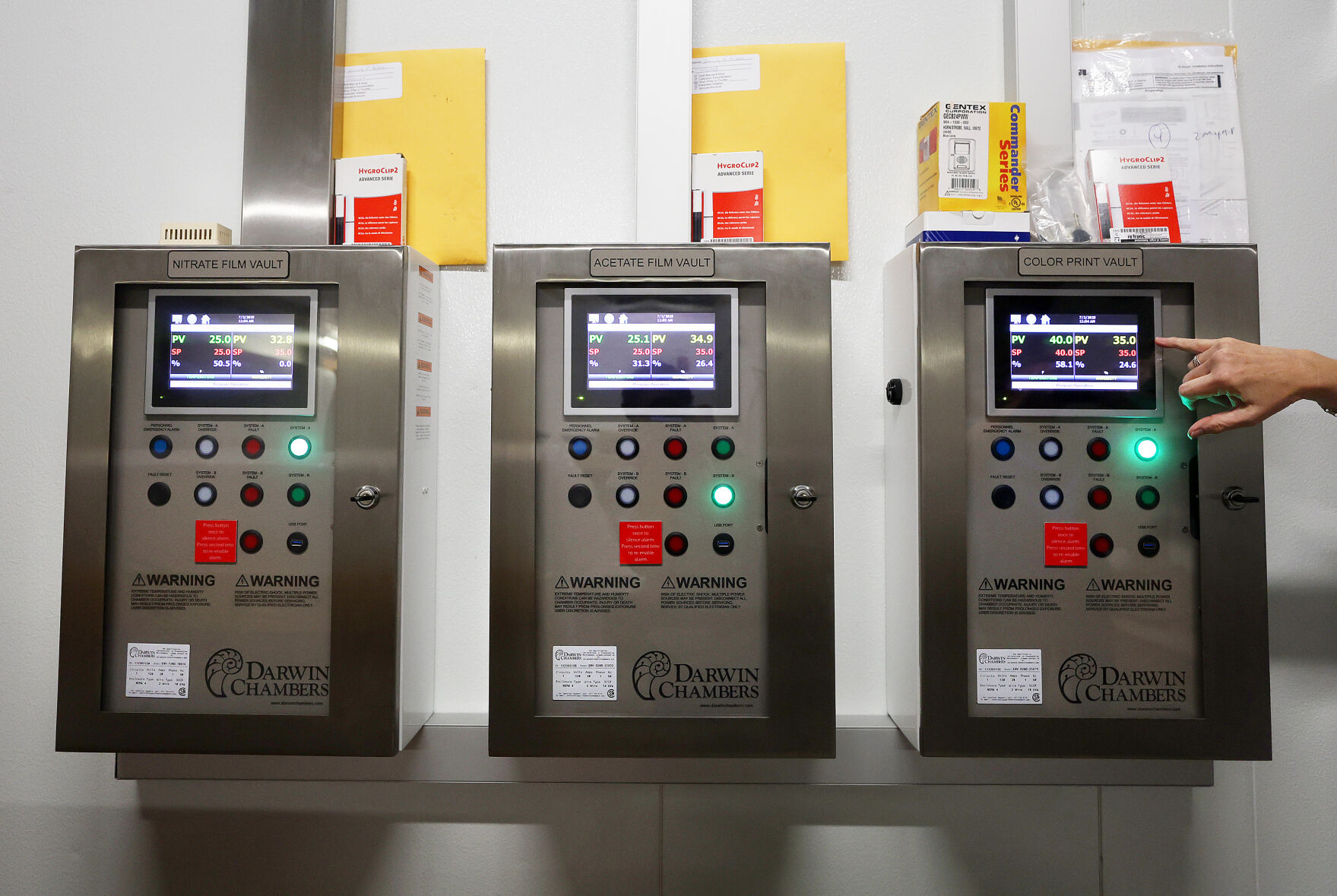
The center’s nitrate negatives will be stored in one vault and its acetate negatives in another, both of them set at 25 degrees and 35% relative humidity. A third vault, chilled to just 40 degrees, will hold color prints containing organic dyes that tend to fade over time.
“What we want to do is get things into cold storage before that begins to happen, right? It buys us a lot of time, both with our negatives and with our color prints,” says Hemmenway, who previously worked as a conservator at the Library of Congress, the George Eastman Museum and New York’s Metropolitan Museum of Art.
Cold plunge
The project has been in the works since 2018, when Hemmenway secured an initial $100,000 grant from a private foundation to replace the old walk-in freezer where the center had been storing its nitrate negatives.
That money paid for a new nitrate storage chamber, along with the containers and the shelves where the material will be kept.
The center and the university then applied for additional funding for two additional vaults so the collection’s acetate negatives and color prints could also be stored in the cold, Hemmenway says. “So it went from this kind of nugget to a much bigger project.”
Tubutis says protecting the collection is crucial because of how significant it is and who it ultimately belongs to.
“Dana’s endeavor here is huge, because these are all assets of the state of Arizona as part of the university,” he says. “We take that seriously.”
Since the old walk-in freezer was dismantled to make way for construction of the new cold storage facility, the center’s nitrate negatives have been sealed inside humidity-controlled containers and packed away inside eight household freezers scattered throughout the building. As a result, the material has been unavailable for study for the past three years now.
“We’ve had years-long waiting lists by researchers to get to these negatives, and we just simply can’t show them,” Tubutis says. “It’s actually important for us to get this (new facility) going, so that people can get at the material and look at what we’ve got.”
On July 21, staff members will finally begin emptying out the freezers and moving the nitrate negatives into their new home. After that, the archive team will turn its attention to the most vulnerable acetate negatives, which will be placed in cold storage on a photographer-by-photographer basis.
“We’ve done a survey to find out whose materials are at risk for becoming distorted and channeled, so we’ll go next with that particular photographer as we can get them prioritized and moved over,” Hemmenway says. “In my opinion, the sooner the better.”
The color prints will be added to their dedicated vault later on, once the center secures the funding it needs to install all the necessary shelves and storage bins. That same vault, the largest of the three, will also be used to store “other things that benefit from lower temperatures and are at risk,” including other kinds of plastics, audio visual materials, magnetic media, optical media and things on glass, Hemmenway says.
Chilling out
When researchers request something from cold storage, they will have to wait about a day for it to thaw out before they will be allowed to look at it.
“This is a very low-tech thing,” Hemmenway explains. The requested materials, still in their archival box, will first need to be brought out of the vault inside a store-bought cooler to protect them from condensation as they warm overnight.
Hemmenway says coats, hats and gloves will be available for anyone working in cold storage. The vault doors are equipped with safety releases and alarms so no one gets trapped inside, but she says workers will be required to carry their cell phones and notify someone before they go in, just in case.
There also will be limits on how much time staff members can spend in the cold. “It’s all going to be very, very tightly controlled,” Hemmenway says.
It could take several years to sort through the center’s entire collection, pluck out the items that need to go into cold storage and organize that material once it’s inside the facility.
“We’re gonna have to go through files and pull things one by one,” Tubutis says. “It’s also a major Tetris game, right?”
“Sometimes boxes have to be replaced with better boxes,” Hemmenway adds. “Sometimes, in order to fit in the cabinetry, what was a very large record-storage box has to be decanted, as it were, into smaller boxes.”
Moving material into the new storage facility will require so much staff time and resources that the center has announced a temporary moratorium on loaning out items from its collection or adding new acquisitions through the end of 2027.
During the transition to cold storage, some gallery space at the center also will be closed to the public for two years, starting Jan. 1, 2026.
But Hemmenway expects all the work — and the disruptions — to pay off for the center and its patrons, now and well into the future.
“We have millions of items in the archive and over 120,000 in our fine print collection,” she says. “There’s enough to keep a conservator here busy for hundreds of years, and hopefully with our cold storage, we’ll have hundreds of years.”

