





Forgive Sarah Hanna if she feels a little like Charlie Brown trying to kick that football.
Hanna runs the Kino Sports Complex. She and other stakeholders in Tucson had it all lined up last summer.

Michael Lev is a senior writer/columnist for the Arizona Daily Star, Tucson.com and The Wildcaster.
The Arizona Fall League would play a tripleheader at Kino Stadium. The Tucson Baseball Team would step into the box next, becoming the first club from the Mexican Pacific Winter League to plant roots in the United States. Then Tucson would be the training site for Team Iran in advance of the 2026 FIFA World Cup.
All those events would bring attention and economic opportunities to our town — further establishing Tucson as a city that’s more than capable of hosting big-time professional sports.
Then they fell by the wayside, one by one.
The AFL tripleheader, scheduled for Oct. 11, was canceled because of a tropical storm. What are the odds?

Obregon's Victor Marquez (6) pops out to Tucson Baseball Team third baseman Aldo Nunez (23) during the second inning at the Mexican Baseball Fiesta on Oct. 2, 2025, at Kino Stadium.
Then the Tucson Baseball Team’s relocation from Navojoa became a fiasco wrapped in governmental red tape. TBT’s U.S. debut was delayed multiple times. The club never played a regular-season game here. On Monday, it announced it was going to remain in Mexico because of ongoing visa issues (which I’ll try my best to explain in a little bit).
And Team Iran? Fraught with problems — namely, a war that has caused worldwide economic upheaval and might prevent Iran from participating in the World Cup altogether. It was reported Tuesday that Iranian officials are trying to move the side’s World Cup games to Mexico. Maybe they could share a training facility south of the border with the squad briefly known as the Tucson Baseball Team?
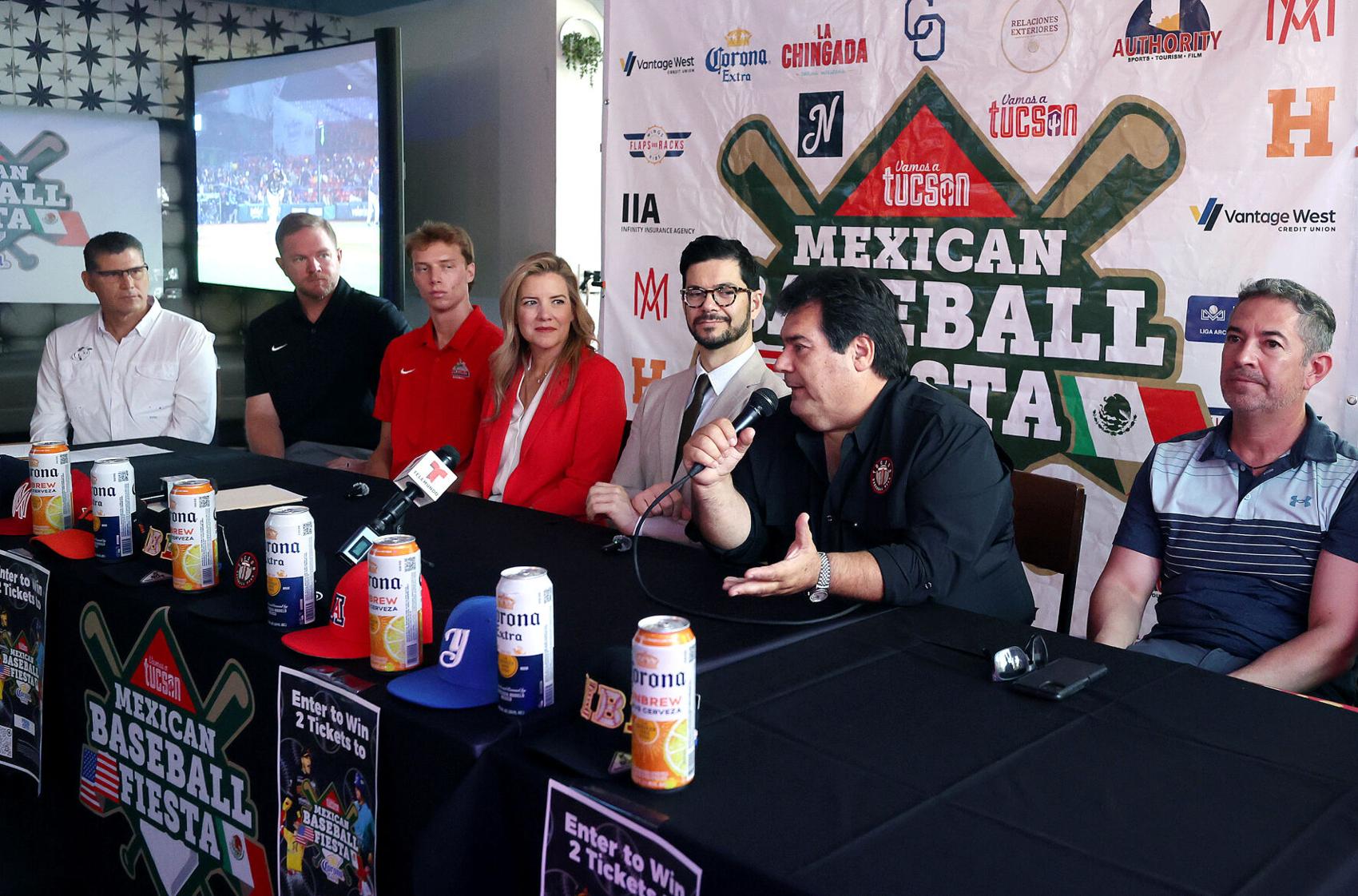
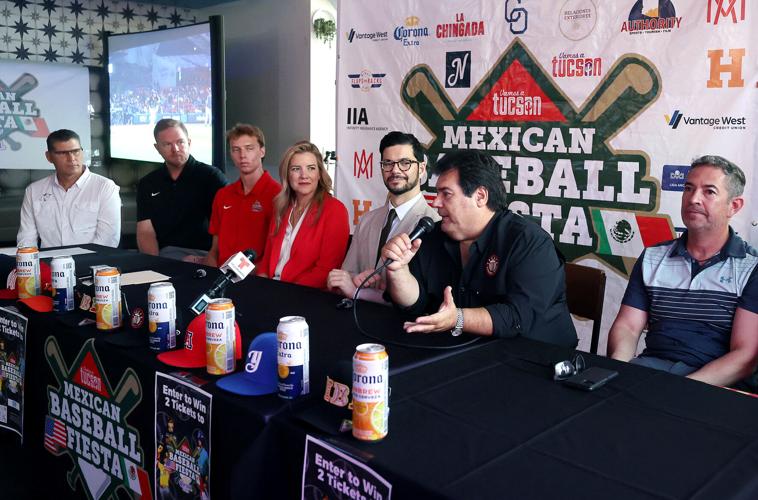
Victor Cuevas, president of the Tucson Baseball Team, second from right, speaks during a press conference previewing the 14th annual Mexican Baseball Fiesta at La Chingada Cocina Mexicana on July 21, 2025. Rafael Barceló Durazo, former consul of Mexico in Tucson, and Sarah Hanna, director of the Kino Sports Complex, are seated to Cuevas’ right.
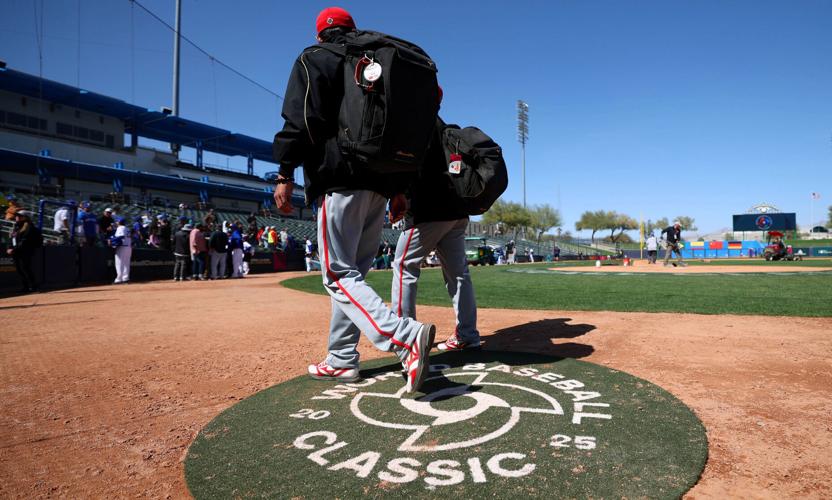
“It’s been a challenging chain of events,” Hanna said by phone Monday from Miami, where she attended the World Baseball Classic and continued to build a relationship with WBC officials.
Before all the swings and misses, Hanna and other local entities — including the Southern Arizona Sports, Tourism & Film Authority (SASTFA) and Visit Tucson — procured and hosted a WBC qualifier in March 2025. It was an unqualified success.
So the news wasn’t all bad. Later in the year, Hanna got married. If you recall reading about a person named Sarah Horvath running the show at Kino, it’s the same Sarah.
“I can tell you that myself and the team, we’re just as highly motivated,” she said. “These things that haven’t worked out, they’ve been completely out of our control. It’s not something where Pima County has dropped the ball.”
That’s something that has provided some solace for local officials. Like Will Hunting, they can take comfort in knowing that none of this was their fault.
They put themselves in the best position possible only to be undermined by unusual weather, governmental bureaucracy and military conflict.
“I would feel way worse if we screwed these things up,” said Blake Eager, executive director of SASTFA.
Visas denied
So what did go wrong with the Tucson Baseball Team? Here’s my basic understanding of the situation:
The team and the attorneys helping it originally believed that B-1 visas would suffice for the team to play in Tucson. A B-1 visa, per the U.S. Citizenship and Immigration Services website, is for those “participating in business activities of a commercial or professional nature in the United States.”

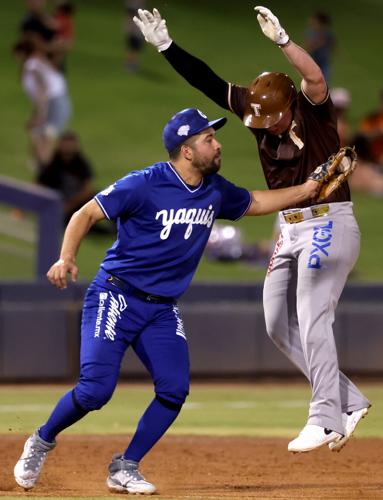
Obregon third baseman Roberto Valenzuela (30) takes a swipe at Tucson Baseball Team baserunner Alejandro Quezada (31) to get an out on a ball hit to the hole during the fifth inning of the Mexican Baseball Fiesta on Oct. 2, 2025, at Kino Stadium.
Just two weeks before the start of the season, TBT was informed that those B-1 visas wouldn't suffice. That led the team down a different path: It pivoted to the idea of P-1A visas instead.
Per the USCIS website: “The P-1A classification applies to you if you are coming temporarily to the United States solely for the purpose of performing at a specific athletic competition.”
Those are the visas typically used by international players in the NBA, NHL and MLB.
However, those players are all employed by teams that are part of U.S.-owned leagues that mostly consist of U.S.-owned franchises. While the Tucson Baseball Team planned to play here and stay here during the season, it was still a Mexican-owned team in a Mexican-owned league.
Therefore, TBT’s scenario was deemed unique and, officials here were told, no visa fit its specific situation.
Those who had invested time, energy and money into the Tucson Baseball Team were hopeful that an exemption could be carved out. None was forthcoming.
Would the outcome have been different under a different administration? Possibly. But again, that’s something that’s out of the control of Hanna, Eager and everyone else who wanted to make it happen.
Hanna couldn’t comment on the specifics of the visa imbroglio. But she did explain why TBT ultimately decided to forgo its relocation to Southern Arizona.
“Ultimately, there was too much uncertainty with the federal government,” Hanna said. “They need to be able to have ... a home stadium to play in consistently.
“Last year was very challenging for the league; it caused a lot of challenges with the travel. (TBT played all of its games at visiting stadiums.)
“There’s just a lot of logistics behind it. For a team to survive, it can’t continue to play on the road. They need the revenue from having a home stadium. The business model doesn’t work.”
“It is what it is,” she added. “We’re going to keep trying.”

Soto
‘Bump in the road’
That was the prevailing sentiment that emerged from my conversations with Hanna, Eager and Edgar Soto, who’s a board chair for SASTFA:
These setbacks are just the prelude to a comeback.
“Nothing good comes without a struggle,” Soto said. “We just gotta keep looking ahead. Things are going to happen.”
Local officials have built strong relationships with the WBC, MLB and FIFA. Efforts are ongoing to convert those relationships into tangible events.
Tucson is expected to again throw its baseball cap into the ring to host a WBC qualifier in 2029. (The next World Baseball Classic is scheduled for 2030.)
A small slate of spring-training games remains a primary goal. Officials are optimistic it could happen next year — assuming MLB isn’t shut down by a labor stoppage (it’s not your fault ... it’s not your fault ... it’s not your fault).
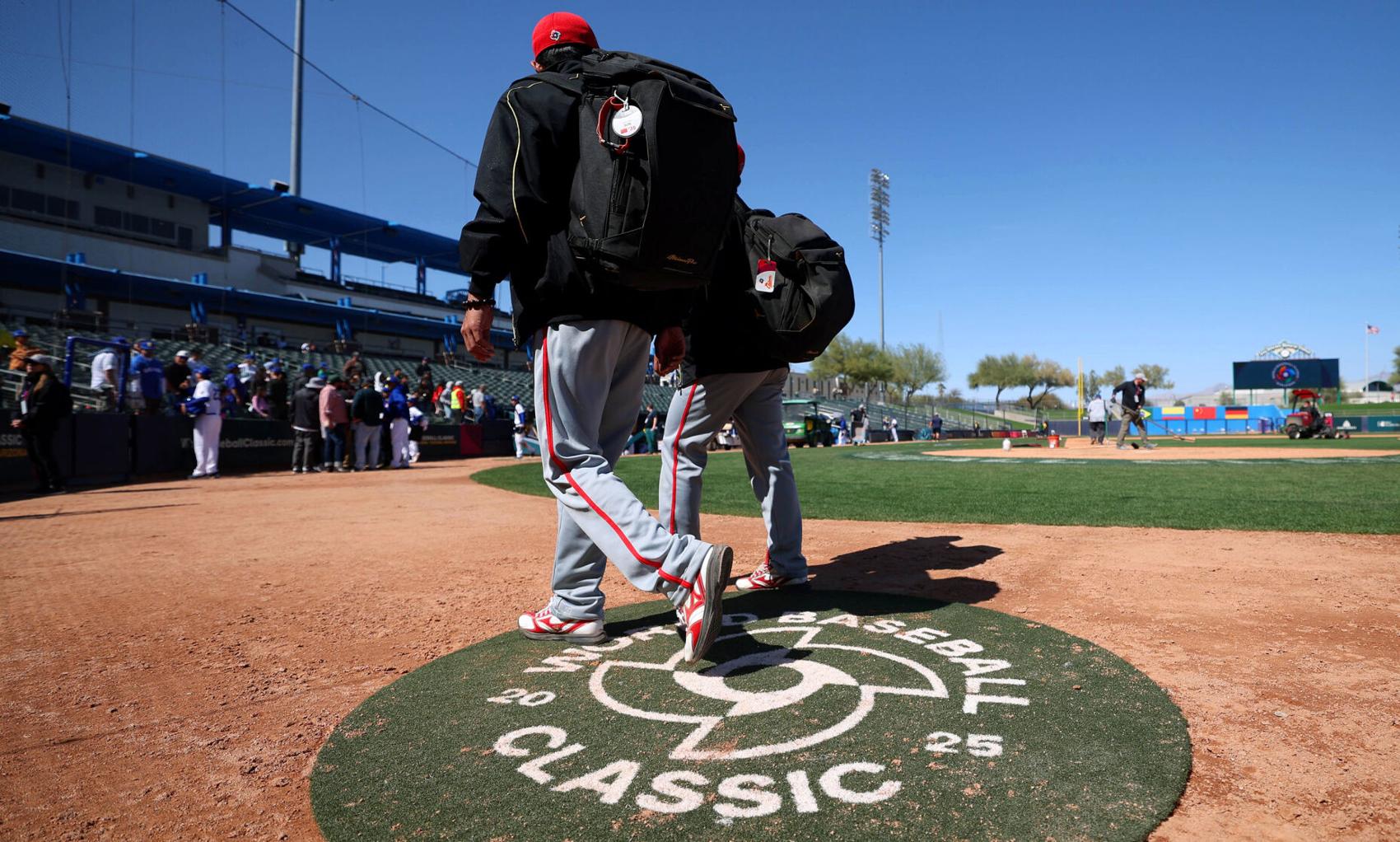
Brazil earns a 12-2 run-rule win against China in a World Baseball Classic qualifier game against Brazil at Kino Sports Complex in Tucson on March 4, 2025.
It would make a ton of sense for all parties for the Diamondbacks to play a game or two in Tucson. Those could be against other MLB clubs — or possibly an international squad such as KBO’s NC Dinos, who already hold their spring training in Tucson.

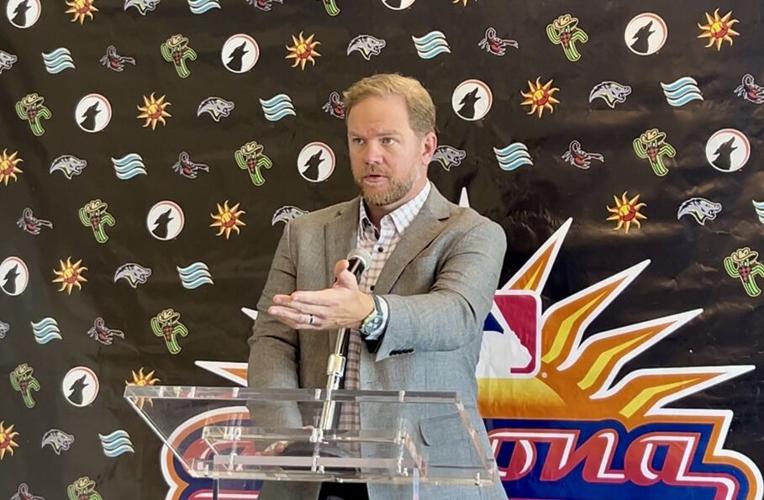
Blake Eager, executive director of the Southern Arizona Sports, Tourism & Film Authority, addresses the media at Kino Veterans Memorial Stadium on Sept. 18, 2025.
The dream scenario would be to land an MLB farm team. Further contraction of the minor leagues, as has been rumored, would make that all the more challenging. But an opportunity could open up if MLB places an expansion franchise in Portland or Salt Lake City.
Whatever form it takes, the incentive to bring professional baseball back to Tucson remains the same.
“The whole reason for doing this is to create economic opportunities,” Soto said.
An ASU study showed that the Cactus League created an economic impact in the Phoenix area of $764 million in 2025, including $378.6 million in visitor spending. At best, Tucson would do only a fraction of that business. But a fraction of $764 million is still potentially many millions.
Hanna said that Pima County did not lose money because of TBT’s withdrawal; Kino Stadium investments and enhancements were made for the WBC qualifier. She did note lost opportunities for local concessionaires and security personnel. The same goes for local hotels, restaurants and retail stores, Soto said.
While the Tucson Baseball Team’s failure to launch left local officials frustrated and disappointed, they remain undaunted. They’re going to keep trying to kick that football.
“It’s a hiccup. It’s a bump in the road,” Eager said. "We have the right people in our community to make something like this happen. We are going to continue moving forward.
“We’re going to knock down every single door we possibly can.”


