






The breakup between Arizona and Adia Barnes felt inevitable.
She undoubtedly leaves Tucson — where she played and coached and raised a family — with a tinge of sadness. Maybe more than that. It was a hell of a run.

Michael Lev is a senior writer/columnist for the Arizona Daily Star, Tucson.com and The Wildcaster.
But you know what they say about all good things ...
The truth is, this was the best-case scenario for both sides.
Barnes coaching here next season on the last year of a contract was never going to work. Recruiting in the NIL era is hard enough. Doing it as a lame duck would have been impossible. And her status — Will she stay? Will she go? — would have been a constant distraction.
Now Barnes gets to start over at a place, SMU, that has resources and is willing to use them. And Arizona gets to hit the reset button on a program that thrived under Barnes’ leadership — but also might have gone as far as she could take it.
UA athletic director Desireé Reed-Francois would never concede this point, but she had to be relieved when Barnes landed a new job. Her departure gets Arizona out from under a $1.3 million bill at a time when Reed-Francois is striving for fiscal responsibility. She also avoids any backlash from firing a revered alum if it ever got to that point.

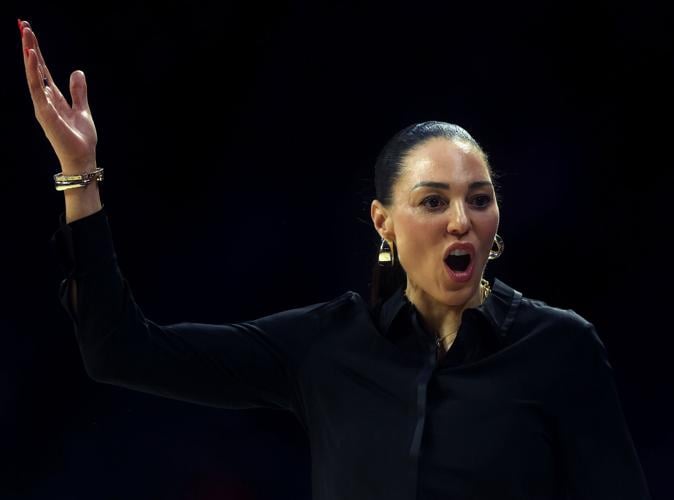
Arizona coach Adia Barnes has some questions on a non-call in the fourth quarter against Arizona State in a Big 12 game Feb. 8, 2025, at McKale Center.
Barnes was unquestionably popular, and her presence and personality helped boost attendance to unprecedented levels.
She was also polarizing. No one’s perfect.
Barnes took over a moribund program and injected it with energy. Arizona women’s basketball was basically a nonentity before Barnes returned to town. She turned it into something it had never been — a genuine attraction. Average attendance increased more than five-fold during her tenure. UA women’s basketball became a thing.
Barnes brought in big-time players such as Aari McDonald, Sam Thomas, Cate Reese and Trinity Baptiste. The program blossomed. Then the Wildcats nearly won it all.
It’s still hard to believe that happened. One shot from winning the national championship in a sport dominated by bluebloods. If that shot had gone in, we probably wouldn’t be talking about Barnes’ departure today.

Arizona guard Aari McDonald, left, lies on the court after missing a shot at the end of the championship game against Stanford in the Women’s Final Four on April 4, 2021, at the Alamodome in San Antonio. Stanford won 54-53.
In a way, that sequence summed up the Barnes coaching experience. She squeezed the most out of her team, upsetting No. 1 seed UConn and taking perennial powerhouse Stanford to the buzzer. But the last play was muddled — McDonald trying to dribble through multiple defenders and hoisting a turnaround, fadeaway 20-footer over 6-foot-4 Cameron Brink and others while the rest of the Wildcats stood and watched.
Two main criticisms were levied against Barnes over the past few seasons, and they were both valid: (1) Her offense became stale; and (2) she couldn’t keep the talented players she recruited and signed.
The transfer portal has changed college athletics forever. Whether it’s for better or worse is up for debate. Probably a bit of both.
But even in the portal era, Arizona’s losses were prolific. Barnes would bring in a highly rated class, and two years later it’d be wiped out.

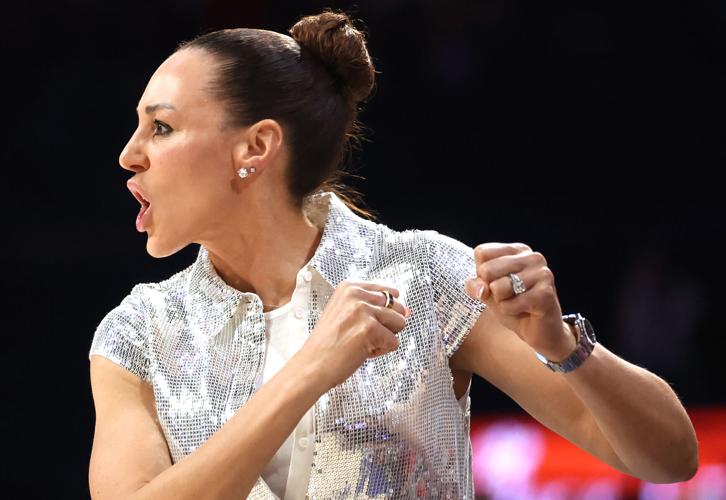
Arizona coach Adia Barnes talks to her bench in the second half during a game against TCU at McKale Center on Feb. 16, 2025. The Horned Frogs won 85-73.
It happened with three consecutive classes, 2021-23. The Wildcats lost, among others, Madison Conner, Aaronette Vonleh, Maya Nnaji, Paris Clark, Kailyn Gilbert, Breya Cunningham, Jada Williams and Skylar Jones. All were top-100 prospects. Some were top 25.
There’s no question that money played a significant role in many of those decisions. Barnes was resigned to the fact that she’d lose most, if not all, of her best players from this year’s team because Arizona couldn’t compete with the offers they’d receive from other schools. It’s an unfortunate reality in today’s landscape — and a source of great frustration for UA fans and Barnes.
You’d like to think the advent of revenue-sharing would mitigate that effect, but it remains to be seen. Arizona is expected to devote only 2% of its $20.5 million allotment to women’s basketball, roughly $410,000. The UA would be better positioned to compete at 5%, which comes out to $1.025 million. The latter would be more commensurate with women’s basketball’s attendance, which has been greater than baseball and softball combined.

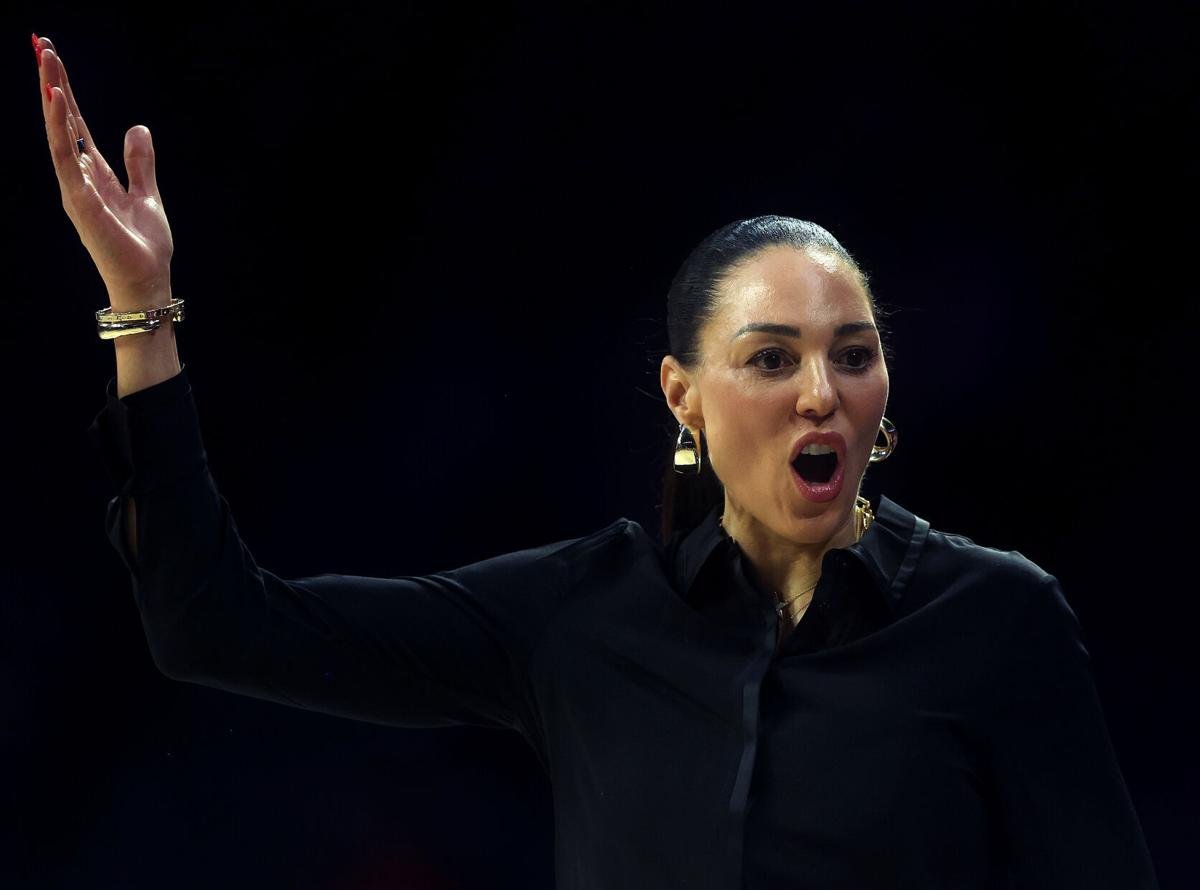
Arizona coach Adia Barnes calls out to the Wildcats during a transition late in the game against West Virginia on Saturday, Jan. 25, 2025, at McKale Center.
Part of the frustration with Barnes’ performance stemmed from a similar calculation: Her salary was top 10; her recent results were not. Arizona’s streak of 20-win seasons ended in 2023-24, when the Wildcats never appeared in the AP Top 25 and barely snuck into the NCAA Tournament. They didn’t make it this past season despite having a deeper and arguably better roster.
Barnes isn’t without blame for the exodus of personnel. If you don’t have the money, you have to offer something else — a reason for players to want to stay. Other UA programs have achieved success via a combination of culture and development. The women’s basketball program fell short in those areas.
I don’t know all the inner workings of the program or what it was like to deal with Barnes on a daily basis. My theory was always that, despite her fashion sense and youthful energy, she’s a demanding, hard-edged coach who expects a level of dedication and professionalism that most young players lack. She wears on them after a while, and they now have an escape hatch.

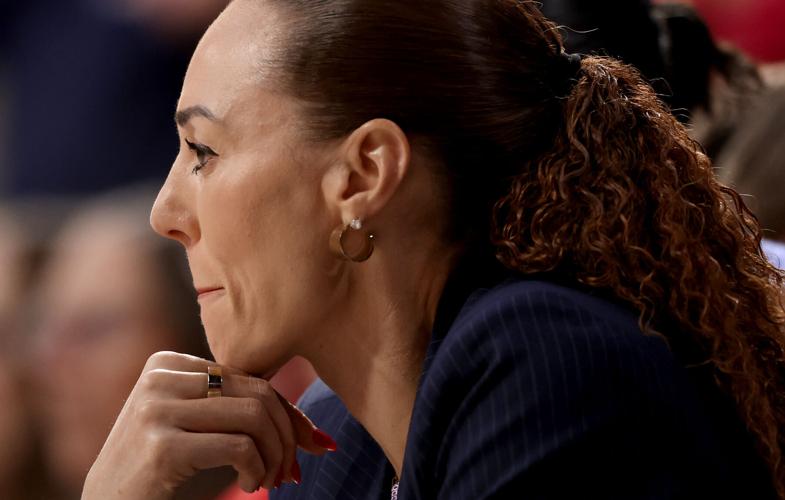
Arizona coach Adia Barnes watches her Wildcats on an offensive possession in the team’s game against Tarleton State on Nov. 7, 2024, at McKale Center.
From a media perspective, Barnes was a delight. Always available, always candid, never grumpy after a loss. Could she have pointed the finger at herself a bit more? Sure. But her frank appraisals of her players and their performance was always appreciated.
If anything, Barnes was too honest at times. Her statements after the season-ending loss to NAU — “We didn’t want to win” and “We were indifferent” — were a bad look.
It’s a shame Barnes’ time at Arizona had to end that way because she unequivocally did the program more good than harm. She left it in a better place than she found it.
In that sense, the next coach has a tough act to follow. He or she will have an entirely new team and will have to work to win over a skeptical fan base.
Sometimes change is a good thing. UA women’s basketball was ready for something different. Whether it’ll be better is to be determined.

