


Rosemont Mine’s owner hopes to start construction of the $1.5 billion project next year, its CEO says -- which could make mining possible in two years.
But while the company says it’s optimistic about its prospects for getting permits and having the money to build the mine, other sources suggest the road to Rosemont remains paved with uncertainties on both fronts.
In a recent interview with a mining trade publication, Hudbay Minerals Inc. CEO David Garofalo said the company is following a two-track process to get the long-delayed mine underway: finishing obtaining its permits while doing detailed engineering studies. It recently hired an Australian firm, Ausenco, to conduct eight to 10 months’ worth of engineering studies, Garofalo said. Construction would take about two years, he said. That means mining could start soon afterward, assuming the price of copper is high enough to justify opening the mine.
“We have to advance both of those on a parallel track so we’re in a position to make an investment case next year,” Garofalo said Sept. 24 at a mining conference in Arequipa, Peru. “Hopefully we’ll start work next year on Rosemont.”
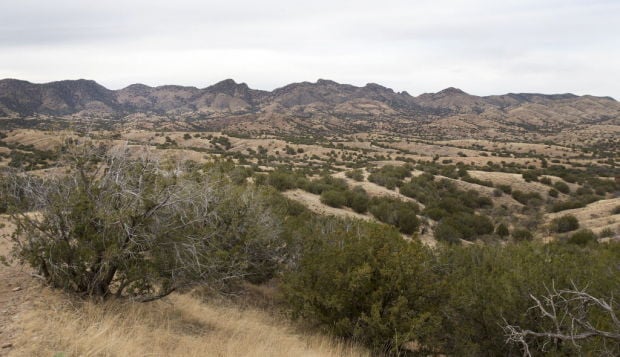
His interview, with the website Platts.com, came a little more than a year after Toronto-based Hudbay paid $555 million to take over Augusta Resource Corp. of Vancouver, British Columbia, Rosemont’s original owner. The mine is proposed for the Santa Rita Mountains southeast of Tucson.
But two key permitting agencies for the project, the U.S. Forest Service and the U.S. Army Corps of Engineers, are mum about their timetables for decision making. A third permit, from the Arizona Department of Environmental Quality regarding Rosemont’s air quality impacts, is tied up in court. The permit was overturned by a Maricopa County Superior Court judge last spring and ADEQ is appealing.
Outside mining analysts are split over the mine’s permitting prospects, with one predicting it may not open until 2022, and another saying the mine could be permitted next year, meaning it would open much sooner.
Copper prices have tumbled in recent months and financial experts and analysts are split over where they’re headed for the long term. Friday’s closing price on the COMEX metal exchange in New York City was $2.34 a pound, a bit higher than it’s been recently but well below the $4 levels of 2010 and early 2011.
Garofalo told a Hudbay shareholders’ meeting in May that no new copper facility will go online anywhere unless prices return to $3.50. His company’s official forecast is that the price will rise to at least close to that level by the late 2010s, when Rosemont theoretically would be ready to open if it started construction next year.
Hudbay’s long-term debt of over $1 billion is also troubling some analysts. But a company spokesman says the company is confident of meeting its debt obligations.
Investors have reacted warily since Hudbay’s prediction of a 2016 Rosemont construction start. With copper prices low, Hudbay’s stock dropped to $3.65 a share Monday on the New York Stock Exchange — its lowest since Hudbay went on the exchange in 2009. By Friday, the stock price rebounded to $4.02, well below its $8 level of a year ago.
Permits still a hurdle
It had appeared that the Forest Service was set to issue a final approval of the mine by May 2014. Then, the U.S. Fish and Wildlife Service said an endangered ocelot was photographed near the mine site, about 18 months after remote cameras first photographed an endangered jaguar nearby. Other new concerns arose involving two species about to be formally listed as threatened, and about potential impacts on imperiled fish in Cienega Creek downstream of the mine.
Those concerns triggered a detailed federal review of the mine after it had already gone through a five-year review for a massive environmental impact statement. This review won’t finish until the Fish and Wildlife Service publishes a new Rosemont biological opinion — currently scheduled for completion in early December.
The Army Corps of Engineers must issue a separate permit for the mine under the federal Clean Water Act. It has said it won’t formally decide until the Forest Service makes its Rosemont decision. But in the past, Corps officials routinely rejected mitigation plans put forth by Augusta as inadequate.
About a year ago, Hudbay sent the Corps a new mitigation plan, aimed at compensating for impacts on about 100 acres of federally regulated streams and washes. This plan was more expensive than Augusta’s plans — $48 million versus $25 million, and offered to buy more land — 4,800 acres versus 2,500.
Hudbay pledged greater efforts toward restoring and enhancing environmentally damaged streams and washes — an effort the Corps had said was lacking in previous plans. It promised to spend more money if necessary on mitigation efforts for Cienega Creek.
Pima County officials, who oppose Rosemont, have sought 13,000 acres of land mitigation, with most coming in the Cienega Creek area.
But the Corps this time won’t comment on the Rosemont plan until the Forest Service decides on the mine, said Dave Palmer, a Corps spokesman.
Heidi Schewel, a Forest Service spokeswoman, declined to say if the service will decide by the end of 2016, adding, “We are not ready to set a timeline.”
If the Corps and Forest Service approve Rosemont, there is the possibility of the Environmental Protection Agency intervening, which it has repeatedly talked of doing, either to veto the Corps permit or to bring the entire issue to the White House Council of Environmental Quality for more review.
But Hudbay is optimistic about its chances for completing permitting next year. Its Arizona officials have worked to build mutual respect with the permitting agencies, “first and foremost by supporting the time and information these government entities require to do their jobs,” Hudbay spokesman Scott Brubacher said.
“We are confident the information Rosemont is providing meets the needs of the permitting agencies, enabling a decision to be reached. A thorough process will result in the best possible outcome when we build Rosemont,” Brubacher said.
Outside analysts are split
One of the 19 outside financial analysts who follows Hudbay predicts a 2022 Rosemont opening. “Permitting consideration has always been (the) issue at Rosemont,” said Toronto-based Haywood Securities Inc.’s July 31 report.
Hudbay has always viewed Rosemont as having a longer timeline than did Augusta, its predecessor, wrote Haywood analyst Stefan Ioannou.
“Nevertheless, skeptics will continue to dwell on Rosemont’s uncertainty until permits are in hand,” Iaonnou said. Also, Hudbay already has its plate full, ramping up and expanding its Constancia and Lalor mining projects in Peru and Manitoba, respectively, Ioannou wrote.
Another Hudbay analyst was more optimistic.
“There is a school of thought that the Obama administration will reverse course and switch sides and release mining projects it’s held hostage,” said John Tumazos, president and CEO of Very Independent Research LLC, based in Holmdel, N.J. One purpose would be to prevent Republicans from using the mines as a jobs issue in the 2016 election, he said.
“The Democrats are not going to lose the environmental vote” if the administration approves mines like Rosemont, Tumazos said. “They might try to move a little closer to the center and get the jobs vote.”
Copper prices a gamble
Expert opinion over future copper prices is also sharply divided.
Leading the bears is New York investment banking firm Goldman Sachs, which last month predicted a 10 percent decline from existing prices by the end of 2016. Its report is titled, “Copper’s bear cycle still has years to run.”
Due to continued economic weakness in China and in emerging market nations, copper surpluses of up to 500,000 tons a year should be expected until at least 2019, it said.
As prices tumbled, some mining companies have started cutting production, leading other experts to predict that this will trigger price increases starting sometime next year, Goldman noted. However, it predicted that this trend will cause “self-reinforcing cost and price deflation,” as producers keep lowering production as prices keep falling.
A contrasting view comes from New York-based Citigroup, which predicted last month that copper prices will rise 6.6 percent by the end of 2015 and supply deficits will start next year. Its predictions, to some extent, match those made by Hudbay.
More than 1.5 million metric tons of planned output this year has been lost for reasons ranging from rains and riots in Chile to lack of precipitation in Zambia and Papua New Guinea, Citigroup analysts told Bloomberg News.
More supply troubles may be on the way, said Citigroup, which said that supply constraints, not just demand, have been key to copper pricing cycles during the past 20 years. “New projects only marginally compensate for stuttering supply growth in older mining complexes,” Citigroup said.
John Tilton, a mining economist at the Colorado School of Mines, took a middle view, saying the copper price by the time Hudbay wants to open Rosemont will depend largely on the global economy.
“If it recovers and is booming by then, $3.50 a pound is quite possible,” said Tilton, but he added that given global economic problems, $2.50 to $3 seems more realistic.

