


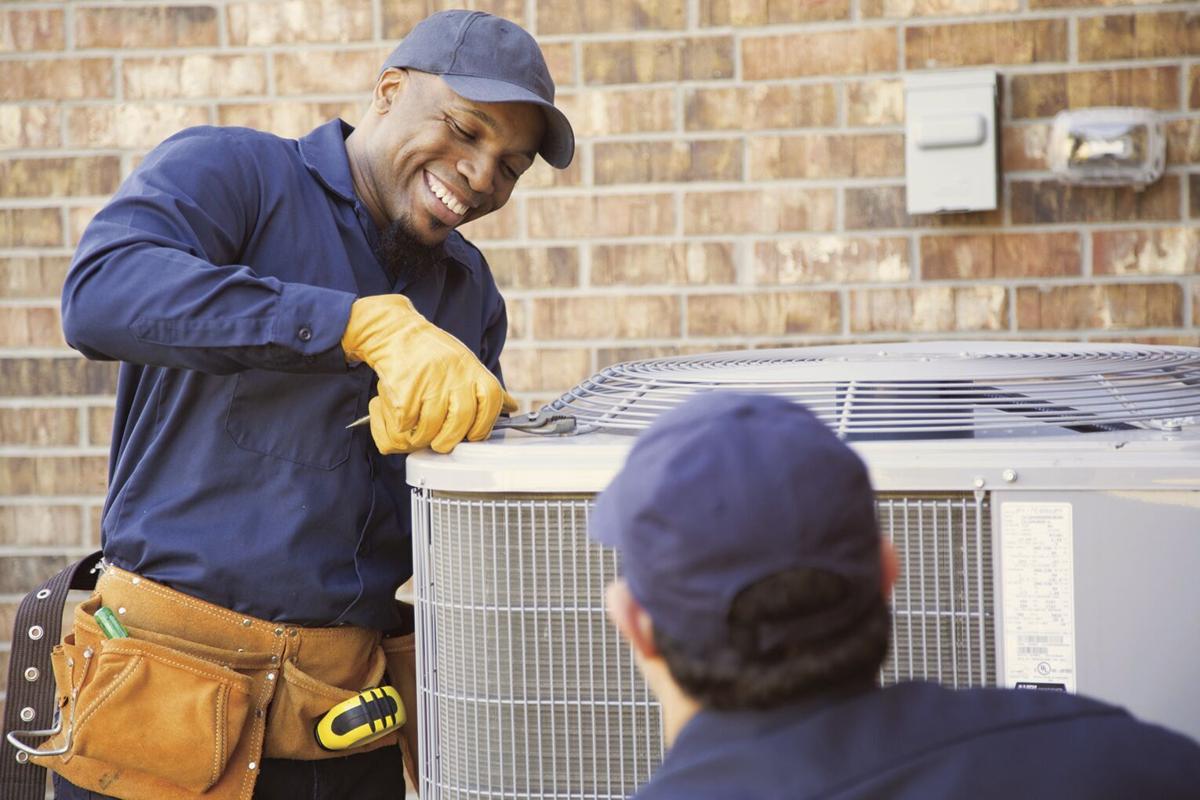
Q: Are there ways to extend the life of my air conditioning unit?
A: Best practices for maintaining your air conditioning range from simple DIY tasks to regular maintenance checkups.
These maintenance chores you, the homeowner, should do regularly:
Change your filters
It is recommended that you change your filters every month. Filters are not there to make your air healthier. Their primary goal is to protect your air conditioning unit and its moving parts. Grime, dust and dirt can build up on the coil, negatively affecting its efficiency.
Create a reminder to change your filters. Methods of tracking this task include putting calendar reminders on your phone, signing up for regular monthly filter delivery services, or automatically replacing them when you pay your utility bill.
Consult your service tech to determine the right filter for your unit. The goal in choosing the right filter is to pick the one with the highest Merv rating but not restrict the air flow. Learn more at tucne.ws/mervrating.
Keep equipment clean
Clean the filter grilles by wiping them with a soft damp cloth each time you change your filter.
If you have a ground-mounted condensing unit, keep the area around it unobstructed from dirt and plants. Use a broom or leaf blower around the unit. You can also use a garden hose to rinse the unit gently but never use any pressure.
Schedule regular maintenance
Remember, your air conditioning unit is a machine; like all machines, it needs to be serviced.
Scheduling your air-conditioning company to service the unit in the spring and fall is a great way to catch minor issues before they become major repairs. They will check for wear points caused by constant vibration, check the motor and other components, and lubricate the machine to operate smoothly.
Q: I have heard there are new EPA rulings regarding the use of refrigerants. What do I need to know?
A: You may have heard that the EPA passed the AIM Act which has outlawed some types of refrigerants. Although there are changes coming, it is a phase down and currently operating systems do not have to be changed.
There are some air conditioning scams associated with this ruling. A contractor may use the scare tactic by misrepresenting AIM Act. He may use it to convince homeowners into buying a new system unnecessarily. The scammer leads the homeowner to falsely believe that their unit will not be able to operate due to the ruling.
If you have an older system that is functioning and may need coolant recharged, it is available and entirely legal. You won’t go to jail for using it. However, the availability of the coolant is limited, and it is quite expensive. This should factor into your decision whether to repair or replace.
The new rules apply to new systems. Whether building a new home or completely replacing your air conditioning system, you must follow the current rules.
The changes may seem burdensome, but they are designed to allow our air conditioning units to operate with greater efficiency.
Q: What are the latest advances in air conditioning efficiency?
A: The air conditioning industry has made remarkable moves regarding how efficiently we can cool our homes. Here are three examples:
Variable-speed compressors are the wave of the future. This type of compressor operates to maintain cooler temperatures throughout the cooling cycle. By ramping up or down in smaller increments, this type of compressor only provides the amount of cooling needed. With the older compressor, the unit was either on or off, and most homes experienced temperature swings. The new units can maintain the temperature more evenly and efficiently.
Ductless air conditioning units have a unique ability to cool a single room. Homeowners who express a desire to keep the bedroom significantly cooler than the rest of the house can achieve that specific result with a ductless system. Other good places for ductless units are man caves, she sheds and garages and home offices.
Programmable thermostats offer a new level of efficiency. They allow the air conditioning unit to control the temperature of the home at all times of the day and night. The thermostat can be controlled from the wall or from a smartphone, making for an efficient utilization of energy and dollars.
Q: When should I replace my system?
A: A good technician will weigh the cost of repair vs. replacement before recommending a system replacement.
There are several reasons for replacing any system.
Energy costs
If your older system has a low SEER number and you have made a choice to lower your electric bill, consider upgrading to a newer, higher SEER of a more efficient model. You should have an evaluation done that will provide you with the information needed to determine that such a move will in fact save you dollars.
Energy usage
Even if energy cost is not driving a change, your choice to lower your energy footprint would be another reason to make the change.
Equipment failure
An air conditioning unit that experiences a catastrophic failure is the most common reason to replace a unit. In other words: it doesn’t make financial sense to repair. You should be a part of this decision-making process with your technician.
Economics and personal comfort are the basic criteria for determining if your system should or could be a candidate for replacement.
Check out some innovative and sometimes overlooked energy-saving strategies that can help you and your wallet survive Tucson's summer swelter.

