

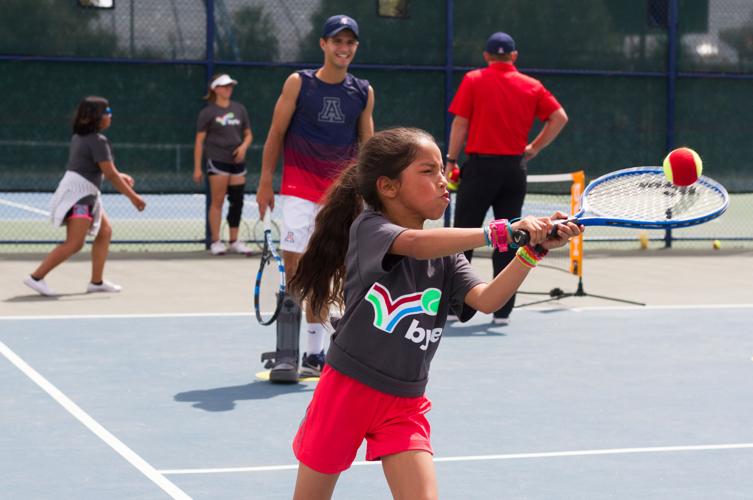

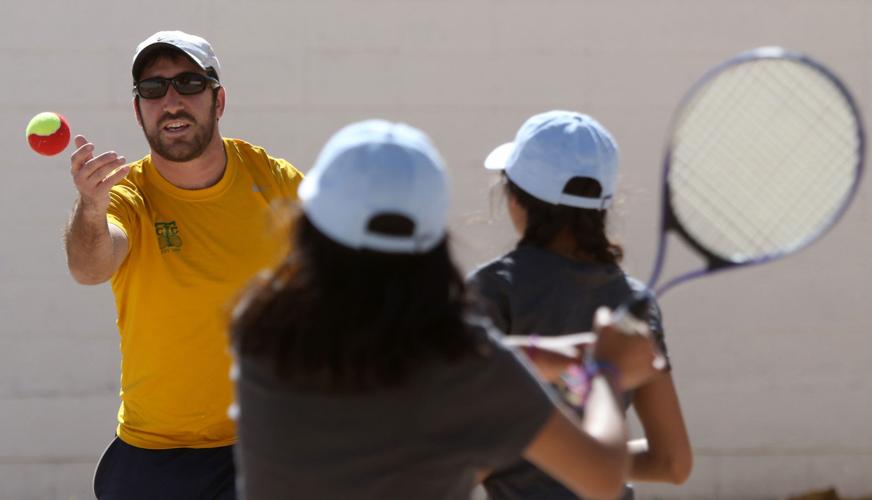
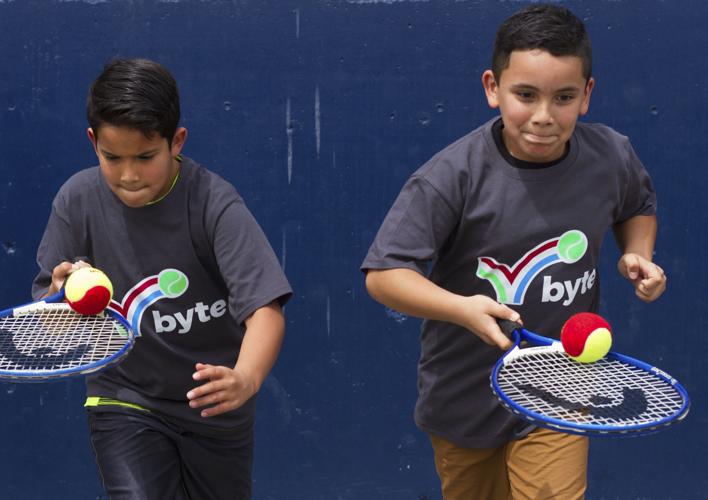

Errant tennis balls provoked squeals of laughter and cries of dismay from the two dozen children trying to keep the balls bouncing on their rackets.
The game: Start walking when Charlie Cutler yells “luz verde” (green light) and stop when he yells “luz roja” (red light). It’s not as easy as it looks, especially for kids who are new to tennis and excited to be meeting pen pals they’ve digitally corresponded with for weeks.
For many of the children, the event earlier this month at the University of Arizona tennis courts was their first time on a full-size court. For a dozen girls from a shelter in Nogales, Sonora, it was the first time they’d stepped foot in the United States, despite living only a few miles south of the border.
Since October, Cutler, 30, and his partners at the Border Youth Tennis Exchange have taught tennis to the girls who live in the Casa Hogar Madre Conchita shelter in Nogales, Sonora, and the kids who spend their afternoons at the Boys and Girls Club in Nogales, Arizona.
But the two groups of kids hadn’t met until the trip to the UA, a visit that took months of effort from the BYTE staff and the U.S. Consulate to arrange one-day passes for the girls from Sonora to cross the border.
The children swapped stories about what school is like in Arizona and Sonora and played air guitar to pop songs on their rackets. And like the balls they hit back and forth over the net, the kids bounced between English and Spanish.
“They were really funny and they sing really good,” said Kendra Wattembarger, 11.
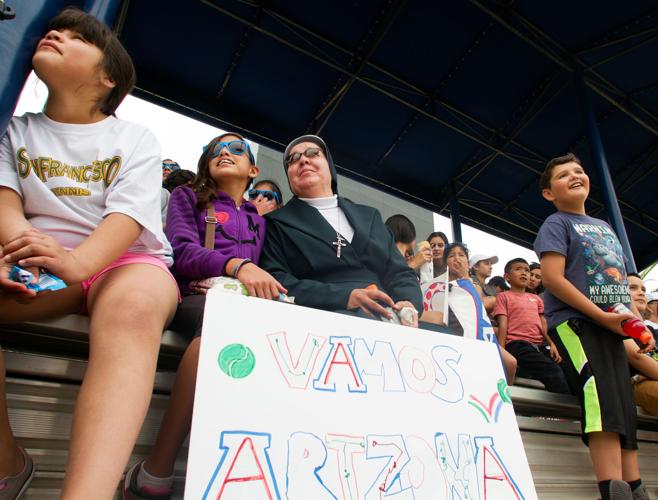
“It’s the funnest and the best that I’ve played,” said Zoe Velasco, 10, adding she also liked watching the UA tennis team play the Oregon Ducks on April 9, particularly the “Ugh!” grunted by players when they hit the ball.
The event was “muy padre” (very cool), said Alma, 14.
“Everybody was so nice and we had fun hanging out with them,” said Cinthia, 16.
Tennis on the border
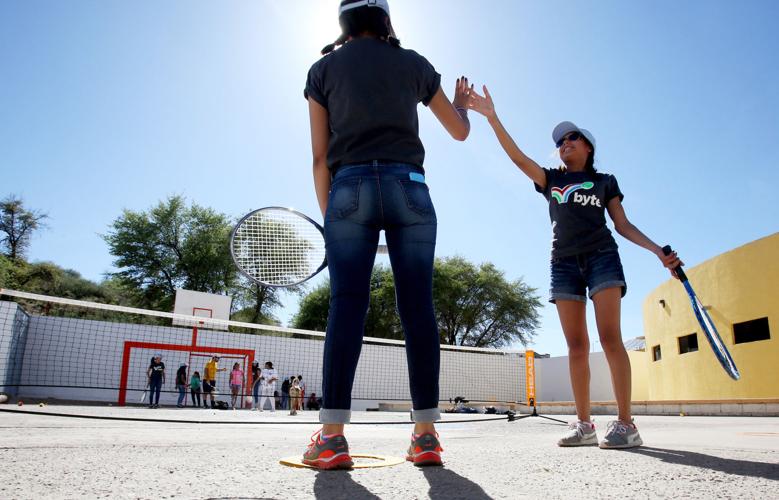
The girls were ready to hit the tennis court as soon as Cutler walked into the shelter Tuesday. They hustled across the street to a basketball court where Cutler set up a portable net and taught them how to volley with each other.
Other sports dominate the Arizona-Sonora border, but novelty is part of tennis’ attraction for Jocelyn, 13.
“It’s fun to learn new things,” she said while taking a break from the tennis lesson.
Tennis also keeps you in good physical condition, said Cinthia. “If you have the opportunity to learn tennis, don’t waste it.”
“Charlie really motivated the girls in a new discipline,” rather than the volleyball and soccer the girls play at school, said shelter administrator Maria “Bibi” Flores.
The shelter, founded in 1922 by a woman who gave food and a warm place to sleep to orphaned boys and girls, now provides a home to girls who are orphans, abandoned or taken from their homes due to mistreatment, she said.
The shelter administration asked the Star not to use the girls’ full names, citing their vulnerable situation.
At the Boys and Girls Club, director Vicki Barden chose a dozen children to participate in BYTE based on their interest and their “stick-to-it-ness.”
Previous cross-border programs focused on health and other issues, but BYTE is the first one Barden has seen that targets children.
Through BYTE, kids “see how much their lives are different and how much they’re the same,” Barden said.
“It’s a really neat program, especially in this political climate,” said Diego Garcia, a 17-year-old Nogales High School tennis player who volunteers with BYTE. Mexico suffers from a “stigma” and the program can “help to break some barriers.”
Although the girls at the shelter are new to tennis, they aren’t naive about the world. They protested the four hours it took to cross the border and urged President Trump to be “conscious of the damage he’s causing” in the border region.
Several of the older girls said they would like to be professional tennis players, but they’re setting their sights on studying criminology so they can do in real life what they see on their favorite TV show “CSI.”
Goals of program
BYTE is helmed by Cutler and his wife, Stefanie Tanenhaus, who plan to live in Rio Rico for the next two years, and modeled after the National Junior Tennis and Learning programs promoted by tennis legend Arthur Ashe.
A widely shared quote from Ashe reads: “Our idea is to use tennis as a way to gain and hold the attention of young people in the inner cities and other poor environments so that we can teach them about matters more important than tennis.”
The goal of BYTE is threefold: provide a direct service to the kids; devise a cross-border curriculum that can be used elsewhere; and change the narratives told about the border.
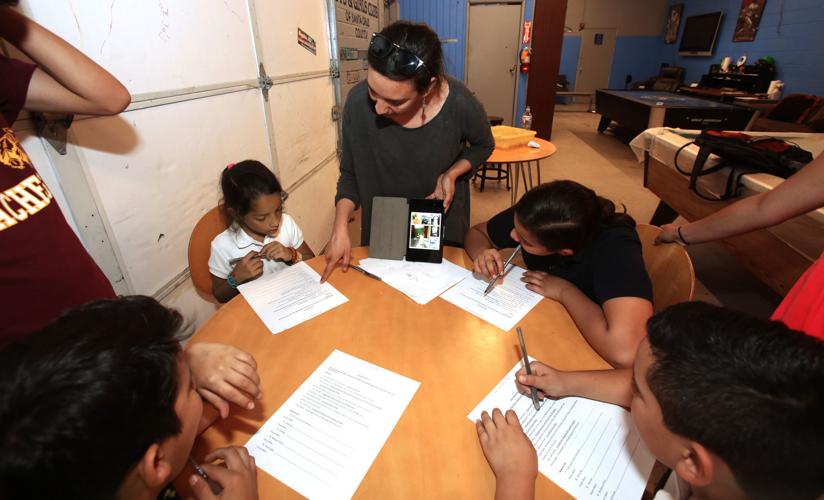
“I wanted to take these awesome girls and make them part of the narrative, too. To make sure their voices aren’t lost,” Cutler said as the younger girls at the shelter seated themselves around a table to interview one another about their UA visit.
So far, the kids are learning how to compose stories and put together photo collages on computer tablets that they exchange back and forth with the kids at the Boys and Girls Club. The goal for the 10-week program is for each of them to create a short video about their lives.
At the Boys and Girls Club on Wednesday, five kids diligently read a story they composed from photographs. And five hands shot up when BYTE academic coordinator Jacksubeli Gonzalez asked who wanted to read their story.
“Once upon a time, there was a dog named Lulu,” one story began, referencing Cutler’s dog who rambles alongside the kids on both sides of the border. In the story, Lulu escapes from a yard and the kids learn to keep the gate shut.
When Gonzalez tells them they’re done, the kids run outside and pick up tennis rackets on the makeshift court on the side of the clubhouse. They are quickly replaced at the reading table by the next group.
The program is funded partly through small grants from the U.S. Tennis Association, but the bulk of the $130,000 raised last year came from philanthropic former tennis students of Cutler in San Francisco.
Cutler is no stranger to crossing international borders. He played tennis professionally in various Latin American countries.
During tournaments, players stayed in nice hotels or with wealthy families. But Cutler ventured out into the cities and countryside, often after being eliminated from a tournament.
“The worse you do, the more time you have to travel,” he quipped.
He went on to study human rights and act as an interpreter in asylum cases. In 2015, he did an internship with the Border Community Alliance where he taught tennis in Nogales, Sonora, and later connected with the Boys and Girls Club.

