



As the mining industry continues to grow and evolve, companies are working with Tucson-area schools to fill what have been historically hard-to-fill positions.
“We’re at a pinch point. It is more critical than ever to figure out, we get students into the right pipeline,” said Tracy Bame, who leads mining company Freeport-McMoRan’s social responsibility and compliance programs in the Americas.
On Friday, there were more than 300 Arizona mining job openings advertised on Indeed.
In Arizona alone, the mining industry is projected to have a 15% growth in jobs between 2020 and 2030, or about 40 new positions annually, according to United States Department of Labor.
Jodi Banta of the University of Arizona School of Mining & Mineral Resources said “There is an acute shortage of mining professionals in Arizona and globally. Over half the current US mining workforce is projected to retire by 2030 … All 14 accredited mining engineering programs in the United States combined produce fewer than 200 graduates per year.”
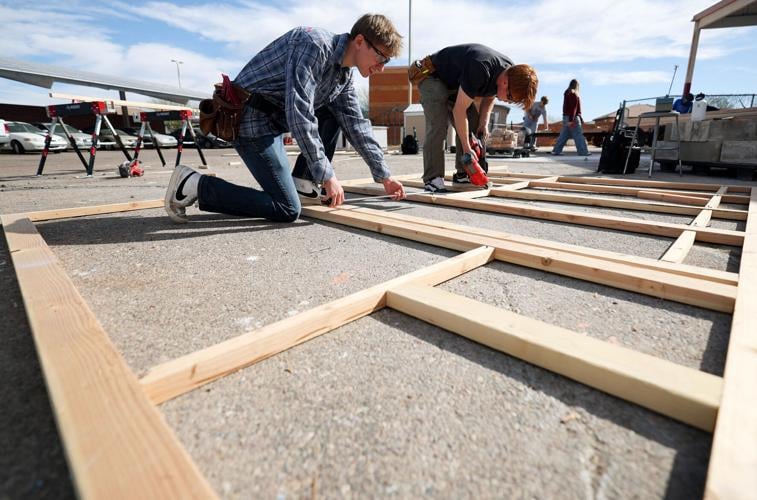
Freeport-McMoRan has a mining location south of Tucson near Sahuarita and a technology center in Tucson. The company has worked with Sahuarita Unified School District, supporting students to participate in the recent SkillsUSA Competition held at Catalina High School.
In one project, students learned about mining safety and best practices through Mining Safety and Health Administration (MSHA).
Freeport gave students a tour of their facilities, which included seeing the company’s safety measures, said Joshua Fields, who is in charge of career and technical education at SUSD.
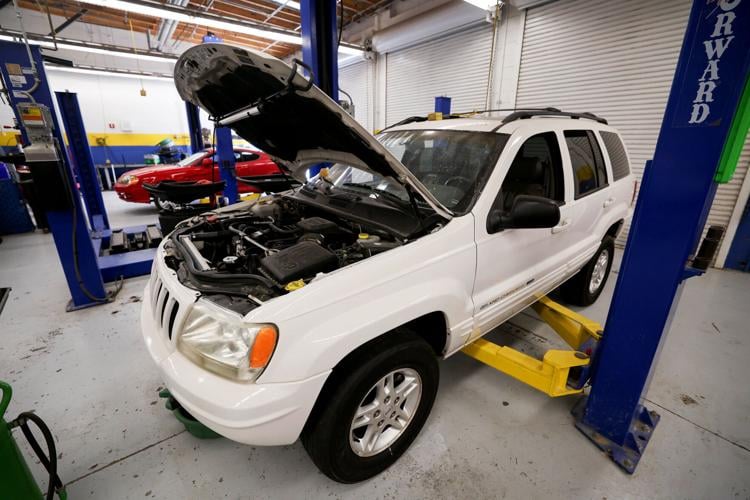
Freeport’s last big investment in education was eight years ago, when the company put in $78,000 to support a partnership between Pima JTED and SUSD for two new technical course offerings.
After a couple of years, the program was unable to maintain the class sizes necessary for the schools to justify continuing to offer the classes, Bame said.
ASARCO has approached Pima JTED about a partnership, said Pima JTED development director Merrill Kemp-Wilcox.
ASARCO (American Smelting and Refining Company) is the U.S.-based subsidiary of Grupo Mexico, specializing in copper. Its open pit Mission Complex is west of Sahuarita.
Pima JTED is eager to partner with ASARCO, and other mining companies, Kemp-Wilcox said. Pima JTED is in talks with the ASARCO to get instructors from the company to become part time instructors at the school, she said.
The problem with getting mining professionals into classrooms?
“We can pay what we can pay,” Kemp-Wilcox said. “We have industries that are is desperate for workforce in certain areas, where we could grow the program if we had more staff, but they aren’t going to work for teacher wages.”
South 32, whose Hermosa Mine near Patagonia has faced legal pushback, approached Pima JTED as well, Kemp-Wilcox said, in this case about developing an electric vehicle program.
“We should love to, but (our facilities) are at capacity. We want to find more partners to help us build the infrastructure that supports the workforce of the future, but we’re at capacity.”
Kemp-Wilcox said another company has approached Pima JTED about its 3D animation students, for creating safety materials.
Because mining is so multifaceted, it is difficult to build a specific mining pathway in K-12 schools, said Kemp-Wilcox said.
Pima Community College welding student and Rincon High School graduate Isaiah Pugh said he wishes he had more guidance to help get a better idea about what he wanted to do for a living.
“I feel like, if I would have known going into high school how much opportunity there was for welders and the mining industry, I probably would have been more focused on trying to get into an industry like that.”
Pugh is a member of the first cohort of students of the Guarantee Your Future with Freeport program, a partnership with Education Forward Arizona.
“It provides scholarships, a living stipend and job placement to students . . . with their commitment to work at a Freeport-McMoRan operation for 3 years after completion of their certificate and hiring requirements,” Bame explained.
“We placed 12 students in the program this year, and we’re hoping to place up to 25 in the second year,” she said.
Pugh said the program is what got his foot in the mining industry door.
“It was one of those things that the opportunity presented itself, and I just felt that I had to take it,” he said. “I would like to do some welding for Freeport to give back what they’ve given me. Depending on how that goes, I might stay with them.”
Other mining entities are making other efforts to reach K-12 students in the classroom.
Banta said U of A’s School of Mining and Mineral Resources team finds themselves doing K-12 school outreach often.
Dan Moreno is a former high school science teacher, now a candidate for a doctorate in science teaching and teacher education. He works with UA’s mining program in the K-12 education outreach program.
“An obstacle is some of the negative misconceptions of mining that exist from eras gone by, but the industry has done an amazing job of addressing concerns about water and air pollution and workers’ rights,” Moreno said.
The biggest obstacle, Moreno said, “is a general lack of awareness in the community and among teachers of the role of mining in society and the tremendous opportunities for careers.
“Research tells us that parents and teachers don’t talk to students about careers with which they are not familiar, so our biggest job in education outreach is raise awareness of the kinds of science and engineering opportunities available in mining.”
Arizona and Pima County are in unique positions, given the amount of mining activity in the area. Community relationships and investing in growing the next generation of employees locally vital, said Kemp-Wilcox. She pointed out that mines have a long lifespan.
“They need roads to work for the next 80 years. They need the education system to work for the next 80 years, for both producing their own workforce, but also being a community that supports that workforce.”

