


The longest government shutdown is all but over, making it a good time to ask:
What the heck was that all about, after all?
We’ve gone more than 40 days with government agencies partially operational, with serious consequences starting to pile up, and the issue this whole thing was about remains unresolved.
The subsidies that make health insurance more affordable for 22 million Americans are still on track to expire Jan. 1.
But the U.S. Senate has voted to end the shutdown, passing a series of spending bills with filibuster-proof majorities. Only House votes are left to put this thing out of its misery.
As the ordeal reaches its anticlimactic end, here are some lessons I draw.
Dems revert to form
National Democrats were riding high after last week’s election. They also were gaining ground in court, winning repeated victories requiring the Trump administration to allow states to pay out supplemental food benefits.
So it is natural that they, as many people have said “snatched defeat from the jaws of victory.”
It only took five new defections from the Democratic caucus to let go of the political leverage they had gained. The path to a win on the subsidy issue was unclear, but things were falling their way.
Arizona’s two Democratic U.S. senators, Mark Kelly and Ruben Gallego, were not among the defectors, in the end. But Kelly had been part of the group negotiating a solution and was thought by some to be one who would switch his vote in exchange for a GOP promise of a vote on extending the health-insurance subsidies.
In the end, he didn’t, but enough others did to undermine his “no” vote. How very typical of the Democrats.
Kelly, Gallego go populist
Kelly and Gallego, explaining their votes to continue the shutdown this week, put the decision in class terms.
“The only reason why we are here today and why we had this fight, is Donald Trump is pitting rich people and their tax cut against regular hardworking folks,” Kelly told MSNBC Monday. “He needed a little extra money to try to pay for it, so he kicks people off Medicaid and he jacks up their prices on their premiums.”
This was a reference back to the “One Big Beautiful Bill Act,” passed in July, which eliminated the subsidies that the shutdown was about, while also cutting taxes in a way that especially benefits the wealthy.
Gallego said in a written statement: “It is disgusting that Republicans have put the country in the place where they are pitting working people against each other — a family at a food bank versus a family that relies on the premium tax credits to get good medical care. We can and must care about both.”
Ciscomani finds fighting form
Rep. Juan Ciscomani, who has run for election on the idea he works across the aisle, found his footing as a partisan brawler during the shutdown.
His main opponents: Kelly and Gallego.
“They’re using SNAP benefits, they’re using people not getting paid, as leverage to put their policy agenda forward. This is not the way we do things,” Ciscomani said.
He also got into an online spat with Gallego over the issue of accepting salaries while the government was shut down. Ciscomani asked not to receive a check during the shutdown, and told Gallego via X “Either open the government or join the millions of families you’re making work without pay, Senator.”
Of course, there was a contradiction underlying his demands: Ciscomani says he wants to solve the same problem of health-insurance subsidies that Democrats shut down the government to resolve. He could have worked with them on reaching the solution rather than condemning their efforts.

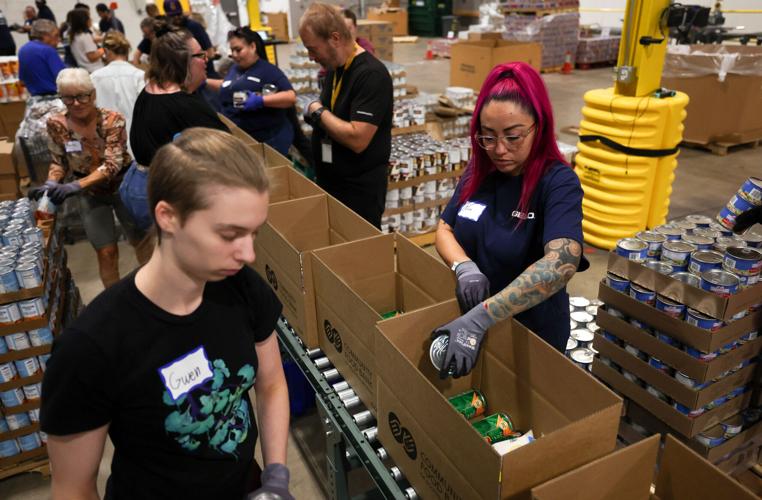
Gwen Scetlar, left, and Zalina Pedrin packed boxes of non-perishable goods late last month at Community Food Bank of Southern Arizona.
Hunger as leverage
One unpredictably ruthless move that followed the shutdown was the Trump administration using SNAP food benefits as a way to regain leverage over Democrats.
The administration claimed that it could not pay out benefits, but when the issue was aired in court, it became clear they could, as judge after judge ruled.
When states like Arizona followed an appeals court ruling by beginning to pay out SNAP benefits, the administration cited their own new appeal in saying that the states shouldn’t have.
They were set on withholding food to regain leverage in the shutdown. That’s not a level I expected them to stoop to, but in retrospect: Of course.
Grijalva, famous freshman
Most freshmen enter the U.S. House unknown and underpowered, needing to scrape their way through a few re-elections before they get anywhere.
Rep.-elect Adelita Grijalva had the advantage of her family name, of course, but that was nothing compared to the publicity that the shutdown helped give her.
House Speaker Mike Johnson may have been motivated originally to postpone Grijalva’s swearing-in by a desire to delay the signing of a discharge position on releasing the Epstein files. Grijalva’s signature is the last needed to move the release forward.
But the shutdown gave the delay an absurdly long life, making Grijalva a cause celebre in Democratic circles. She’s been interviewed on ABC, NBC, CNN and many other national news outlets — publicity that new members of Congress rarely get.
She expects Johnson to end the long delayed swearing in this week, as the shutdown approaches a closure. But Grijalva plans to vote to keep it closed until the subsidies are extended.
A lot more people will notice than would have before the nearly two-month delay.

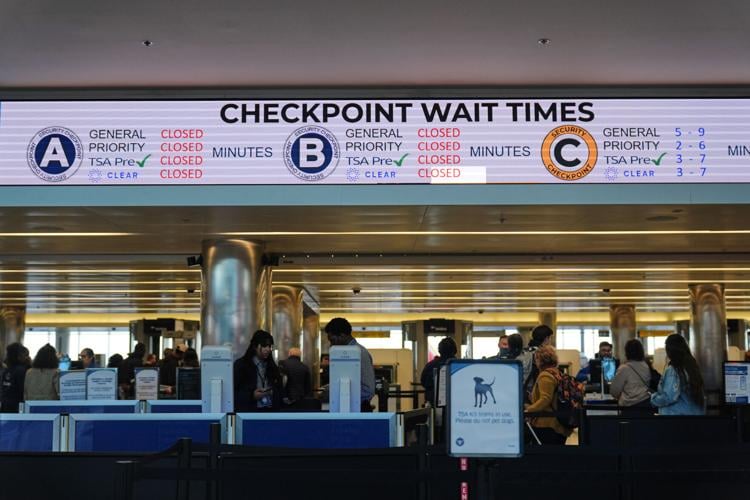
Security checkpoint closures are displayed on an information board in the terminal at Baltimore/Washington International Thurgood Marshall Airport.

