


Optimism is a rare breed in Arizona water politics, filled as it is with intractable conflicts over overstressed aquifers and a declining Colorado River.
But Arizona water chief Tom Buschatzke offered some hope for the currently stalled, seven-state Colorado River negotiations. He went so far, at a University of Arizona water conference, as to say he’s now optimistic about the negotiations’ current state.
Buschatzke, director of the Arizona Department of Water Resources, cited three reasons — including the Trump administration’s attitude.
Two of the reasons surfaced for the first time at the conference, in a talk by a federal official given just before Buschatzke’s speech Wednesday at the annual UA Water Resources Research Center conference.

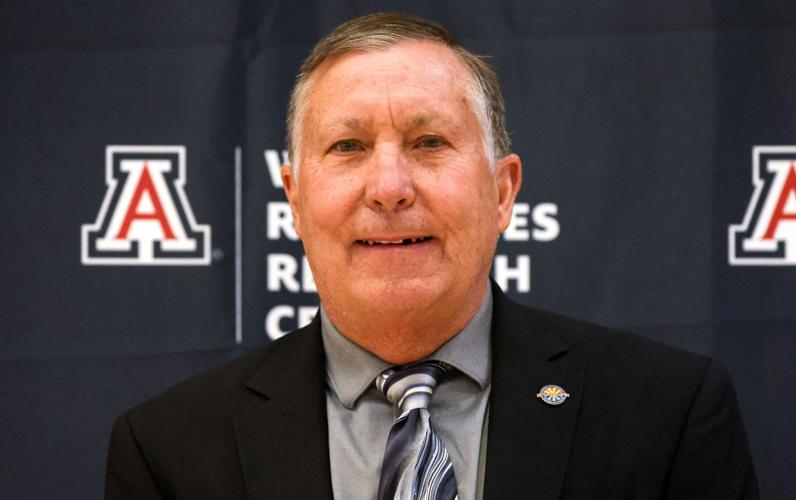
Buschatzke
At the heart of the dispute among the seven states is that the Lower Colorado River Basin states, including Arizona, have offered to give up some of their river water to reduce or end the longstanding deficit between water use and supply, whereas the Upper Basin states have not.
Arizona sits at a major legal disadvantage in the negotiations, due to a provision in a 1968 federal law giving Arizona’s $4 billion Central Arizona Project the lowest priority for receiving water during river shortages. That provision was tacked onto the law that authorized the CAP’s construction.
But state officials from Gov. Katie Hobbs on down have fought hard to preserve some water for the CAP on the grounds that to eliminate its supply would cause major economic hardship here.
Bureau of Reclamation official Carly Jerla, in her talk Wednesday at the conference in Tucson, made a commitment to consider alternatives to those it has previously analyzed. The previous alternatives have been strongly opposed by ADWR and other Arizona water officials. Reclamation runs the Colorado River system.
Ticking off his reasons for optimism, Buschatzke pointed, first, to Jerla’s comment.
The bureau’s original alternatives were released in November 2024 and analyzed in detail last January in the Biden administration’s waning days in office. Buschazke said they didn’t require any conservation efforts by the four Upper Basin states (Colorado, New Mexico, Utah and Wyoming), only the three Lower Basin states of Arizona, California and Nevada.
The Lower Basin alternative, which the Upper Basin states have repeatedly rejected and the bureau refused to analyze, called for the two basins to split all cuts 50-50 after the Lower Basin states take the first 1.5 million acre-feet of necessary cuts alone.

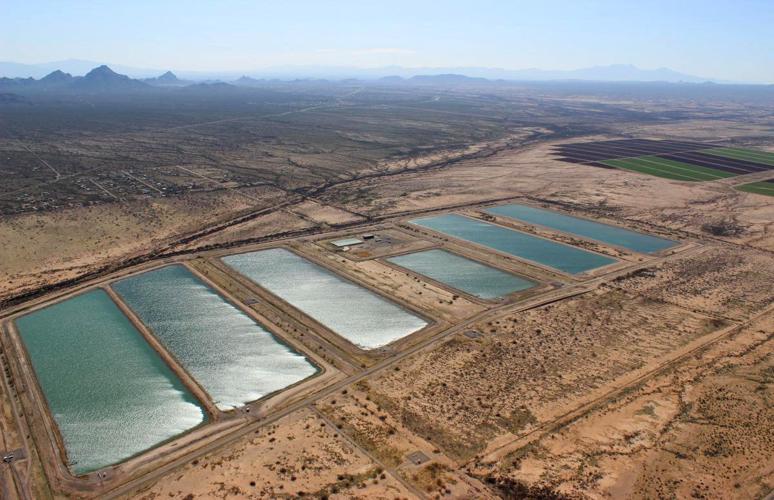
CAP water is stored in the Central Avra Valley Storage and Recovery Project near Sandario and Mile Wide roads in Avra Valley.
In Jerla’s talk, she made no commitment to formally consider the Lower Basin alternative or to discard the agency’s total package of alternatives now, as requested over the winter by the Lower Basin states.
But, said Jerla, “We are currently still working on those alternatives. We received considerable input on them. We are refining them, as appropriate, so we can go into an analysis” to use in an upcoming environmental impact statement.
A longtime bureau official, Jerla manages the agency’s ongoing effort to prepare new federal rules and guidelines to manage the river to replace current guidelines that expire in 2026. She told the conference she hopes the bureau will release a draft environmental impact statement in late 2025 and a final statement in spring or summer 2026. A final decision is due by summer or fall 2026, she said.
“Our goal has always been to develop a reasonable, broad range of alternatives, in collaboration with our partners — the states, tribes, other water users, the NGO (non-governmental organizations) community and others,” Jerla said. “We’ve not made a final determination on the precise range of alternatives. We’re working very diligently to modify the alternatives that are needed and move those into the draft.”

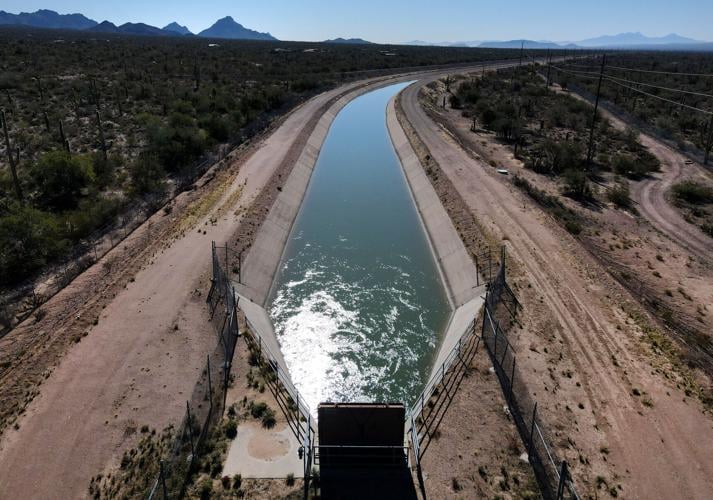
The Central Arizona Project canal near Sandario Road and Mile Wide Road northwest of Tucson carries Colorado River water to the city.
Buschatzke described Jerla’s commitment to consider more alternatives and to release a draft environmental report to be “hot off the presses” statements, not said publicly until now by the bureau.
Second, he said Trump administration officials have been significantly more involved and engaged in the negotiations over the river than their predecessors in the Biden administration. The acting assistant Interior secretary for water and science, who oversees the bureau and its water projects, has attended the last four negotiation sessions of the seven basin states, Buschatzke said.
The Biden administration’s Reclamation commissioner, Camille Touton, would occasionally meet and engage with all seven states’ representatives at once, but “in the last six months or longer, she did one-on-one meetings with the states,” Buschatzke said.
Now, although President Donald Trump hasn’t yet named a replacement for Touton for the bureau’s top post, when the states and feds do meet, all the officials meet at once in person or virtually, Buschatzke said.
“The benefit is we all hear things first hand instead of by telephone tag,” he said. “There’s more clarity.”
Finally, he said federal officials “in discussions with us,” have been more willing to accept alternative proposals that would call for a more “equitable” split of risks to the Upper and Lower Basin states.
The “risk profiles” that exist in the proposals the bureau is currently analyzing don’t require any mandatory conservation steps by the Upper Basin states, only the Lower Basin states, Buschatzke said. “What is embedded in those alternatives is not acceptable.”
One of the Upper Basin states’ prime reasons for opposing any new mandatory conservation measures is that many of the farmers in those states already face frequent shortages when the Colorado River tributaries that serve them run low during dry years.
“One reason this rationale doesn’t track with us is that when you have these hydrologic shortages, it’s not saving water for the (river) system,” Buschatzke said. “If a person lets water go by his farm because of shortages, someone else (downstream) will be taking it. It does not benefit the system.”
Another reason the Upper Basin states have resisted mandatory conservation measures is that they currently use only 4.5 million acre-feet or so of their total legal allocation of 7.5 million. The Lower Basin states typically use much more, especially if you consider the water evaporation from their many reservoirs as part of their use, although those states have trimmed their use considerably in recent years.
But at the UA water conference, a few hours before Buschatzke’s talk, Arizona’s governor said the cuts have to be split equitably among all seven states, meaning that every state needs to contribute its fair share of conservation measures.
“Their solution, where Arizona bears the brunt, is absolutely unacceptable,” Hobbs said of Upper Basin state water officials. “We need the federal government to take a leadership role, and show risks to all of the parties across the basin in order to force a collaborative outcome of compromise.
“At the end of day, equity isn’t about everyone taking the same cuts or requirements, but it means all water users in all the states have a skin in the game and are willing to come to the table with contributions,” Hobbs said.
Behind the series: The Star's longtime environmental reporter Tony Davis shares what inspired him to write the investigative series "Colorado River reckoning: Not enough water."

