


Question: What happens to a neighborhood and its residents as the neighborhood gets older?
Answer: Every suburban neighborhood has a heyday, and many, unfortunately, have fallen victim to decline. However, some have been revitalized and have become popular “new” neighborhoods.
One of the many reasons a neighborhood could decline in Arizona is the abundance of space to build new developments. Those homes, though often on the outskirts of town, may be priced for first-time homebuyers who want something new.
A neighborhood’s heyday
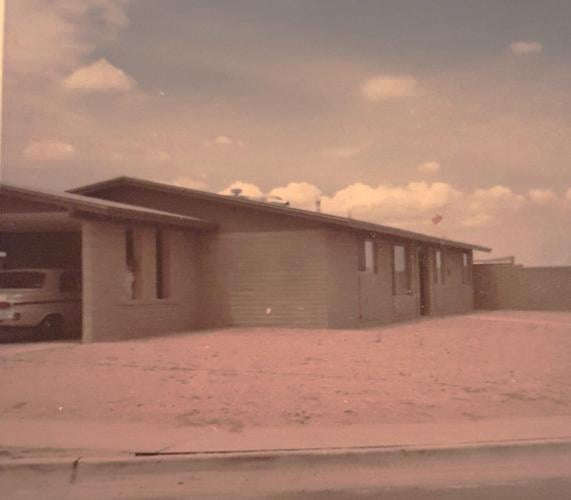
“My mom still lives in the house I grew up in,” says Susan Kregar, a Rosie on the House staff member. “My parents bought it brand new in 1974. During the 1970s and ’80s, it was full of families.”
There were kids outside on bikes, roller skating, skateboarding, parents working in the yard, neighbors chatting on the sidewalks — a bustle of activity, just like today’s new neighborhoods.

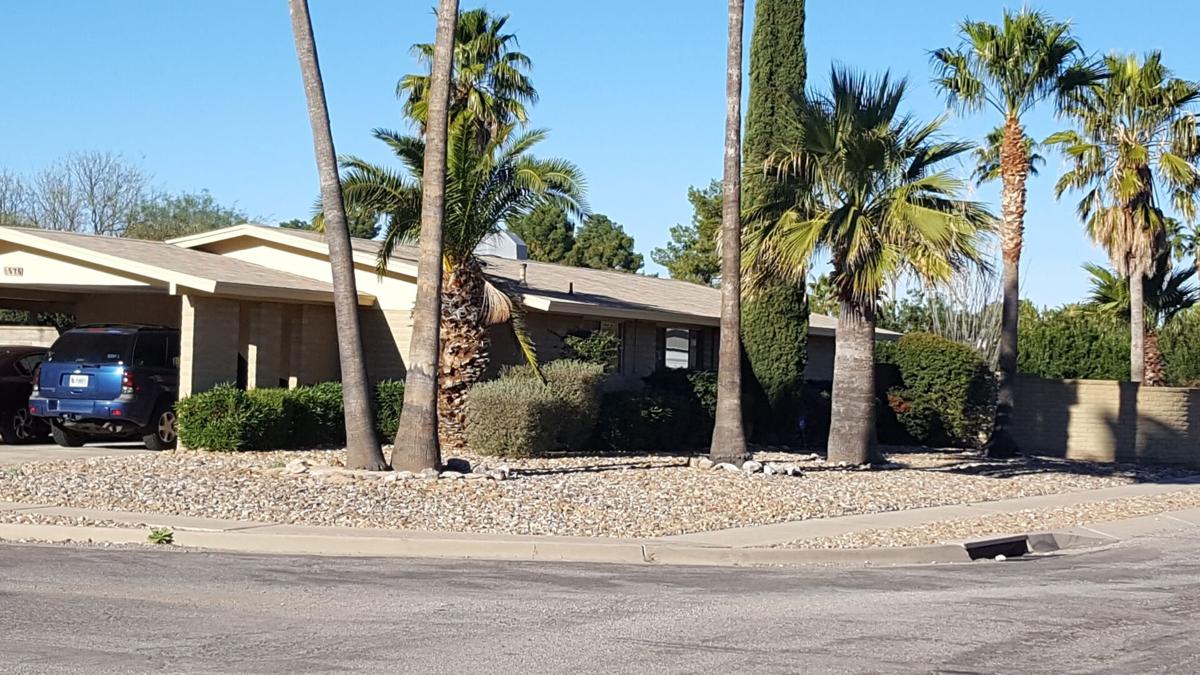
Susan Kregar’s childhood home in 1974. At the time, the neighborhood was filled with families. By the ’90s, the area’s population had changed.
In new neighborhoods, everyone knows and looks out for each other. There is a sense of security when you know your neighbors are interested in your well-being. Older people may count on a neighborhood kid to pull the weeds, a mom to bring a fresh meal, a dad to fix odds and ends, and so on. Children know whose house they can go to if they need help.
With or without an HOA, homes are generally kept in good shape, though there is always that “one” (think “The ‘Burbs”).
Schools are critical components of a neighborhood’s social infrastructure. Sometimes used for polling stations, neighborhood association meetings and children’s playgrounds, they are the heartbeat of the neighborhood.
A bygone era
“By the late ’90s, most of the kids from my neighborhood, including my sister and me, had grown up and left,” says Kregar.
Gone were the kids walking and riding their bikes to and from school and playing outside until dusk. Neighborhoods like hers from the 1960s and ’70s became quiet and sometimes forgotten.
In the early 2000s, the medians and many once-pristine yards were overgrown. Some original homeowners remained, but the neighborhoods were showing their age.
Neighborhood grocery stores and gas stations closed, making those errands less convenient.
As the number of children in neighborhoods declined, so did the enrollment in their schools, particularly the elementary schools. One by one, they closed due to lack of funding. The students were sent to schools outside their neighborhood.
According to a study by Educational Data Systems, when a neighborhood loses a school, it can hurt property values and tax revenues. Public schools are gathering places that may be sites for other social services such as parent education, job skills classes, health services or distribution points for donations.
Another change that can occur in older neighborhoods is the aging of infrastructure. Roads, bridges and buildings may become outdated and require repair or replacement.
Effect on older residents
It’s not just the structures in those neighborhoods that have declined. One of the most significant changes in older neighborhoods is the aging of the population.
Population Reference Bureau (PRB) reported, “Older people typically experience higher levels of exposure to neighborhood conditions, often having spent decades in their communities. They have more physical and mental health vulnerabilities compared with younger adults and are more likely to rely on community resources as a source of social support. As older adults become less mobile, their effective neighborhoods may shrink over time to include only the immediate areas near their homes.”
If they are no longer physically capable of pulling weeds, sweeping the driveway, or performing other maintenance tasks and are on a tight budget, finding someone to maintain the yard and help with household chores becomes a challenge when younger people are no longer their neighbors.
The economic impact
The economic status of a neighborhood in decline reaches far and wide. The neighborhood may see more renters than owners who live there, which means potential homeowners may not want to buy in an area with a lot of resident turnover.
“With interest rates rising higher than they have been in recent years, more people are turning to renting homes and living in ‘rental home’ neighborhoods,” says Realtor Vikki Gorman, a Rosie on the House certified partner with Realty Executives. “As real estate agents, we are seeing shifting in the daily lives of Americans, for many reasons such as family dynamics, or because of flexibility with technology in the workplace, people can basically live anywhere in the world.”
She says the U.S. Census Bureau recently released a study of the 15 fastest-growing large cities in the United States, and two Arizona cities made the list, Queen Creek at No. 7 and Maricopa at No. 12.
Revitalization
Fortunately, some older neighborhoods have seen a surge in popularity.
“What’s catching our eye is the trend of people opting to rent before taking the plunge into homeownership. It’s a smart move, really. It’s about getting the feel of the neighborhood, understanding the pace of life, and immersing yourself in the local tapestry,” Gorman notes. “Renters aren’t just settling in; they’re becoming the heartbeat of our local economy. They’re giving a boost to mom-and-pop businesses, schools, retail spots, grocery stores, and restaurants — a real boon for the community. So, it’s not just about bricks and mortar; it’s about embracing the vibe, exploring different corners of town, and weaving into the rich tapestry of community life.”
Those neighborhoods also tend to become the starter homes for first-time homebuyers, many with young families. This is the case in Kregar’s mom’s neighborhood. Young parents now take their little ones for a stroll, and kids ride their bikes. People are caring for their yards, and many are updating their homes.
Five years ago, new homes were built on an empty parcel in Kregar’s old neighborhood. The cost of those homes is double the value of the original homes, which is terrific news for those homeowners.
New homes on undeveloped lots, called infill, can create health, social, economic and environmental benefits for an old neighborhood.
Infill can bring many benefits to existing residents, including increased property values, easier travel, reduced pollution and economic stabilization of neighborhoods.
Infill can also help revitalize the area and boost the neighborhood’s economy by placing residents closer to jobs and community services.
Infill development can also save historic structures, including preserving them or bringing a new appreciation.
Homeowners associations can be updated to keep up with the times. Changes include color choices, updated building materials, plants and hardscape. These changes go a long way in allowing a neighborhood to graduate into more current designs and preferences.
Older and wiser
Don’t overlook an older neighborhood. They tend to be more affordable, closer to public transportation and services, and full of people who know its history. Plus, they have a lot of character, and we don’t mean the just homes themselves.


