


The population of Mexican gray wolves in Arizona and New Mexico grew again in 2025, inching closer to the threshold for the endangered species to one day be downlisted to threatened.
There were at least 319 wolves living in the wild last year, up from 286 in 2024, according to the latest estimate released on Wednesday by wildlife officials in the two states.
That marks a record 10 straight years of population growth for a species that was extinct in the U.S. until 1998, when a recovery team of nine federal, state and tribal agencies began releasing captive-bred wolves acrossMexican gray wolf population grows for 10th year eastern Arizona and western New Mexico.
To qualify for downlisting under the current U.S. Fish and Wildlife Service recovery plan, the wild population of Mexican wolves must average at least 320 over a four-year span, while maintaining benchmark levels of genetic diversity.
The change from endangered to threatened would allow wildlife officials to develop new species-specific rules for managing wolves, including less stringent protections for the animals in the wild.
That in turn would give state officials “more management authority than they currently have” and “add greater flexibility in implementing management actions intended to reduce conflict while continuing recovery of the subspecies to the point of delisting,” said the Arizona Game and Fish Department in a statement announcing the 2025 population estimate.

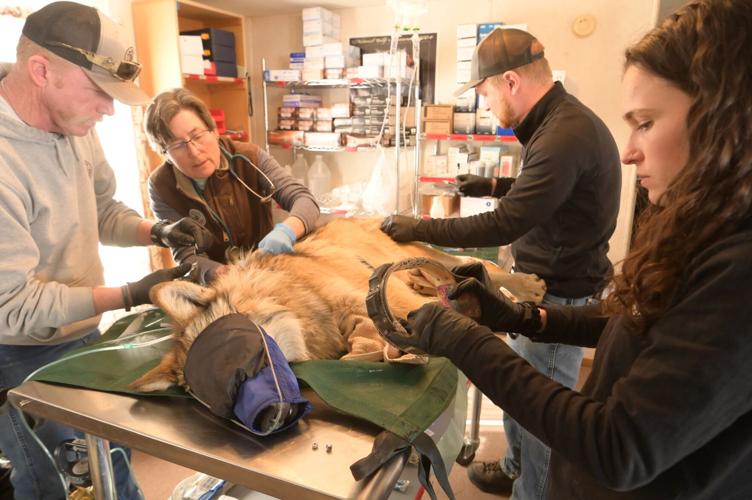
A sedated Mexican wolf undergoes a health exam before being fitted with a tracking collar and released back into the wild in early 2025.
Wolf advocates welcomed the rising numbers, but they warned that the reintroduction program still has a long way to go before the species is sufficiently abundant — and genetically healthy enough — to ensure long-term survival.
“We are heartened that the population of Mexican wolves has grown this past year, though it is still very small,” said Mary Katherine Ray, wildlife chair for the Sierra Club in New Mexico. “Importantly, it isn’t just a numbers game. The wildlife agencies must do more to improve the genetic health of the population, which is going down even as their numbers go up.”
Added Craig Miller, senior representative for the Washington, D.C.-based nonprofit Defenders of Wildlife: “Today, the threats are very real, and stripping Endangered Species Act protections now would mean dead wolves and a derailed recovery.”
Once found across the Southwest, the Mexican subspecies of gray wolf was listed as endangered in 1976, after it was all but wiped out by a century-long, government-sponsored, predator-eradication campaign.

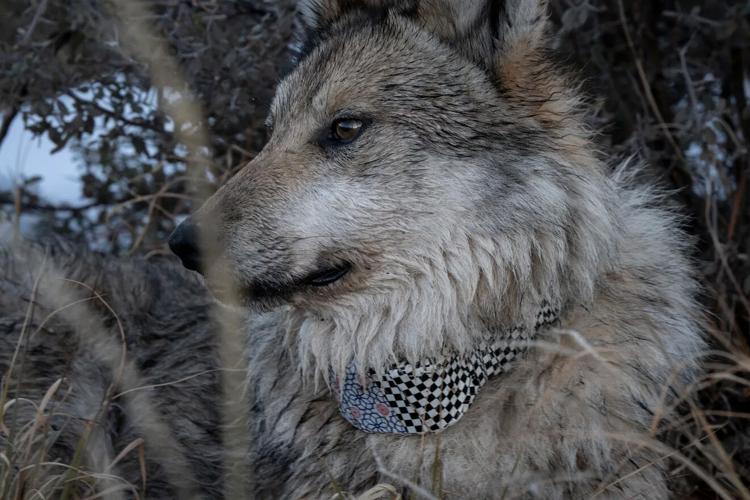
Newly announced population figures have sparked some early talk of downlisting for endangered Mexican gray wolves like this one that was released in Arizona in 2024.
Though it could be downlisted to threatened based on its U.S. population and diversity alone, the wolf won’t qualify to be delisted altogether under the current recovery plan until it reaches an eight-year average of at least 320 animals in the U.S. and 200 animals in Mexico, with a sufficient genetic mix on both sides of the border.
In addition to the wild population, there are now roughly 350 wolves living in captivity at facilities throughout the U.S. and Mexico as part of a binational breeding program.
So far, though, recovery efforts south of the border have fallen well short of expectations. In a 2025 analysis, the U.S. Fish and Wildlife Service found that its Mexican counterparts had released only about half as many wolves as planned and failed to document any animals with tracking collars still living in the wild in 2023.
The latest U.S. population estimates come amid Republican-sponsored legislation at the state and federal level aimed at ending the recovery program and stripping the Mexican wolf of protection.
One bill passed by the Arizona House of Representatives on Tuesday would allow the animals to be hunted for sport or killed in defense of property. Another still awaiting a House vote would bar state officials from participating in the reintroduction program, except the part that compensates ranchers for livestock preyed on by wolves.

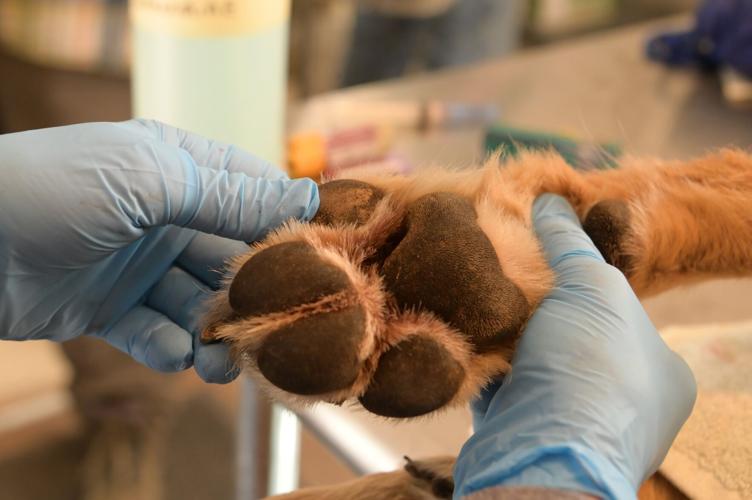
The paw of a sedated Mexican wolf is examined before the animal was released back into the wild in early 2025.
At the same time, Rep. Paul Gosar is pushing legislation in the U.S. House of Representatives that would immediately remove the Mexican wolf from the endangered species list, regardless of the status of the recovery plan. The Committee on Natural Resources passed the measure on Jan. 22, but it has yet to come to a vote of the full House.
Conservationists say such bills are part of a campaign by the livestock industry to legislate the subspecies out of existence.
“It’s inspiring that there are now hundreds of Mexican wolves in the Southwest, especially considering there were zero roaming the wild just three decades ago,” said Michael Robinson, a senior conservation advocate at the Tucson-based Center for Biological Diversity. “The big danger is that politics will strip these still-imperiled wolves of their Endangered Species Act protections before they’re truly recovered.”

