





Mexican gray wolves continued their comeback in 2024, according to the latest population estimates from state wildlife officials in Arizona and New Mexico.
The annual survey results, announced on Monday, showed at least 286 of the endangered animals living in the wild in the two states.
That’s an 11% increase over the 2023 estimate, and it marks the ninth consecutive year of population growth, the longest such streak since Mexican wolves were first reintroduced to the region in 1998.
“The results of this year’s count reflect the hard work of many people and agencies,” said Clay Crowder, assistant director of the Arizona Game and Fish Department. “Prior to the first release into the wild, many thought that a successful free-ranging wild Mexican wolf population was impossible, but as we can see from the ninth consecutive year of population growth, we are knocking on the door of recovery.”
New Mexico has the biggest share of the population at about 57%.

An endangered Mexican wolf in the wild.
Wolf advocates welcomed news of the population increase, but they warned that the animal’s future is still threatened by its limited gene pool and potential cuts to the U.S. Fish and Wildlife Service and other federal agencies involved in the recovery effort.
“We’re concerned that Mexican gray wolf recovery will be defunded by people in the Trump administration who don’t care about the non-monetary values of wild things and wild places,” said Greta Anderson, the Tucson-based deputy director of Western Watersheds Project. “We don’t always agree with how Mexican wolves are managed, but we know that without the continued federal engagement and the strong protections of the Endangered Species Act, we wouldn’t have this many lobos alive and in the wild.”
Chris Smith, wildlife program director for the Santa Fe, New Mexico-based nonprofit WildEarth Guardians, said the slow growth of the nation’s only wild Mexican wolf population is “a testament to the species’ resiliency and their place on the landscape where they have roamed for thousands of years.”
But true recovery is being stymied by “illegal killings, genetic crisis, and a lack of room to roam,” Smith said. “As the federal administration abandons the environment, wildlife, and conservation, states need to step up.”
The latest population estimates are based on data collected from November through February by the Mexican Wolf Interagency Field Team, which includes five federal agencies, along with Arizona Game and Fish, the New Mexico Department of Game and Fish, the White Mountain Apache Tribe and the Saving Animals From Extinction program.
Team members visually count the animals from the ground and in the air and track them using GPS collars, remote cameras and scat collection.
Some 112 wolves, about 39% of the estimated population, are currently wearing tracking collars.

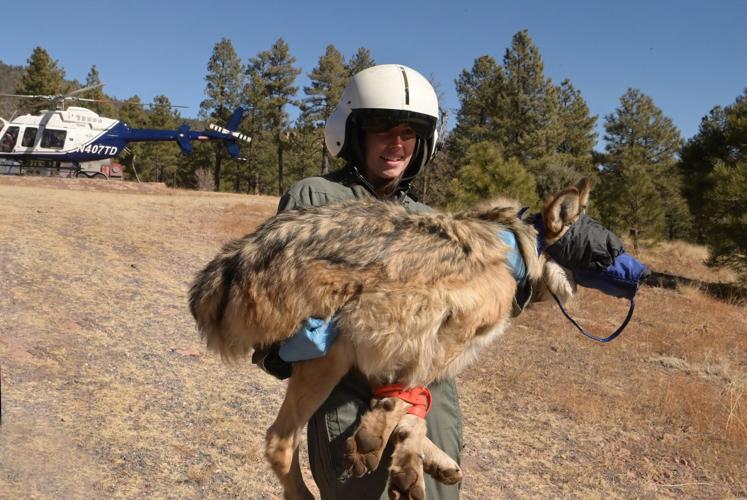
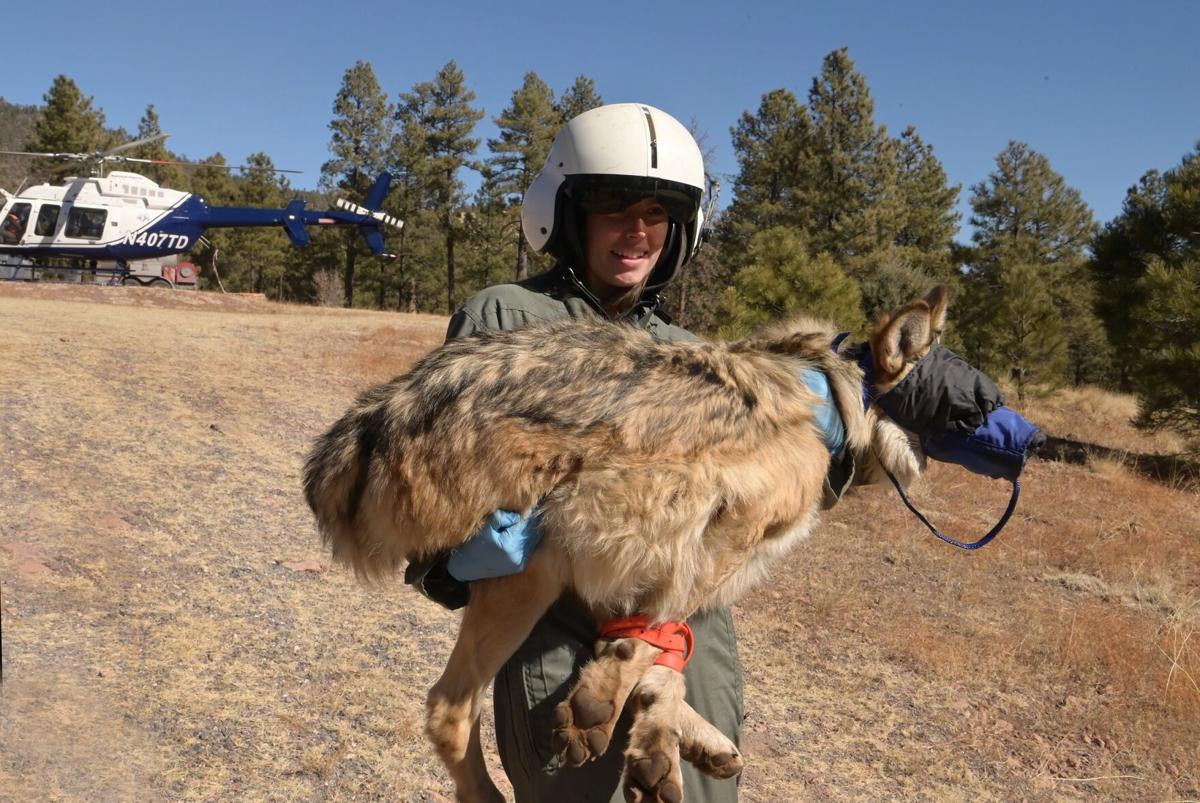
A sedated Mexican wolf undergoes a health exam before being fitted with a tracking collar and released back into the wild on Jan. 31.
The 2024 survey identified at least 60 distinct packs – 23 in Arizona and 37 in New Mexico – each containing two or more wolves with an established home range.
Wildlife officials estimate that a minimum of 164 pups were born in 2024, and 79 of them made it to the end of the year, a survival rate of 48%.
The field team also documented two more foster wolf pups that survived to adulthood, bringing the total to 20 since that effort was launched in 2016. At least 10 of those wolves have now successfully bred and produced litters in the wild.
The fostering program aims to increase the genetic diversity of the subspecies by taking selected pups born in captivity and placing them in the dens of wild wolf packs, where they are cared for and raised alongside wild-born pups of similar ages.
The Mexican wolf is a subspecies of the gray wolf that has been listed separately under the federal Endangered Species Act since 1976. It was once found across the southwestern U.S. and Mexico until government-sponsored predator-eradication practices drove it to the verge of extinction.
In addition to the wild population, approximately 350 Mexican wolves currently live in captivity in facilities throughout the U.S. and Mexico as part of a bi-national breeding program designed to save the subspecies.

The paw of a sedated Mexican wolf is examined on Jan. 31.
The new population figures come roughly two months after Mexican wolves were blamed for the deaths of eight cows on rangeland in southeastern Arizona.
A subsequent investigation by the Wildlife Services branch of the U.S. Department of Agriculture determined that only two of the cows were actually killed by wolves. “Inspections of the remaining dead animals concluded that the (deaths) were not the result of Mexican wolf depredations,” according to a Feb. 20 statement from Arizona Game and Fish.
But that hasn’t stopped ranching supporters from pinning all of the lost cattle on wolves and using the incident to call for an end to the recovery program. A pair of Facebook posts shared hundreds of times since early February include a direct appeal to President Trump: “Defund the wolf and protect American agriculture!”
Only two Mexican wolves, nicknamed Llave and Wonder by conservationists, are known to live that far south in Arizona.
State wildlife officials said they dispatched riders from the agency to haze any wolves they found away from areas occupied by livestock, while staff members helped the owner of the two dead cows file for compensation from the Arizona Livestock Loss Board.
Anderson, from the Western Watersheds Project in Tucson, has spent years reviewing federal investigations of suspected wolf attacks on cattle and challenging the scant evidence sometimes used to repay ranchers and punish predators.
She said it is “very, very unlikely” that the wolf pair in southeastern Arizona would kill cattle for sport instead of food or that the cows that weren’t attacked somehow died of fright, as the Facebook posts suggested.
“I’m afraid this kind of wild speculation is going to lead to these wolves being removed,” Anderson said.

