


Top water officials from the seven Colorado River Basin states will return to the negotiating table next week, reportedly in sequestered fashion, to try to make headway over how to cut water use.
Starting Monday, the negotiators will meet for four days in Salt Lake City, sources said, and two people familiar with the long-stalled talks say attendance will be sharply or at least unusually limited.
Federal officials are convening the seven-state meeting after a missed deadline in November in the long stalemate over how to deal with the oversubscribed, dwindling river. The U.S. Interior Department, which typically runs the negotiating sessions, has told the states it wants an agreement among them by Feb. 14. If that doesn't happen, Reclamation Commissioner Scott Cameron has said he'll consider imposing a solution on the states.
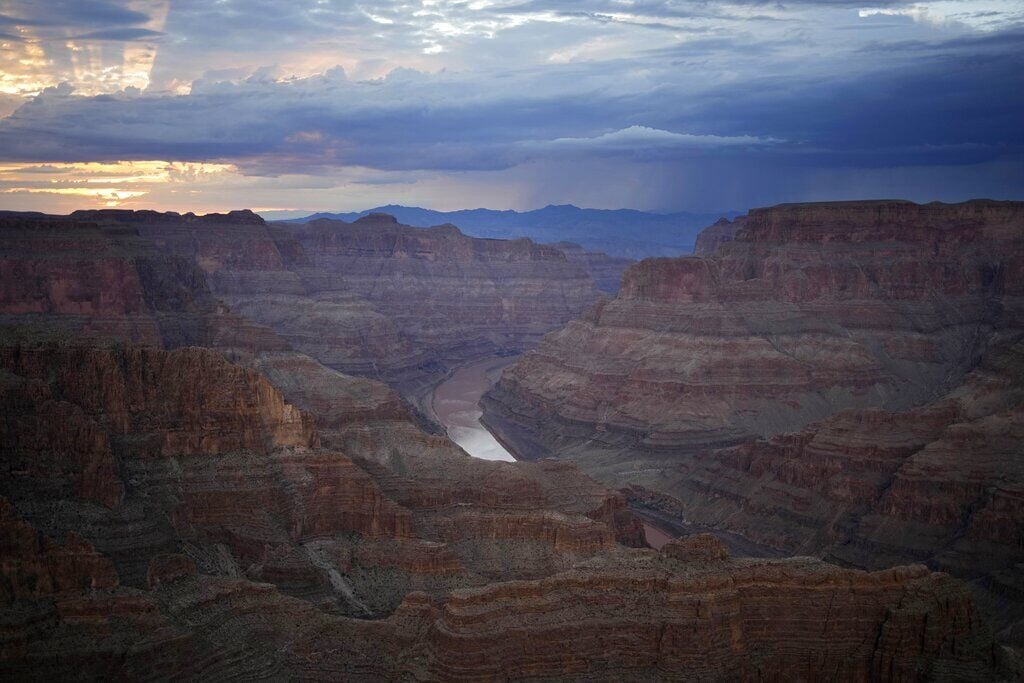
The imperiled Colorado River flows through the Grand Canyon on the Hualapai reservation in northwestern Arizona.
The new talks will come slightly less than a month since the basin state representatives and more than 1,700 other participants adjourned the annual Colorado River Water Users Association conference in Las Vegas with no agreement in sight.
One source said attendance next week will be limited to only the lead negotiators from the seven states, including Arizona Department of Water Resources Director Tom Buschatzke, who also serves as the state's Colorado River commissioner.
Often at these meetings, the state representatives are accompanied by staffers from their departments, attorneys for various agencies and other experts. They are there to offer advice and important background to the main negotiators.
But some officials and outside observers have expressed concern the additional participants can unduly influence negotiators by raising either legal or political concerns about whatever kind of deal they're discussing in the private sessions.
Other outsiders, including some environmental activists and academics, say, however, that keeping the meetings closed limits transparency over a critically important issue. The meetings themselves have long been closed to the public, on the grounds that allows negotiators to discuss their positions more candidly.
The purpose of sequestering the basin state representatives now would be "just to promote real concentration in the room," one source familiar with the talks said. Both he and the other source requested anonymity to preserve their access to the negotiators, who have generally declined to discuss specifics of the talks.
"The hope is that maybe without some of the others there, there will be less animus, and it will calm down some of the partisanship," the first source said.
The other source said attendance at the meeting would indeed be significantly reduced but that would amount to allowing maybe 15 people in the sessions instead of the usual 30.
Competing interests
The negotiating sessions, lasting more than two years, have deadlocked largely over the issue of whether just the Lower Basin states or both basins' states will have to take cuts.
The Lower Basin states of Arizona, California and Nevada have agreed to shoulder the first round of cuts alone. But once reservoir levels drop below a certain point, they have said they want the Upper Basin states to share the forthcoming cuts equally. The Upper Basin states are Colorado, New Mexico, Utah and Wyoming.
The Upper Basin states have refused to accept any mandatory cuts in their water use although they've offered to consider some voluntary reductions. They say the Lower Basin states are overusing their legal share of the river water while the Upper basin states — which have far fewer people — have used less than their share.
The Lower Basin states have said it's not fair for them to have to swallow all the cuts alone and that they won't accept an agreement that doesn't require mandatory cutbacks in both basins.
It has long been a matter of negotiation over how many people can sit in the room during the sessions, a third source familiar with the negotiations said.
"But whether seven or 15 people can emerge with a 'deal" that they will stick to is a very open question," said that source who also requested anonymity.
A spokesman for Buschatzke said the director won't comment on the specifics of meeting dates or locations. He did tell KJZZ radio in Phoenix last week, however, that he has seen some "movement" in the negotiations, particularly over the question of how much water should be released at what times of the year from Lake Powell to Lake Mead.
The states need to reach an agreement over a plan to operate the river and its reservoirs by the end of 2026. That's when the current plan, approved back in 2007, expires.
"I think there is a chance we can get to a deal by Feb. 14, but a deal next week is unlikely," an Arizona official said, asking that their name not be used. "But we need to see movement and compromise from our partners" in the Upper Basin.
The states need to cut their water use because both in 2024 and in 2025 the basin's cities, farms and industries took about 3.6 million acre-feet more from the Colorado than came into the river naturally from runoff.
That amount of water is more than both the Central Arizona Project and Southern California's Metropolitan Water District use, combined, in a single year. The CAP delivers water to the Tucson and Phoenix areas, while Metropolitan serves water to six Southern California counties.

