


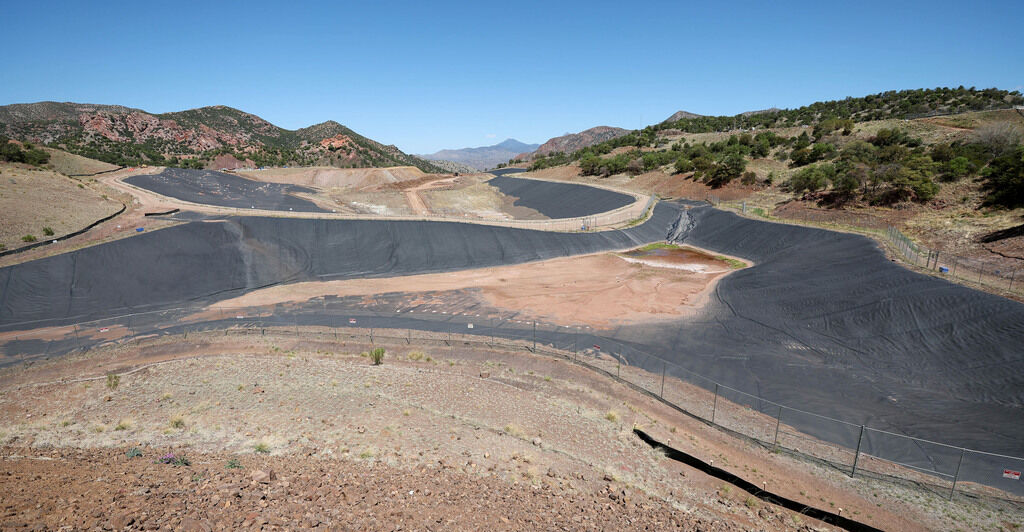

Arizona’s environmental agency must rewrite five sections of an air quality permit for the Hermosa Mine near Patagonia after the Environmental Protection Agency ruled many provisions were unclear and in some areas lacked adequate monitoring.
EPA’s ruling late last week won’t stop construction of the mine, which began last fall. When operational, the $2.16 billion mine is slated to produce zinc, manganese, lead and silver in a large underground facility in the Patagonia Mountains, about 75 miles southeast of Tucson.
In fact, EPA denied opponents' request in a petition and subsequent lawsuit to overturn 15 other items in the state air quality permit.
But it will force mining company South32 to have better monitoring of its air emissions than what’s currently required by the permit issued in August 2024 by the state, said activist Carolyn Schaefer of Patagonia. That decision was a “big win,” said Schaefer, who is with the Patagonia Area Resource Alliance, which has opposed the Hermosa project for years.
Monitoring is needed to insure they comply with emission limits imposed by the permit, said Jeremy Nichols of the Tucson-based Center for Biological Diversity, one of several opposition groups that had petitioned EPA to overturn the permit.
“It’s put in place to insure peoples’ health and air quality of the region. If there’s no monitoring, no way to verify it, it’s like having a speed limit sign with no radar or speedometer,” Nichols said.
The Arizona Department of Environmental Quality “is reviewing EPA’s order and intends to respond to the order and revise the permit” within the 90-day limit set by the federal Clean Air Act, said Shea Sorenson, an ADEQ spokeswoman.
Carrying out the permit revisions doesn’t delay construction because petitions such as the one opponents filedunder that act “do not touch upon construction requirements,” Sorenson said.
Pat Risner, president of the mine's proposed developer South32, said that overall, "the EPA found that the ADEQ permit for the Hermosa Project was protective of public health and the environment and contained emission limits meeting Clean Air Act requirements.
"They did, however, send a few conditions back to ADEQ to provide further demonstration of compliance to allow the public to better understand compliance status. The five of the 20 petition points that were not upheld by EPA are non-substantive requests for additional monitoring and record-keeping.
"This in no way changes or impacts what the EPA upheld – that the Hermosa project meets all substantiative Clean Air Act requirements - which were 15 of the 20 petition review points. Current site development activities remain unchanged and without impact," Risner said.
EPA agreed with the mine opponents on five claims they made alleging that monitoring was inadequate and that other provisions in the permit were unclear or unenforceable. Opponents had formed a coalition, including the Center for Biological Diversity and the Sierra Club along with the Patagonia-based group.
ADEQ granted the permit last August. Opponents first petitioned EPA to review their objections to the permit, then filed suit in January after EPA didn’t respond to the petition.
Specifically, EPA ruled ADEQ’s permit:
- Lacked adequate monitoring of how much mineral content was produced by various parts of the mine to insure the production met limits prescribed by the permit.
- Doesn’t make it clear how some emission limits are calculated and leaves it unclear as to their enforceability.
- Allows the mine to in some cases use a water-based scrubber to control air emissions, but doesn’t make it clear which operating units of the mine will need wet scrubbers.
- Lacked adequate monitoring to insure that controls the mining company agreed to, to control particulate pollution, are working. The controls involve the use of water to control dust pollution and the building of partial enclosures around various structures to limit how much pollution escapes from them.
“Thankfully the Clean Air Act is still working and holding the mining industry accountable for protecting air quality and communities,” said Nichols, a senior advocate at the Center for Biological Diversity.
if ADEQ doesn’t revise the permit in 90 days, EPA can intervene and take over the permit review process entirely. But “ADEQ plans to work closely with EPA Region 9 to ensure an adequate response is provided for each claim that was granted, which could include additional monitoring requirements in the permit as we deem necessary in collaboration with the EPA," ADEQ's Sorenson said.
South32's Betancourt added, "We look forward to working with ADEQ to achieve this additional record-keeping and transparency ask promptly so the community rests assured that we fully comply with all Clean Air Act requirements while operating a next generation mine that will produce two federally designated critical minerals necessary for secure domestic supply chains."

