




Cut Colorado River water use now, water researchers and other experts urge in a new report, to avoid putting the river system in a very difficult to potentially catastrophic position in a year.
The river and its reservoirs’ dwindling reserves that have kept supplying Arizona and the six other river basin states could soon be exhausted unless major cuts in use are made now, they said. The cuts should be made by users in both the river's Upper and Lower Basins, the report said.
One of the six authors, former federal water official Anne Castle, termed it a “wake up call.”
If the upcoming year’s weather is as dry as this year’s, and no action is taken to cut water use soon, Lake Powell is in danger of falling by next August to the minimum level at which the Bureau of Reclamation wants to keep it.
Worse, it could fall by November 2026 to the level at which Glen Canyon Dam’s turbines can’t generate electricity. Then, river water would have to be funneled through steel outlet tubes instead of the turbines. Officials have said they don’t want to continuously run water through those tubes because they’re not designed to carry a lot of water and could suffer serious damage known as cavitation as a result.
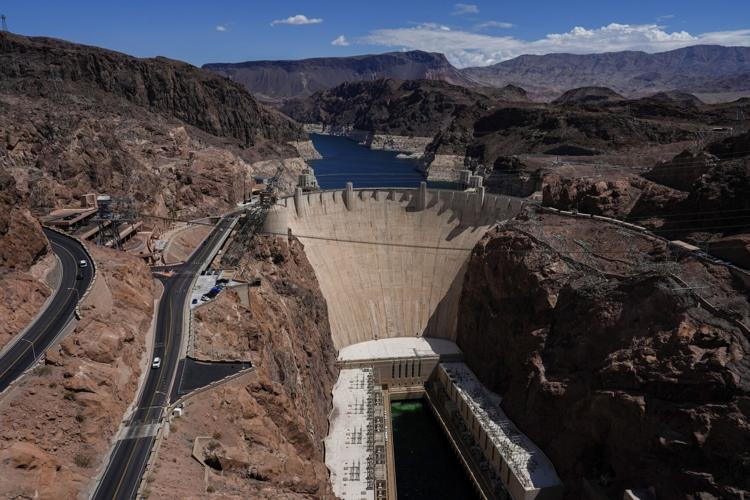
Lake Mead could also fall by spring 2027 to levels below 1,035 feet, at which 12 of Hoover Dam’s 17 turbines can no longer generate power, the bureau’s worst-case forecast says. The bureau has pledged to keep Mead above 1,000 feet, compared to the middle 1,050s today.
“We are not predicting in spring 2027, civilization will fall to its knees. We are saying the prudent way to manage the system now is to implement cuts now,” said Jack Schmidt, a longtime river researcher at Utah State University. “If we wait to go through another winter and it’s the same as last year, it’s going to be really complicated next summer.
“The cuts to be implemented (then) would be really, really painful. It would be much better to realize we are in a crisis now and deal with it now,” Schmidt told the Star Tuesday.
The researchers say they’re trying to protect what Castle calls a “water savings account.” That’s the amount of water available in Powell and Mead beyond the minimum required to meet the bureau’s condition that the reservoirs stay above 3,500 feet at Powell and 1,000 feet at Mead.
“I think the message for the general public is, it’s just like your checking account,” said Castle, who most recently served until early this year as a Biden administration appointee to the four-state Upper Colorado River Commission. “You can spend more than you’re bringing in on a monthly basis if you have a savings account.
“But if that savings account is getting close to zero, you don’t have flexibility anymore to outspend your income. We’re pointing out that the water savings account is getting closer to zero.”
The water the researchers are trying to protect by recommending curbs in use now is called “realistically accessible storage.”
That’s water sitting in the reservoirs above the levels that the reclamation agency is trying to protect. While those levels are well above “dead pool” levels of 3,370 and 895 feet, respectively, at which no water can be released, using “accessible storage” figures as a guidepost “gives us a lot less storage to work with than we are thinking about,” Schmidt said.
If next winter is dry, “it is likely that less than 4 million acre-feet will be available above these elevations in Lake Powell and Lake Mead in late summer 2026,” he said. That amount to just 9% of the total storage capacity of the reservoirs in the late ‘90s when they were full or nearly full.
“As everything gets lower and lower, then suddenly you begin to get complicated discussions about whether you want to lower both reservoirs together or whether you want to preferentially store water in one reservoir or the other,” he said.
The report comes as the seven basin states’ negotiators are deadlocked over who will take water use cuts under a new, long-term set of guidelines to govern how the river should be managed. The Lower Basin states of Arizona, California and Nevada want the two basins to share equally in cuts made once river flows fall below a certain threshold. The Upper Basin states of Colorado, New Mexico, Utah and Wyoming won’t commit to mandatory cuts, partly on the grounds that their farmers in particular are suffering from shortfalls in river flows already occurring.
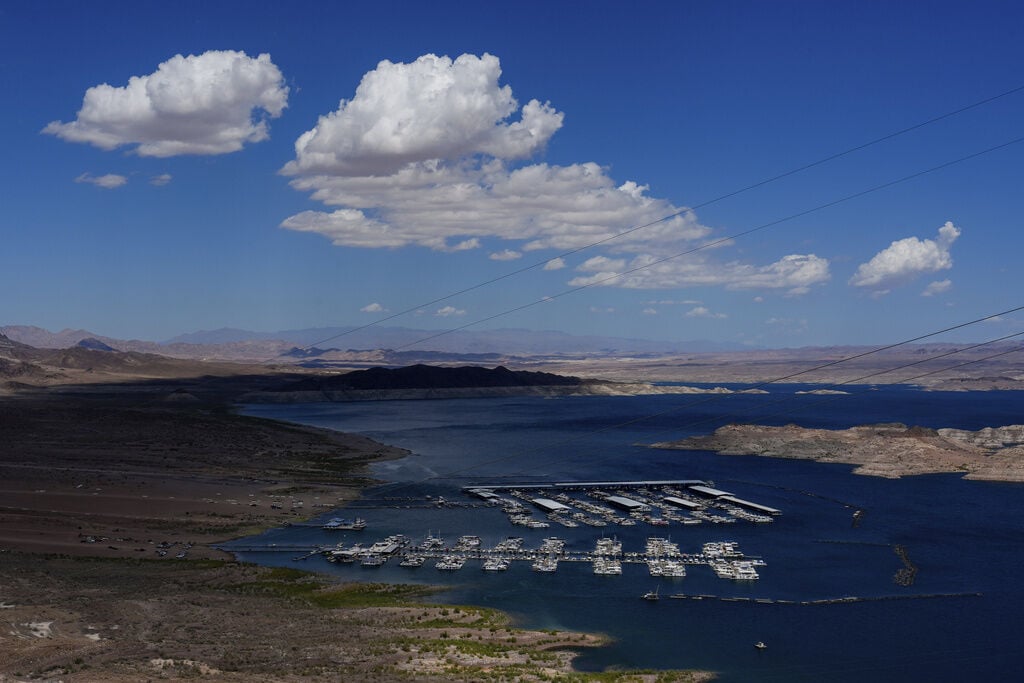
Lake Mead at Hoover Dam. Lake Mead could fall by spring 2027 to levels below 1,035 feet, at which 12 of Hoover Dam's 17 turbines could no longer generate power, the Bureau of Reclamation's worst-case forecast says.
“We’ve been so focused on what the next set of operating guidelines are going to look like, it’s been difficult to focus on the short term,” said Castle, who was an assistant Interior secretary for water and science under President Barack Obama.
“If next year is like this year, we’re not predicting that’s going to happen but it could, we’re going to deplete half of that already small amount of reserves we have in storage,” said Castle, now affiliated with the University of Colorado. “We would be close to the brink of not having a storage buffer in our largest reservoirs. That’s not a good situation to be in.”
So far, water officials in Arizona and Colorado and the U.S. Bureau of Reclamation, contacted this week by the Star, show no interest in making immediate cuts.
The state water officials restated their positions made during the negotiations about how water use cuts should be allocated.
The bureau said in a statement that it’s closely monitoring the river’s current conditions. “This is a moment that demands urgency, collaboration and transparency,” it said. “We remain committed to working with basin states, tribes, Mexico and stakeholders to ensure a sustainable and resilient future for the Colorado River system.”
Asked afterward if bureau officials agree immediate cuts should be made, a bureau spokesperson said, “We have nothing to add at this time.”
In a statement, the Arizona Department of Water Resources said while the agency disagrees with some of the researchers’ assumptions underlying their conclusions, it agrees “with another year of hydrologic conditions comparable to this year, additional storage losses of the magnitude described are plausible.
“More importantly, ADWR agrees with the authors’ fundamental point that enforceable actions in both Basins will be crucial to any solution in addressing conditions on the Colorado River,” the state agency said.
The forecasts for water levels in Powell and Mead are low enough to meet conditions laid out in 2023 decisions by Reclamation calling for a “consultation” among the seven states and the bureau, ADWR spokesman Doug MacEachern said.

Hoover Dam on the Colorado River, near Boulder City, Nevada. The river and its reservoirs' dwindling reserves — which supply Arizona and six other states — could soon be exhausted unless major cuts in water use are made now, researchers say in a new report.
But before cutting water releases to the Lower Basin states, the feds should first release water from reservoirs upstream of Powell such as Flaming Gorge in northern Utah to Powell, he said.
The new report agreed that’s a likely action, but cautioned, “It must be kept in mind that a release from any of the upstream reservoirs is only a one-time solution. Such releases do not solve the fundamental problem of the gap between supply and use/losses. The water provided from upstream reservoirs will not be available again unless wet years return and those reservoirs are refilled, and that refilling will reduce inflows to Lake Powell.”
Colorado’s Colorado River Commissioner Becky Mitchell said in a statement, “The report underscores what we already know: We cannot continue consuming more water than nature provides.”
The water uses of Colorado and the other Upper Basin states are already directly limited by their water rights, “based on physically and legally available supplies,” she said.
The Upper Basin states’ water use for the past 20 years has been well below what the 1922 Colorado River Compact awarded them, Mitchell said.
“In contrast, the Lower Basin’s water deliveries consistently exceed supply and continue to be the largest driver of declining elevations at Lake Powell and Lake Mead,” she said.
Upper Basin states have done voluntary conservation efforts, invested millions of dollars in water efficiency programs and partnered in “drought response operations” to protect Lake Powell elevations, she said.
The emergency cuts the new water report calls for should come strictly from releases from Lake Mead, Mitchell added. That's because the Upper Basin states have already experienced lots of cuts with no compensation -- unlike many of the cuts already made in the Lower Basin -- because it can't draw on big reservoirs like Powell and Mead to get water.
"Two key examples (of Upper Basin cuts) include the Dolores (irrigation) project, which is experiencing a 70% cut, only receiving a 30% supply; and the Ute Mountain Ute Farm and Ranch Enterprise, which is cut down to a 50% supply. There are countless other similar examples of water users in Colorado and across the Upper Division States having to adapt in real time to deep cuts with no compensation," Mitchell said.
The new report comes as the river’s perennial deficit between water supply and uses continues.
In water year 2024-25, about 8.5 million acre-feet of water flowed through Lee’s Ferry on the river just below Lake Powell, and another 900,000 acre-feet flowed into the river downstream of that point. The flow at Lee’s Ferry, the point at which most officials monitor river flows, was down from an annual average of 12.3 million acre-feet over the 21st century.
While river water use has also declined significantly in recent years, the new report estimates a 3.6 million acre-foot supply-demand gap in this past water year and that the 2025-26 water year could see a similar gap.
The researchers said some early signs aren’t good for the upcoming winter season’s weather.
- A monsoon season of well below average precipitation hit not only Arizona, but western Colorado, Utah and Wyoming, said Eric Kuhn, a Colorado-based author and a contributor to the new report.
- The National Oceanic and Atmospheric Administration predicts another three months of above-normal temperatures and below-normal precipitation in the West. If that happens, “we’ll have very low soil moisture conditions,” causing winter snowpack to melt into the ground rather than run off into the river, Kuhn said.
- NOAA predicts a 71% chance of a La Niña atmospheric condition developing between October and December 2025 and a 54% chance from January through March 2026. A La Niña condition often brings dry conditions to this region.
The report’s other authors are John Fleck, an author and writer in residence for the University of New Mexico’s Utton Transboundary Resources Center, researcher Kathryn Sorensen of Arizona State University’s Kyl Center for Water Policy and Katherine Tara, an attorney for UNM’s Utton Center.

