


PHOENIX — Gov. Katie Hobbs on Wednesday signed legislation rescinding the state holiday honoring civil rights leader César Chávez — but not until the day after this year's event had already occurred.
The decision by the governor is no surprise.
She had said on Monday, after the bill had gained final legislative approval, that was her intent.
The content of the measure had been public for a week. And the final version of the measure was sent to her that same day.
But Hobbs sidestepped questions Wednesday about what took her so long — particularly as the delay meant that, legally speaking, Tuesday — the anniversary of his birth — still officially remained Dr. César Estrada Chávez Day.
"I'm not going to get into logistics of when I took bill action,'' the governor said. "But I'm proud to have signed the bill.''

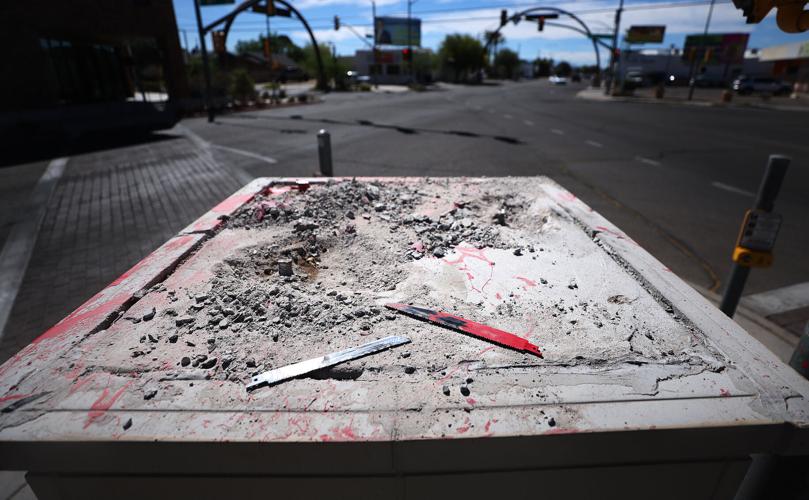
A bronze statue of the late labor and civil rights leader César Chávez was removed last week from the Five Points intersection south of downtown Tucson. On Wednesday, Gov. Katie Hobbs signed legislation that dropped César Chávez Day from state law.
What the additional time did give the Democratic governor a chance to do is come up with a statement to address concerns by several lawmakers from her own party who voted against the repeal.
All said they were in favor of stripping the honor for Chávez in the wake of reports that he had molested two girls in the 1970s. And even Dolores Huerta, who co-founded the United Farmworkers Union, revealed that she, too, had been forced to have sex twice with Chavez, both times resulting in pregnancies.
But they objected to the fact that the Republicans who control both the House and Senate refused to consider their proposals to rename the annual holiday to honor farmworkers and the movement.

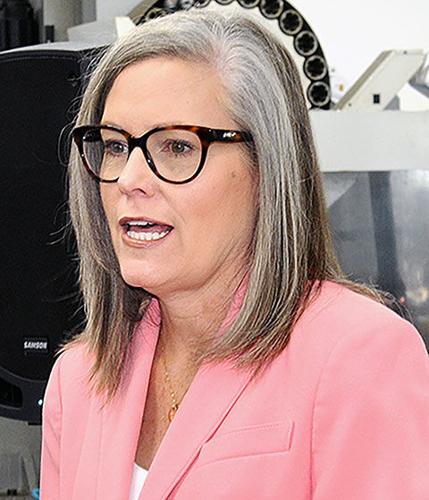
Gov. Katie Hobbs
Hobbs, in the prepared statement she released with the announcement of the bill signing, said she is "grateful to our hardworking farmworkers'' and "working with community leaders to find meaningful ways to honor and celebrate our farmworker community and their continued contributions to the state of Arizona.''
"Their resilience is evident in the lettuce fields of Yuma and the orange-picking farms of Mesa,'' the governor wrote.
Hobbs' decision to sign comes despite the fact that Sen. Sally Ann Gonzales, who voted against repeal, sent a letter to the governor asking for a veto.
In her Monday letter, the Tucson Democrat objected to the fact that the legislation was being pushed as an "emergency.''
That is a provision in the Arizona Constitution that allows a measure, approved by a two-thirds vote, to take effect immediately on the governor's signature. Otherwise, all new laws are effective 90 days after the end of the session.
What makes that important, Gonzales said, is that tacking an emergency clause onto a bill strips Arizonans of their constitutional power to gather signatures to keep a law from going into effect until it can go on the next ballot and give voters the final say.

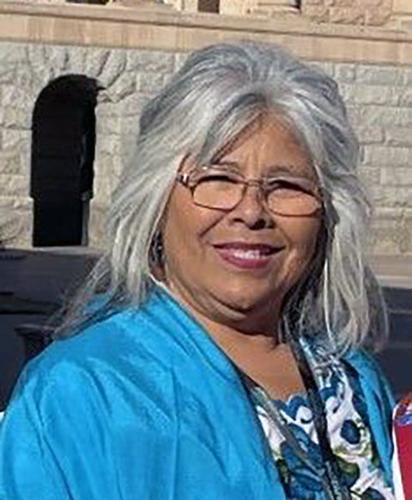
Gonzales
"It denies the people of Arizona their constitutionally protected right to direct democracy via referendum power reserved to the people,'' the senator wrote.
Beyond that, Gonzales said that there was a legal issue: The legislation failed to say exactly what was the "emergency'' that required the expedited action. And that, she contends, makes the use of the expedited process here illegal.
There also is the fact that, despite the claim of an "emergency,'' that Hobbs didn't sign it until the day after this year's Chavez holiday. So the first time it will have an effect is when there is no Chavez holiday next March 31.
Gonzales said she is looking to consult with an attorney to decide whether to sue.
While the senator said she never heard directly from Hobbs about her veto request, she did get a call from the governor's staff asking for her thoughts. Gonzales said she repeated to them what she said in the letter about why Hobbs should veto the bill.
What she did get, the senator said, was gubernatorial staffers — she would not name them — who said Hobbs was considering an alternative of sorts: the governor could issue some sort of order or proclamation honoring Huerta on April 10, which is her birthday, or an order proclaiming Aug. 22 as a day to honor the United Farmworkers Union, the day it was officially formed in 1966.
Gonzales told Capitol Media Services she told them those were not acceptable options.
"An executive order is only going to stay for (as long as) she's in office,'' the senator said, with Hobbs up for reelection in November.
Gonzales said that a veto could have pushed lawmakers who want repeal to consider and approve the bid by Democrats to rename the existing holiday or some other day for the farmworkers — and have it be a part of state law that is not dependent on the whims of whoever is governor.
Now, she said, lawmakers who support such a move have to start from scratch. And Gonzales was not optimistic about that.
"It took two decades to get a law in place,'' Gonzales said, with Arizona legislators finally acting in 2000.
Gubernatorial press aide Christian Slater declined to say what staffers told Gonzales.
"I'm not going to discuss the contents of private conversations,'' he said.
"I'm going to stick to the governor's statement that she's in continued conversation on these issues,'' Slater said. "And if and when there is something to be announced, it will be announced.''
He also would not comment about Gonzales' contention that it was inappropriate — and illegal — to use the "emergency clause'' for immediate repeal.

