


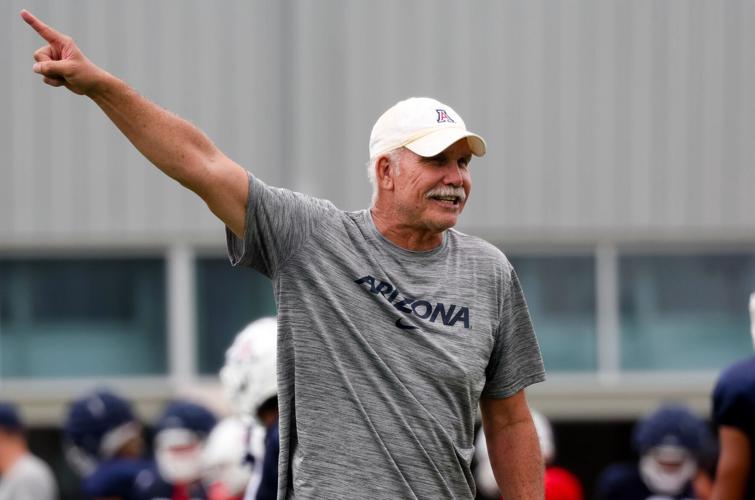


Arizona defensive coordinator Duane Akina has coached college football for over four decades, but he’s about to endure a newly added element to the sport: coach-to-player communication through helmets and tablets to review recorded footage and images to make in-game adjustments.
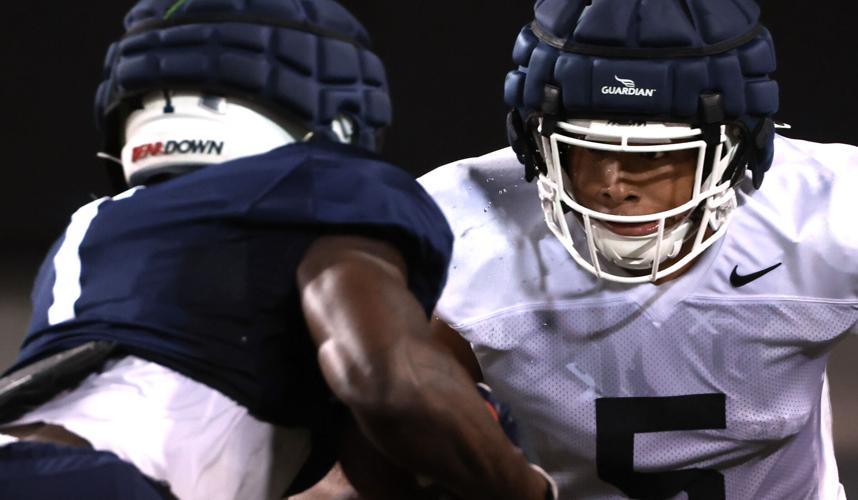
Each team can have one player on the field with a helmet that is connected to coaches’ headsets; helmets will be marked with a green decal on the back. Coaches have up until the 15-second mark on the play clock to communicate through a player’s helmet. For the offense, quarterbacks are traditionally the players to don the communication helmet.
The latest development in college football falls the season after Michigan’s sign-stealing scandal that was orchestrated by former UM staffer Connor Stalions, who was fired midway through last season. Arizona linebackers coach Danny Gonzales said last week that “stealing signals is a big thing. It’s a lot bigger than people think.”

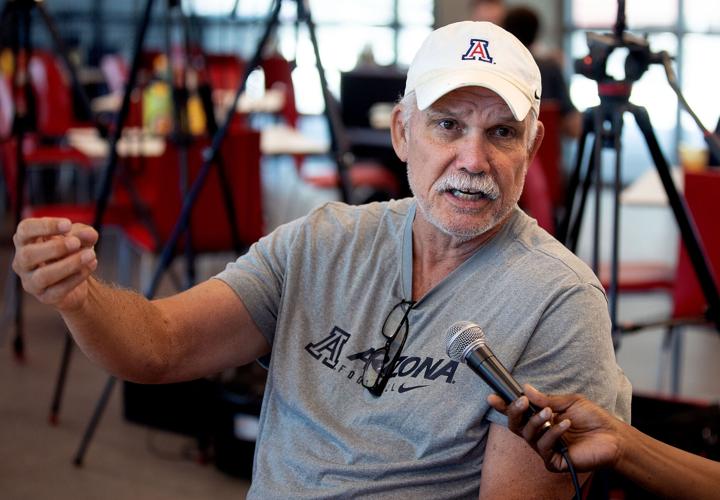
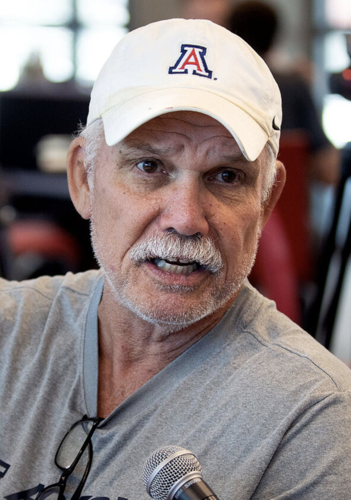
Arizona defensive coordinator Duane Akina answers questions during a preseason media luncheon in Tucson on July 30, 2024.
Arizona star linebacker and preseason All-Big 12 selection Jacob Manu will likely become the go-to player for helmet communication to relay formations with the rest of the defense. Gonzales called Manu “the best linebacker in the Big 12, and I proudly say that.”
“He’s one of the toughest kids I’ve ever been around, one of the biggest alpha males I’ve ever been around,” Gonzales said. “He’s fun to coach and when you coach those guys the hardest and get after them, you got a chance. Our machine rolls when Jacob Manu is in there.”
Manu is “a model for us in terms of toughness,” Akina said.
“He’s got a real toughness about him,” Akina said. “That’s the trademark of who we are. ... We’re a downhill, physical football team.”
Or Arizona’s communicator could be senior free safety and returning captain Gunner Maldonado, who can project his voice to the entire defense due to his position on the field. Akina said the coach-to-player communication is a “unique piece on the defensive side of the ball as opposed to the offensive side of the ball.”

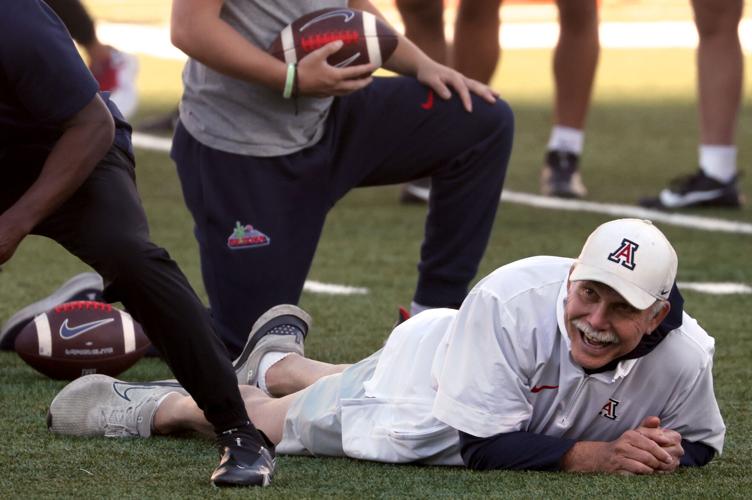
Arizona defensive coordinator Duane Akina gets low to keep out of the way and watch his secondary unit defend passes as the Wildcats work out at Arizona Stadium during a spring practice session on April 2.
“On the defensive side of the ball, who do you give that helmet to?” asked Akina. “Is it Manu, where’s gotta turn around and talk to the secondary? Is it Gunner talking down, because the pieces are still out there? That’s going to be one of those ‘we’re learning as we go’ on how to manage that piece to the puzzle, with the helmet communication.”
Added Akina: “There’s a lot of gymnastics, but I’m learning it myself and figuring it out as we go.”
Even though “the helmet (communication) can be a big deal, we’re still going to have to signal on defense,” Gonzales said.
Arizona, along with the rest of the Big 12, will also utilize Microsoft Windows tablets on the sidelines this season; the SEC, Big Ten and ACC have a deal with Apple and will use iPads. Akina said the tablets are “an interesting deal.”
For old-school coaches like Akina and Gonzales, they prefer to make in-game corrections, well, the old-school way without the added technology. Gonzales said he’s “a little disappointed with the (tablets) to be honest with you,” because “we’ve done some really good things with adjustments and have been able to see things on the field without having to rely on a computer to make those game-day adjustments. ... Now you can make average coaches a whole lot better by watching video on the sideline.”
“I always though the trick in coaching to be able to solve the puzzle on Saturday,” Akina said. “Anybody can solve it on Sunday. But to be able to make the game-day adjustments is a big part of the profession. I think the tablets do help in that area, because some guys can’t hit rewind. ... I think we’re all learning through the process.”

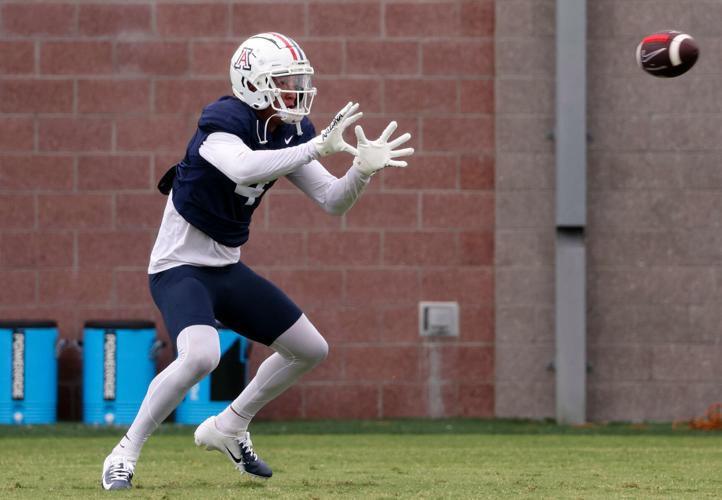
Arizona wide receiver Tetairoa McMillan turns to catch a pass from quarterback Noah Fifita during a fall preseason practice at the Dick Tomey Practice Fields on the UA campus on Aug. 7.
Trio of Wildcats receive first-round projection
After producing a first-round pick in the NFL Draft for the first time in 16 years, the Arizona Wildcats could send three more in next year’s draft.
ESPN’s Field Yates recently released his mock 2025 NFL Draft, and Arizona wide receiver Tetairoa McMillan, offensive lineman Jonah Savaiinaea and cornerback Tacario Davis are projected to land in the first round.
McMillan is projected to land No. 13 to the Pittsburgh Steelers, a team that’s actively pursuing San Francisco 49ers star wide receiver Brandon Aiyuk in a trade. Savaiinaea is predicted to go No. 21 to the Miami Dolphins, where he’ll team up with fellow Saint Louis High School (Hawaii) product in quarterback Tua Tagovailoa. Davis is predicted to land at No. 27 to the Dallas Cowboys.
Arizona offensive coordinator Dino Babers is connected to “over 40 receivers in the league” throughout his 36 years of coaching.
“I’m not sure I’ve met anyone like (McMillan),” Babers said. “The only person I’ve seen with a catch radius like that is Larry Fitzgerald. I’m not comparing him to Larry, because he played 17 years (in the NFL), I’m telling you he’s not normal. He may be better than anyone I’ve ever coached. We’ll see.
“I’ve coached some really good ones and they played really well in the pros. At the college level, he might be better than anyone I’ve ever coached.”
Arizona Football Press Conference - Duane Akina.1

