


The state Department of Corrections’ decision to move Ricky Wassenaar to a lower-security prison in Tucson resulted in three inmates being killed, prison critics say.
And, they add, it could have been avoided.
Wassenaar, serving multiple life terms related to a prison escape attempt years ago in which a corrections officer was raped, was transferred from maximum custody prisons out of state to a lower level of “close custody” in 2018 at Tucson’s Cimarron Unit. It was a lethal move that likely made it easier for Wassenaar to fulfill his ongoing threats to kill, says Carlos Garcia, executive director of the Arizona Correctional Peace Officers Association, who has worked within the Arizona prison system for 20 years. He said his information about the attacks came from reports he received.
“And that’s what he did, and he fulfilled it with a vengeance,” Garcia said.
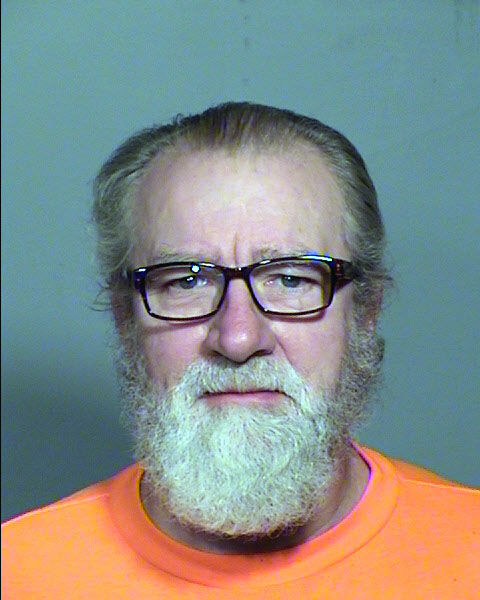
Wassenaar
On April 4, prison officials and advocates say Wassenaar went on a methodical killing spree. Within a few minutes, three fellow inmates were dead:
- Saul Alvarez, who has been in prison since 2004 for first-degree murder in Maricopa County.
- Thorne Harnage, who has been in prison since 2024 after being sentenced in Pima County for sexual conduct with a minor.
- Donald Lashley, who has been in prison since 2023 after being sentenced in Pima County for sexual conduct with a minor and molestation of a child.
A natural death?
Donna Hamm has spent more than four decades fighting for prison reform. Through the years Hamm said thought she heard it all, until a call in November from Wassenaar, who reached out to the Director of Middle Ground Prison Reform with an unusual declaration: He had strangled his new 81-year-old cellmate, Joseph Desisto, but not before warning prison staff he’d do so if they forced him to have him as a bunky.
Wassenaar told Hamm he strangled Desisto because he “got on his nerves.”
There should be no doubt about it, Wassenaar said, because his sweat, fingerprints and other DNA should be all over the man’s body.
With the admission, Wassenaar could now get what he wanted, said Garcia, a cell to himself.
That didn’t happen.
The department found no proof Wassenaar had killed Desisto, whose death was listed as undetermined.
Wassenaar refused to accept the determination, and called Hamm “angry and upset” that, despite her call to prosecutors, no charges had been filed against him in connection with Desisto’s death.
In an email to Hamm, Arizona Department of Correction, Rehabilitation and Reentry Director Ryan Thornell wrote that Desisto’s death had been “thoroughly investigated” and there were no indications of anything but a natural death. ”you have my assurance that there is no cover up or other wrong-behavior occurring, regardless of what Mr. Wassenaar may be sharing with you,” Thornell wrote.
Thornell wrote that Desisto passed away of natural causes due to underlying medical conditions, as reported by the medical examiner. His cause of death was listed, however, as undetermined.
These few sentences did not quench Hamm’s desire to find what she believed was the truth, she said.
In a statement released by Thornell, the director makes it clear that the department has “no reason to believe that inmate Wassenaar had any involvement in Desisto’s demise,” despite the threats and Wassenaar being so adamant about now having a cellmate that he used his body to try to block officers from opeing the cell door to let Desisto in, Hamm said.
Less than six months later, in March 2024, after telling anyone who’d listen that he strangled Desisto, Wassenaar’s custody level was reduced from maximum security based on his good behavior.
Nothing to lose
With “nothing to lose” and failing to be charged with a homicide he claimed to have committed, Hamm said Wassenaar found a new way to kill.
In a single attack, Wassenaar is accused of killing his cellmate and two more inmates in the prison yard.
The two provided a chilling description of what they said happened on the morning of April 4.
One man was killed in his cell in the Cimarron Unit, strangled and stabbed in the eye with a makeshift knife called a shank, according to Garcia.
The body was then covered and posed as if he were sleeping on his side in his bunk, Garcia said.
The killer then walked from the cell and crossed the prison yard to the dining area, where he instigated a fight, Garcia said. He used a laundry bag stuffed with rocks to bash in one inmate’s head and used the shank to slit the throat of a second, Garcia said.
Wassenaar was named the “sole suspect” in the three killings by the Arizona Department of Corrections, Rehabilitation & Reentry. The agency has provided limited information, saying an “altercation between inmates” took place near the dining area, resulting in the death of two men.
Garcia said that the department describing Wassenaar’s attack as a series of “altercations” minimizes the events and elicits images of inmates fighting, he said. Instead, Wassenaar ambushed inmates after he had warned several people that he was “hell bent” on killing someone.
“He’s not hiding it. He’s been warning the department he was going to kill someone and they left him alone with another new cellmate (who he allegedly killed),” Garcia said, and put him in the yard with dozens of others, where he allegedly killed two additional men.
So, Garcia and Hamm are on the case, trying to confirm how Desisto died and why Wassenaar was never charged or disciplined in connection with that cellmate’s death.
“They played chicken with the wrong inmate. They rolled the dice and it didn’t work out for them,” Garcia said.
You’ve been warned
The day after the killing of the three inmates, Hamm was at her computer feverishly typing a formal letter to Gov. Katie Hobbs.
Hamm explained the Nov. 2024 situation with Desisto and Wassenaar’s allegations of a cover-up regarding his cause of death. She also shared her contact with the prison’s director.
She told Hobbs that in a phone call Wassenaar all but begged to take claim for killing Desisto.
Thornell had been relayed this message, Hamm said, but failed to act.
“It is incomprehensible why or how (Wassenaar) would be given access to or contact in any manner with other inmates,” she wrote Hobbs. “Only utter incompetence or deliberate indifference could explain such a tragic error.”
She pleaded that these murders be investigated by independently.
“This tragedy for the three men killed yesterday was likely avoidable,” Hamm wrote to Thornell, as she reminded him of Wassenaar’s admission of Desisto’s death in November. “If Ricky Wassenaar had been taken seriously — no one, literally no one confesses to a murder as frequently and as adamantly as he did . . . the deaths of these men yesterday could surely have been avoided.”
“I hope the department is prepared for what is now coming your way in a legal sense as a result of the failures to take appropriate action to isolate Mr. Wassenaar after the (Desisto) incident.”
‘Nothing short of a tragedy’
In a public statement, however, Thornell is standing his ground, saying staffing was not an issue during Wassenaar’s alleged killing spree, and that corrections officers did all they could to deescalate the situation.
Staffing issues have plagued Arizona prisons for years, leaving inmates potentially vulnerable to attacks. The ACLU spotlighted staffing shortages in a 2023 lawsuit against Thornell, according to the Arizona Republic.
Correctional officer vacancies at the Tucson prison complex remain high compared with other Arizona prisons in 2025, records show.
Nine officers were working at the Cimarron Unit during the time of the triple homicide, fewer than half the number needed to fully staff the unit, Garcia said. The unit can accommodate 576 beds.
“What happened at the Cimarron Unit was nothing short of a tragedy. Violence of any kind is not tolerated,” Thornell wrote. “…what occurred was a senseless act by one person who appeared to be solely focused on seeking harm to these specific individuals without any prior warning.”
Thornell called the murder of three inmates a “heinous act” and said Wassenaar will be held accountable to the fullest extent of the law.
“ I am proud of the quick response by the staff at ASPC-Tucson that morning. Their training kicked in immediately, quickly subduing the situation and ensuring no other inmates were seriously injured,” Thornell wrote.
No stranger to spotlight
This wasn’t Wassenaar’s first headlining case.
In 2005, Wassenaar was convicted on 19 charges, including kidnapping, dangerous or deadly assault by a prisoner, aggravated assault, sexual assault and first-degree escape for his involvement in a 2004 hostage situation at the state prison near Buckeye, the department said.
Wassenaar has a lengthy criminal record stemming back to 1986 when he was charged with armed robbery and aggravated assault.
Ten years into a 15-year sentence, Wassenaar was placed on house arrest in 1996. He went on to be convicted of eight counts of aggravated assault and one count of armed robbery in 1997. He was given a 28-year sentence.
A 2004 attempted prison escape landed him 16 life sentences.
After four years in the Lewis Prison complex in Buckeye, Wassenaar attempted to escape with his cellmate, Steven Coy. They plotted to escape from the kitchen to an arsenal tower and through the administration building.
The Arizona Republic detailed his and Coy’s attempted escape in 2004.
Early that morning the two inmates fled the kitchen, raping, assaulting and tying up two workers while en route to the tower. They made it to the watchtower but were trapped as more and more officers surrounded it.
The pair took two correctional officers hostage, one of whom was a mother. Both sexually assaulted her on the first day. The other suffered head injuries, according to The Republic.
Negotiations lasted more than two weeks. Eventually, Wassenaar surrendered after being promised a transfer to the Midwest. Coy also gave himself up. The hostages survived.
Coy was serving a life sentence for two counts of armed robbery and aggravated assault at the time of the attempted escape, along with a slew of other sentences for previous offenses. He added seven more life sentences.
Wassenaar added 16 life sentences to his prior 28-year sentence. He was returned to Arizona in 2018.
‘About getting his own cell’
“I think this is all about getting his own cell,” Garcia said of Wassenaar’s most recent alleged attacks.
Wassenaar was transferred to a maximum custody housing unit where he remains, Thornell said.
In a statement sent to the Arizona Republic on April 14, the department said commenting on the case would be “irresponsible and potentially debilitating to the case.
“The ADCRR recognizes that persons, including those not affiliated with the Department, may find it advantageous to make public their theories about what occurred or their opinion about motivations, the ADCRR actions, procedures, or processes,” the statement said.
“Keep in consideration these individuals lack firsthand knowledge of the situation, so their perspectives are merely the opinions of people from outside the situation.”

