



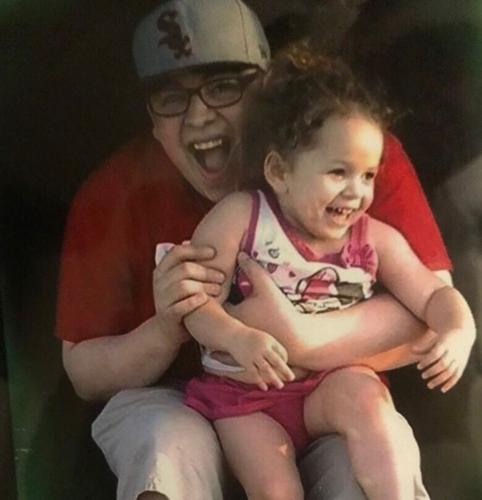


Ava Petersen says she inherited a number of wonderful traits from her father, Eric, such as his deep love for animals, fishing and spending time in nature.
But one of the best things he passed down to her was his passion for cooking. She says she can still hear his words of advice: “Never measure. You always eyeball it and do it with your heart."
Ava Petersen requested her dad’s specialty every year for her birthday: meatballs drenched in marinara sauce on a garlic hoagie roll. But she will never again be able to experience one of her father’s delicious homemade meals.
On June 13, 2022, Eric Petersen died in Illinois' Rock Island County Jail from ketoacidosis — a complication of diabetes that occurs due to a lack of insulin. Petersen, 46, was serving a five-day sentence for an alcohol-related DUI charge.
Petersen's family said that he arrived at the jail with paperwork from his doctor requiring frequent blood sugar monitoring and the administration of medications to treat his diabetes.
During his time at the facility, Petersen requested on several occasions for his blood sugar to be checked, but those requests were ignored by jail staff, the lawsuit alleges. He began showing symptoms signaling serious medical concerns such as vomiting and hallucinations. The father of two was found unresponsive in his cell three days into his five-day sentence.
Patricia Keitel, Eric’s mother, filed the lawsuit in May 2024 against Rock Island County Jail and MEnD Correctional Care, the jail’s healthcare provider at the time. The case is still pending as of Dec. 8. The private healthcare company filed for bankruptcy six months after Petersen’s death.

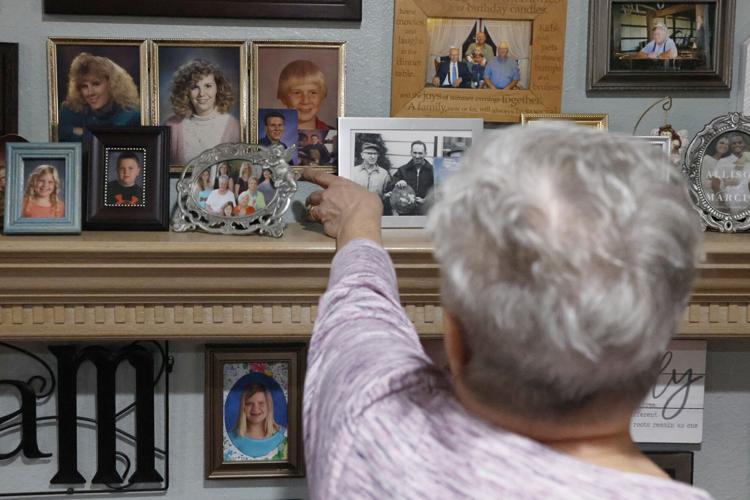
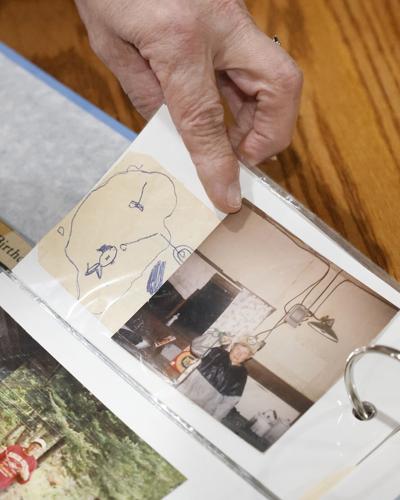
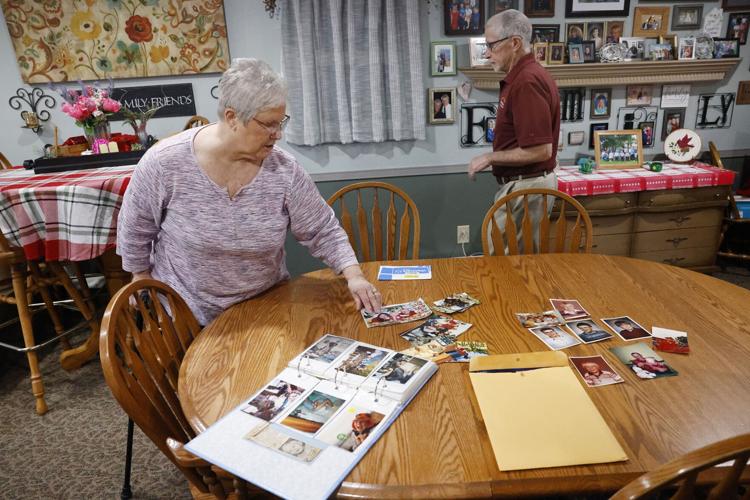
Patricia Keitel shows off a scrapbook and other photos of her son Eric Petersen in her home in Maquoketa on Friday, February 28.
MEnD, based in Minnesota, is one of several for-profit health care companies that contract with jails and prisons in Illinois and across the country. Keitel and other families of inmates who have died in jail say cost savings pursued by these companies have compromised medical care in jails. Company officials didn't respond to requests for comment.
“Their penny-pinching cost my son his life,” Keitel said.
Rock Island County Sheriff Darren Hart said he could not comment on pending litigation, but provided information on the county’s current healthcare provider, Advanced Correctional Healthcare (ACH), a private healthcare company that contracts with over half of the state’s jails. Lee Enterprises Public Service Journalism Team and the Pantagraph previously spoke with ACH CEO and President Jessica Young. Young would not agree to an interview and would only answer questions via email. When the team reached out again earlier this year for follow up, the requests for comment went unanswered.
Ineffective treatment for the chronic medical conditions of jail detainees has contributed to the injury or death of people all across the state, a months-long investigation by Lee Enterprises' Public Service Journalism Team and The Pantagraph found.
Confirming hospitalization
In some Illinois jails, like those that contract with Advanced Correctional Healthcare, one of the largest providers of medical and mental health services for county jails, correctional staff are encouraged to send inmates to the hospital if there is any concern over someone needing medical attention the jail is not equipped to administer.
“ACH has a reputation for ‘doing the right thing.’ In addition to being known for our motto, the 'when in doubt, send them out’ policy refers to jail staff sending inmates to the hospital if their medical needs cannot be met at the jail,” ACH President and CEO Jessica Young said.
That system isn't perfect. In 2017, David Brown was booked in the Woodford County Jail, which contracts with ACH, for driving on a suspended license and was sentenced to serve 240 days in jail.
Brown, who suffered from a prostate condition that required him to self-catheterize daily, started to complain of “10/10 flank pain” within a week of his detention, according to a lawsuit filed by his son. His condition worsened over the next week, and he was unable to catheterize, urinate, eat or stand.
Despite multiple requests to go to the hospital, and with Carle Eureka Hospital being across the street from the Woodford County Jail, Brown died 15 days after his booking.
An autopsy determined that Brown died of “eminently preventable causes” and that his bladder contained approximately triple the amount of urine an average male bladder can store.
Woodford County agreed to pay a roughly $500,000 settlement in 2019, and the case was dismissed with prejudice against county and ACH defendants in 2020. Former Woodford County Jail Superintendent Dennis Wertz said he doesn't recall any jail procedures changing following the settlement. He said staff had followed all proper procedures at the time.
Young said she couldn't speak about specific inmates and their medical care due to privacy concerns.
Young said correctional officers in ACH facilities can provide medical care or refer inmates for care without an approval process, which can mean inmates receive specialty care "significantly faster" than the general public.
Training and retaining staff
Before working for their respective county, correctional officers in Illinois are required to complete an eight-week training course that includes medical and mental health training such as first aid and CPR. One of the locations offering that training is the Macon County Illinois Department of Corrections Training Center in Decatur, Illinois.
State law also requires full-time correctional officers to receive training in identifying and managing detainees with a mental illness or developmental disability. Annual training by or approved by mental health professionals on suicide prevention and mental health issues is also required.

Lt. Jamie Belcher with the Sherriff's Office at the Macon County Jail in Decatur.
“All of our officers are trained on basic life saving techniques,” Macon County Lt. Jamie Belcher said. “If there is an emergency, pretty much everyone that’s free floods to that scene, renders whatever aid is necessary and then the call is made. Do we just need to move them so that this little issue resolves itself? Or do we need immediate emergency treatment? And at that point, the 911 call goes out.”
Contracts jails have with third party medical providers may also have options for additional training.
Some ACH contracts require the company to provide medical education and training for staff, including taking blood pressure, administering insulin and identifying signs and management of individuals with disabilities.
“We are the best problem solvers in the industry,” Young said. “On information and belief, our team has more combined experience in correctional health care, law enforcement, mental health and forensics than any other organization.”
However, they along with several other providers have been involved in dozens of lawsuits and settlements across the country, several of which involved Illinois inmates.
Young said incarcerated people file a disproportionately high number of lawsuits, which makes health care professionals' jobs harder. “Frivolous lawsuits, combined with the negative media portrayal of our industry, continue to deter many health care professionals from working in corrections. The lifesaving events and positive impacts that providers achieve in correctional healthcare rarely get the attention that they deserve.”
Heath care coverage in correctional settings is further exacerbated by projected nursing shortages.
According to a report released in 2024 by researchers at the University of Illinois at Urbana-Champaign and the Illinois Economic Policy Institute, the state is projected to see a shortage of 15,000 registered nurses in Illinois in 2025. The survey also found that 34% of existing RNs say they plan to leave the profession in the next twelve months.
“Unfortunately, with the nursing crisis going on all over the country, trying to find people to work inside the facility has been just as hard as trying to find somebody to work inside of a hospital,” Belcher said. “...some of the stigma that's behind it is ‘oh, my god, the jails are dangerous, dirty, nasty places to work in.’ Once the nurses get here, they find out oh, it's not, it's actually quite clean.’”
Belcher added that another roadblock in hiring is having to match or beat the salaries of traveling nurses.

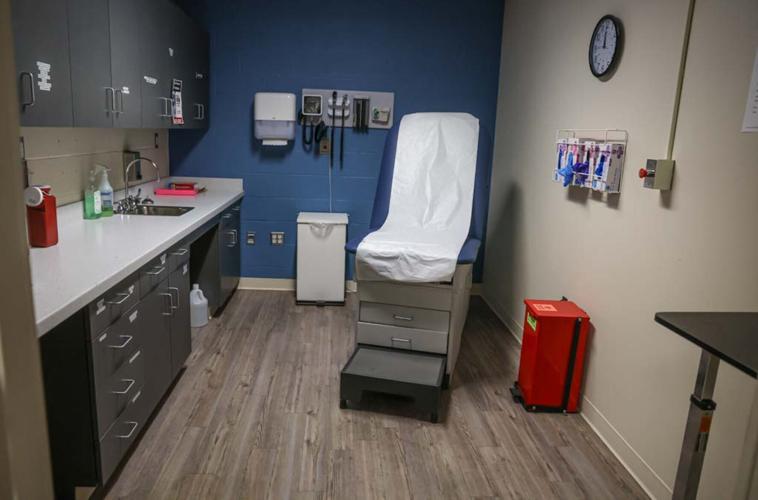
Medical Unit of the Macon County Jail
“We have agency nurses that come in here to fill in gaps and they're making 80 bucks an hour,” he said. “Where the nurses are [here] are making $40 to $50 an hour. So, there's no way that we can compete with that.”
Addressing variability
State law provides some oversight of county jails regarding health care. But staffing levels, shift lengths and other standards may be determined by the contract between a county and a third-party provider.
Melissa Caldwell, president of behavioral health services for Freedom Behavioral Health, which often collaborates with ACH to provide behavioral health services to jails, said ACH tries to customize its programming, staffing and services to the needs of the facility and community.
"For example, you'll come into our facility and we may be working elbow to elbow with a community mental health center, who is in the jail, and then we may have another facility that doesn't have that same agency or system set up and we may be doing the bulk of things," Caldwell said. "So there can be different configurations."
An ACH contract approved in 2020 for Coles County provides for on-site nursing coverage for 40 hours a week on a schedule approved by the county. Qualified mental health professionals are on site six hours a week. Although a physician or advanced practitioner is only required to visit the jail weekly, they are contracted to be on call around the clock.
However, a 2020 ACH contract with the Macoupin County Jail, which reported the same overall inmate population as Coles County in its 2020 Illinois Department of Corrections inspection, calls for on-site LPN coverage for 20 hours a week on a schedule approved by the county.
Weekly visits from physicians or advanced practitioners were not written into Macoupin County’s contract but behavioral health concerns were to be referred to the Locust Street Resource Center.
Macon County's contract with QCHC, meanwhile, does not specify how often medical staff need to be on site. Instead, the agreement requires registered nurses, licensed practical nurses and mental health professionals to be on site for periods of time “sufficient to accomplish the objectives of this agreement.” Anticipated staffing levels are for one health service administrator working 40 hours a week, one mental health professional working 40 hours a week, registered nurses working 36 hours a week across three days, one LPN working 36 hours a week and another LPN working 24 hours a week.
The lack of standardized health care rules among county jails becomes apparent when an inmate is transferred between them. Such moves could lead to medication changes and the loss of supplemental services depending on the provider and resources available at each jail.
In 2023, the McLean County Jail was forced to transfer roughly a quarter of its inmate population to the LaSalle County Jail for roughly eight months due to corrections officer shortages.

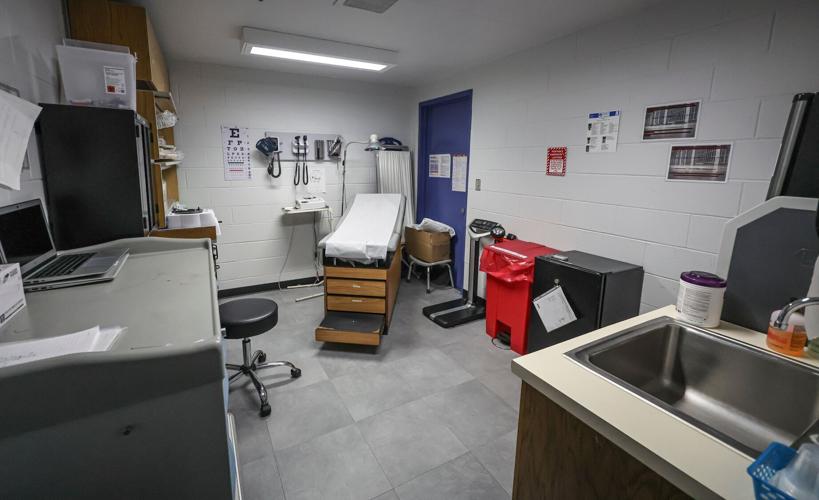
Medical Unit of the McLean County Jail
McLean contracts with ACH while LaSalle contracts with Wellpath, and those contracts reflect different degrees of oversight and treatment.
Within two months, LaSalle County Jail Superintendent Jason Edgecomb reported that a grievance had been filed by a transferred detainee claiming that the medication he was prescribed in McLean did not follow him to LaSalle, according to emails obtained via the Freedom of Information Act.
"He is very concerned and states that he does need this medication," Edgecomb said.
Edgecomb said that unlike LaSalle, McLean County has a direct supervision jail, which allows corrections officers to have one-on-one supervision of inmates when they enter and exit their cells.
A week prior to this incident, McLean County had arranged the return of one of their inmates to be replaced by another detainee who was not on medication.
Staff at the LaSalle County Jail, which does not have a contract dentist to serve its inmate population, also reported issues connecting McLean County inmates with dental services.
In March 2023, Edgecomb had reported one inmate who was complaining of tooth pain. He was put on the list of patients to be seen by McLean's contracted dentist a week later.
"I don't care about his behavior issues, we can deal with that, but I don't want to see someone suffer with pain if you guys have the ability to handle the tooth problems," Edgecomb wrote to the county.
Edgecomb had reported another two inmates complaining of tooth pain and requesting a dentist in June but had advised that they may have their own dental services by August. Although LaSalle’s 2024 jail inspection reported that arrangements are made for detainees to have access to emergency dental care, no provider was listed.
Law enforcement, reform advocates and legislators agree that juggling the demand of healthcare services is not something that can be reevaluated overnight. A number of issues have to be considered, funding being one of the biggest sticking points.
“In the state of Illinois, when you put these types of responsibilities on law enforcement, there has to be a funding mechanism for us to keep up with (it),” said Hart. “It will never decrease, it will continue to go up with the level of care that we’re trying to provide,” Hart said.
‘They failed him’
Petersen for some time had struggled with an addiction to alcohol, but was making a concerted effort on moving his life in a positive direction. Despite his uphill battle with alcohol, those closest to him said he was a loving son and involved father to his daughter and son, 16-year-old son, Caleb.
Petersen was on a positive trajectory for his road to recovery. He was participating in a local support group, was leaning into his faith, and had been residing in a sober living facility near the Quad-Cities leading up to his death.
“He was getting his sobriety chips and was so excited,” his daughter said. “...He was getting on the track.”
Keitel said her son was first diagnosed with Type 1 diabetes when he was 12, which was around the same time when he began experiencing issues related to his mental health. Since then, he has always stayed on top of monitoring his blood sugar and later did the same for his daughter.
“What I miss most honestly is the phone calls,” said Ava, adding that she is also a type one diabetic. She said he would frequently call her to ask about school and how her blood sugar levels were doing.
She believes the jail failed her dad.
“He had repeatedly asked for help because he wasn't feeling good. He knew he was getting sick. He knew something was wrong,” she said.

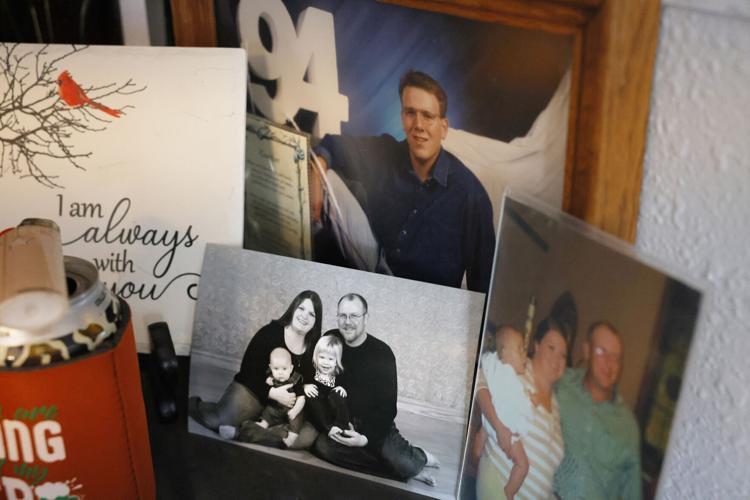
Photos of Eric Petersen, along with his two kids, fill a small memorial in Patricia Keitel's home. Erin Petersen, his wife, mentioned that he was a very hands on father.
Petersen was in the same jail in August 2021 when he nearly escaped a fatal medical issue because of the staff’s failure to properly monitor his blood sugar levels, according to the lawsuit filed by his mother. That experience was what led him to making sure he was prepared ahead of serving the five-day sentence in 2022 his mom said. Upon arrival at Rock Island County Jail on June 10, 2022, Petersen brought a note from his doctor that listed his medications for diabetes, which included Humalog and Lantus and details of when they should be administered.
However, when meals were passed around at the jail and Petersen asked for his blood sugar to be taken, he was denied, the lawsuit alleges. It was recorded on June 12 that Petersen had been vomiting and the next day, an inmate heard him banging on the door begging to be taken to the hospital. The inmate also said they heard Petersen experiencing hallucinations. Despite his condition becoming increasingly more serious, jail staff did not provide proactive care, the complaint alleges.
Coping with his loss is a daily battle, according to Keitel. She surrounds herself with one of her greatest joys: family.

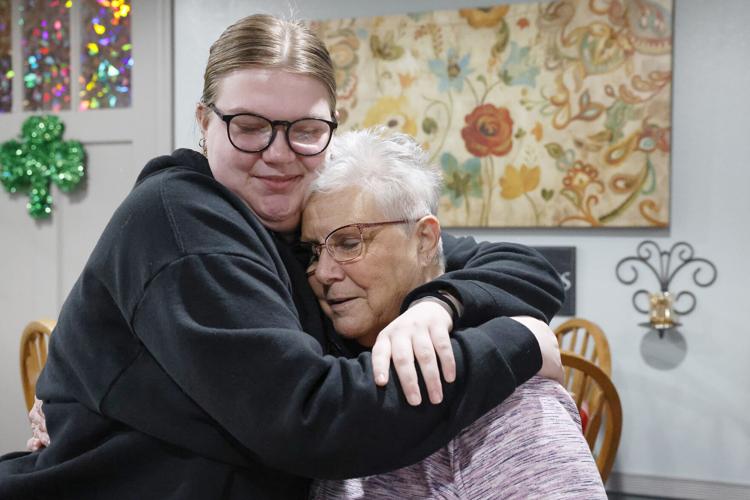
Ava Petersen hugs her grandmother, Patricia Keitel, goodbye after visiting her home in Maquoketa on Friday, February 28.
The walls of Keitel’s home are decked out in pictures of the people she loves — adults laughing on holidays, children opening birthday gifts, and dozens of yearbook-style portraits spanning multiple generations.
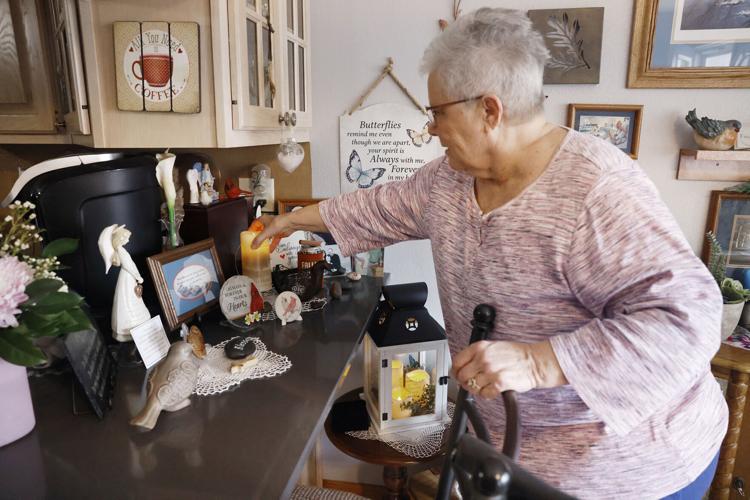
Her son’s smile can be seen almost anywhere Keitel turns in the house. One corner of her kitchen is reserved just for Eric. The countertops and floor are adorned with photos, statues of cardinals and angels, a lantern with flickering candles and more precious items that create a beautiful memorial of son.
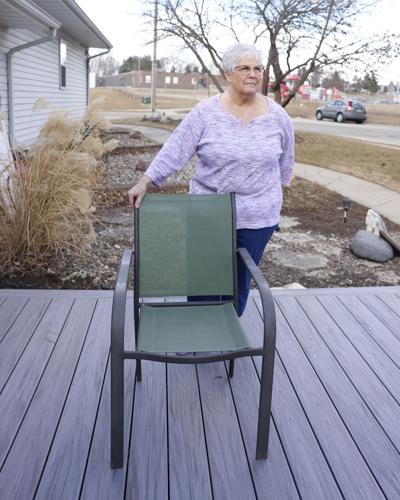
She even kept his favorite chair on her front porch where Eric used to sit and greet her as she would come and go.
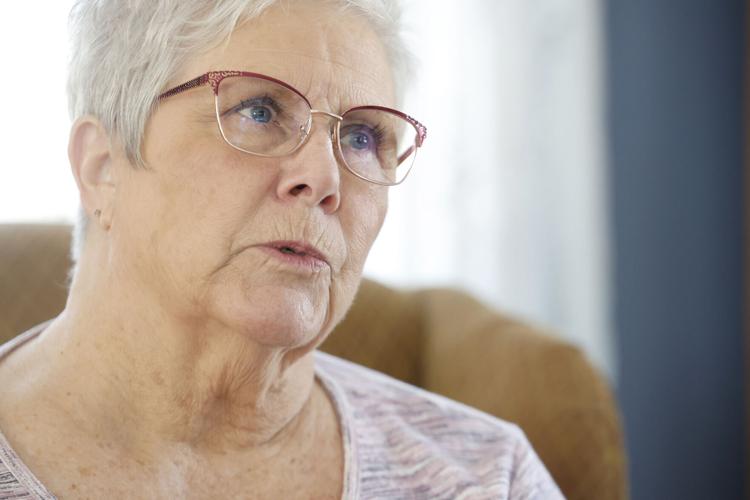
“My baby is gone and there is nothing we can do about it,” Keitel said.
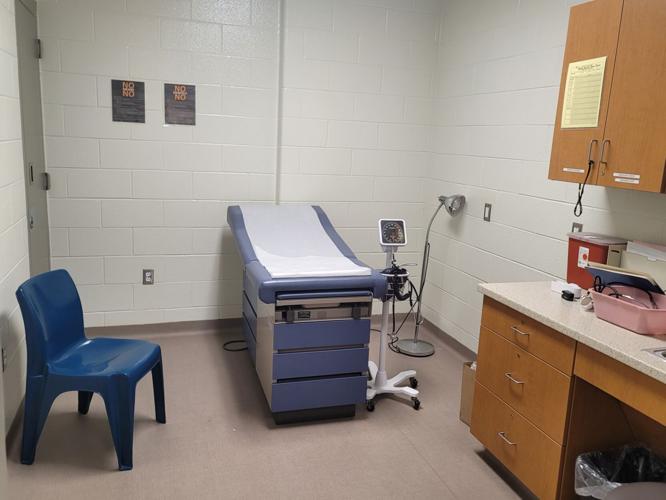
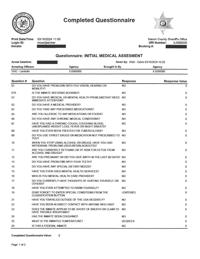
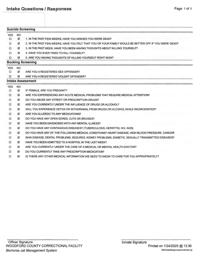
Illinois Jail Medical Questionnaires

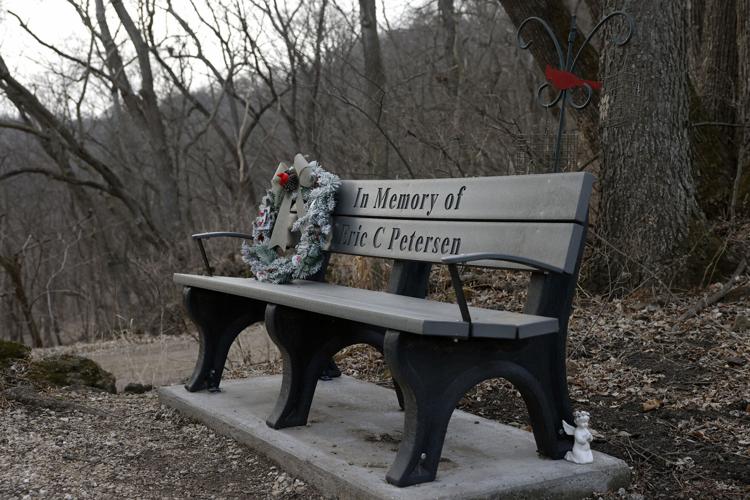
Eric Petersen's memorial bench located on a trail at Eden Valley Refuge in Ballwin, Iowa. Family visits occasionally to change out the decorations to fit the seasons and to refill the bird feeders.

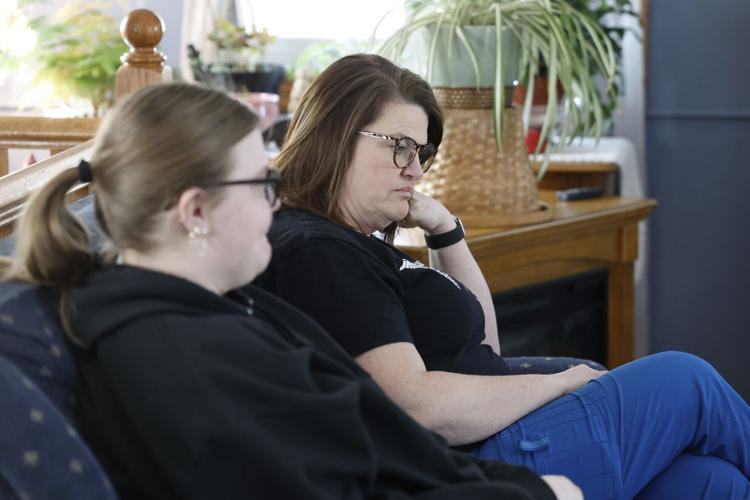
From left, Eric Petersen's eldest daughter, 18, and his ex-wife, Erin Petersen, talk about his life and death on Friday, February 28, in Maquoketa. Though dealing with alcoholism during the later part of his life, his loved fishing with his kids, cooking and geode hunting.

Patricia Keitel places an electric candle in the middle of a small memorial in her home to honor Eric Petersen, her son, on Friday, February 28, in Maquoketa. Petersen, a type one diabetic, died in June 2022 in the Rock Island County Jail from ketoacidosis after the staff failed to administer his glucometer and medications.

Patricia Keitel shows off a photo of her son, Eric Petersen, in her home in Maquoketa on Friday, February 28.

Patricia Keitel speaks about her son's death at her home in Maquoketa. Eric Petersen died from ketoacidosis in the Rock Island County Jail after the staff failed to administer his medication.

Patricia Keitel poses next to her son's favorite chair on Friday, February 28, in Maquoketa. She reminisced that when he had lived at home for a short while, he would use the chair, which he had pulled from an apartment complex dumpster, in the front lawn to enjoy the outdoors -- something he loved doing.

Patricia Keitel points out a photo of her son, Eric Petersen, holding a fish that he had caught when he was younger. Next to the photo is a picture of a fishing rod and pond that Petersen had drawn during a church service when he was young.




