

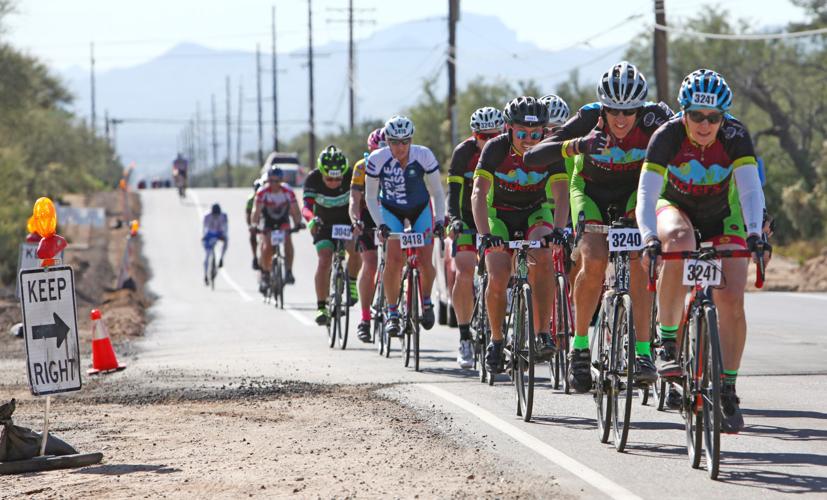

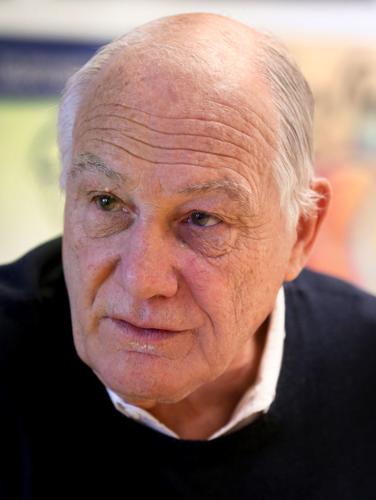


It probably should have been a warning sign over the years when El Tour de Tucson’s founder regularly held press conferences saying that a title sponsor was desperately needed or had been found just in time to keep the race running.
You could view it as a warning sign that something was amiss in the organization that runs El Tour, the Perimeter Bicycling Association of America. Or you could view it as a warning sign that there just aren’t enough big donors in Tucson to keep such an ambitious event afloat.
Either way, El Tour founder Richard DeBernardis has described the event as on the edge of financial oblivion many times over the years.
“There was a time in late May when we were without a title sponsor,” DeBernardis said in October 1995 as he announced a new sponsorship by the Arizona Daily Star’s Starnet. “We didn’t know how we were going to get through. We didn’t see any possible way this ride would be able to happen this year.”
In May 1996, DeBernardis told the Tucson City Council, “If there is not the support from the city of Tucson as requested, there may not be an El Tour de Tucson this year, there definitely won’t be an El Tour de Tucson in 1997, and we’ll move our offices out of the city.”
“We’ve been saved by Touchstone (Energy),” DeBernardis said in October 1999, as the race faced a $50,000 deficit. “We’re getting through this year, and we’re going to have an El Tour in 2000.”
“Their sponsorship is allowing us to go on,” DeBernardis said in announcing a new three-year sponsorship in May 2014. “I’ll tell you what, El Tour would not exist today if it wasn’t for Special Olympics coming in and basically saving us. They’re keeping El Tour going.”
But Special Olympics pulled out, and in October 2015, DeBernardis said of Tucson Medical Center, “You’re saving us this year; you’re allowing the Tour to go on for another year.”
The desperate hurtling from one year and one sponsor to the next was bound to end sometime. Now it has, with Pima County announcing it will sue Perimeter if the organization doesn’t repay the $180,000 it owes the county within 90 days of a demand letter sent on Feb. 12.
That prompted Perimeter’s board to force DeBernardis to hand over the operation of Perimeter Bicycling to an interim CEO and to shift financial management away from DeBernardis’ sister, the longtime treasurer of the group.
Of course, El Tour would not exist without DeBernardis. But it’s not uncommon for nonprofits to suffer from what’s known as "founder's syndrome" — when a visionary starts a nonprofit but stays in the stranglehold of this founder longer than it should.
This may apply to El Tour, but the Perimeter Bicycling board now has a chance to break out of the pattern. It should, for the good of a race that DeBernardis turned into a recognized local brand since he founded it in 1983.
One of the problems is fundraising in a city without many big corporate headquarters. It’s easy to exhaust your options after 37 years.
“We recognize the value an event like El Tour brings to the community,” said Julia Strange, vice president of community benefit for Tucson Medical Center, which has been involved with the event off and on for almost 20 years. “We also recognize how difficult it is to keep an event like that going.
“We have seen, over the course of time, that the availability of sponsorship dollars in our community has decreased as the makeup of our business community has changed,” Strange said. “Those big-dollar sponsor opportunities are less than they were 20 years ago. That has clearly created problems not just for Perimeter, but for other nonprofits in our community.”
Local cycling enthusiast Mike McKisson, who ran the website bicycletucson.com for about six years, told me the local bicycle culture has also shifted.
“I think the big picture is that cycling is changing and El Tour has not changed,” said McKisson, who is the husband of a co-worker at the Star and rode El Tour last year. “The financial picture is it gets more and more expensive to close streets.
“It’s indicative of where cycling is moving. It’s less about the spandex and riding fast on the road. It’s more about nature and getting away from cars.”
The 24 Hours in the Old Pueblo mountain-bike race, which takes places each February near Oracle, was founded by a protege of DeBernardis, Todd Sadow, and is thriving, along with other races run by Sadow’s Epic Rides company.
So it’s good the board has finally moved to become more independent of the founder, DeBernardis. Even Ralph Phillips, the owner of Fair Wheel Bikes, who has been involved in the tour as a participant and an announcer since the beginning, said it’s time to “perk it up.”
“It’s been run the same way for a while. All the past sponsors are pretty tired of it,” Phillips said. “It’s a big nut to crack, but with the community’s support ....”
Board member Pat Lopez told me big changes in how the race operates are likely to start this year. That doesn’t just make sense but it is probably essential to keeping this iconic Tucson event going and making it sustainable over the long run.
The days of appealing for a last-minute financial savior are over.

