



As Tucson surged eastward during the city’s post-World-War-II boom, it was the humble ranch house that paved the way.
Now, one east-side neighborhood plans to show off its ranch-style roots with a tour dedicated to the housing design that dominated during the 1950s and beyond.
“They were so ubiquitous, and there were so many different styles of them. You may have lived in one and not known it,” said Alfredo Araiza, association president for Palo Verde Park Neighborhood, which is holding the home tour.
The April 5 event, called “MidCentury Celebrated,” will include a historical lecture and guided walkthroughs at four representative “ranches” in the neighborhood bordered by Broadway, Kolb Road, 22nd Street and Wilmot Road.

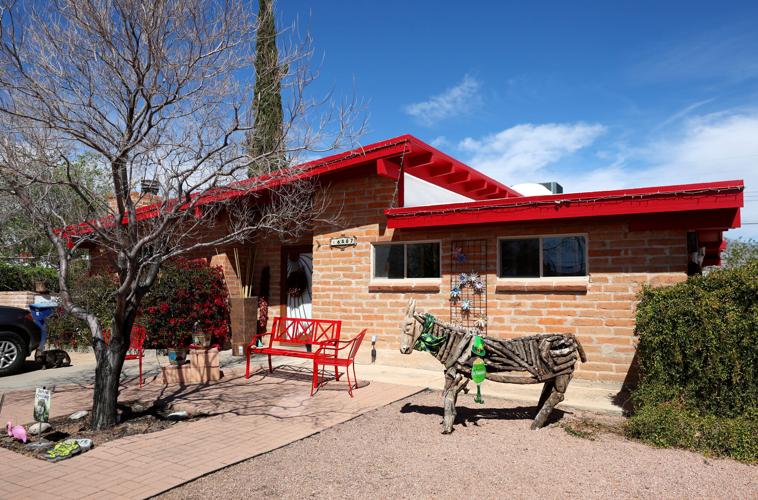
The home of Rhonda Bodfield and Alfredo Araiza is one of the homes that will be featured on the Palo Verde Neighborhood tour to celebrate its ranch-style roots. The tour on April 5 is dedicated to the house design that dominated during the 1950s and beyond.
The ranch-style design made its way to Tucson from California to fill a need for inexpensive housing after the war. The low-slung structures were typically constructed from burnt adobe, brick or concrete and stucco, with rectangular, L-shaped or U-shaped floor plans that included porches and carports or garages under the main roof.
“They were designed with cars in mind,” Araiza said.
The houses were set back from the property lines to allow ample space for front, back and even side yards. Large picture windows and sliding glass doors connected the indoor space to the outdoor living areas.
The arrangement encouraged neighbors to interact with each other while mowing the front lawn or chatting over a shared side wall, Araiza said. “I don’t know if that was a conscious thing, but that’s what it did.”

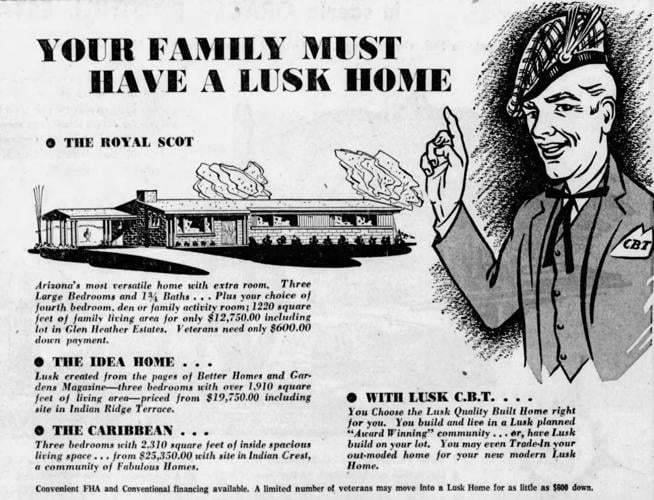
For just $12,750, you could have a new ranch-style house called the “Royal Scot” in Tucson’s Glen Heather subdivision at Broadway and Kolb, according to this ad in the Feb. 17, 1957, edition of the Arizona Daily Star.
Ranch-style homes could be built relatively quickly, and there were plenty of people available to build and buy them, he said, thanks to all the veterans mustering out of wartime service. The popular and affordable building style soon became a symbol of the post-war American dream.
Palo Verde Park Neighborhood Association secretary Rhonda Bodfield said while other home tours highlight spectacular, high-end houses, this one is focused squarely on how basic construction materials and a utilitarian architectural style combined to help build a thriving new middle class.
“Ultimately the lecture and tour together should help provide a deeper understanding of the era and the factors that shaped Tucson’s growth,” said Bodfield, who is married to Araiza.
The couple moved into their ranch house in Palo Verde Park’s Riviera Estates subdivision in 2009. It has four bedrooms, but “they’re almost tiny by modern house standards,” said Araiza, a Tucson native who grew up in a different ranch-style house near Craycroft Road and Pima Street.
Their place near Broadway and Kolb features a number of modifications typical of the durable, adaptable design. The carport has been enclosed and now serves as their dining room, while an addition to the back of the house offers private lodging for guests from out of town.

The home of Rhonda Bodfield and Alfredo Araiza is one of that will be featured on the Palo Verde Neighborhood tour.
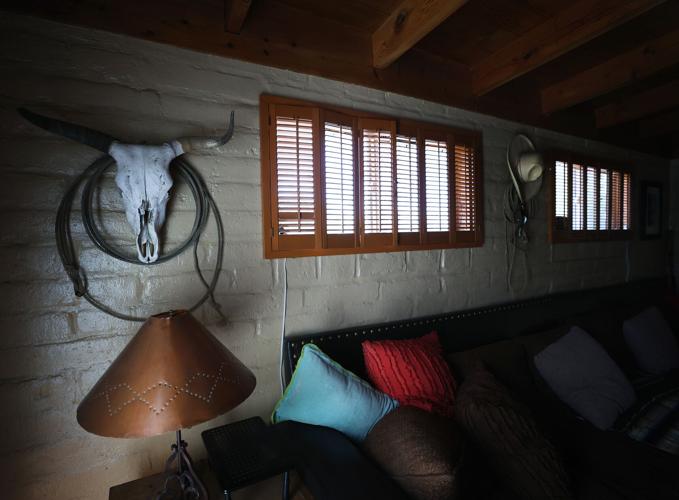
But plenty of original touches remain, including wood paneling, built-in shelves, exposed roof beams and unusual, floor-level lighting in the hallway leading to the bedrooms. An unfinished-wood shelf inside the kitchen pantry still bears the stenciled name of its previous owner: “Davis-Monthan Air Force Base, Arizona.”
The home was built in 1960 as part of six different subdivisions that were established between 1952 and 1959 in what now comprises the Palo Verde Park Neighborhood.
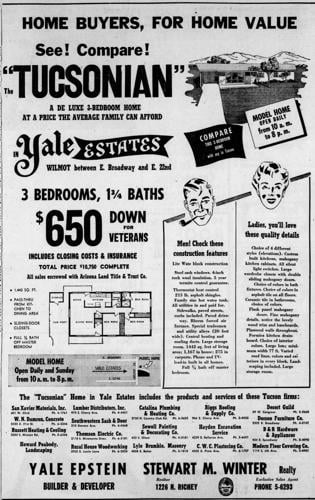
Builders there offered a number of variations on the ranch-style theme, including such models as the “Tucsonian,” the “Wilmot,” the “All-Star,” the “Suburban” and the “Spacemaker.”
In ads for Yale Estates, home of the “Tucsonian,” carpenter-turned-homebuilder Yale Epstein promised that no two houses on a block would feature the same roof lines, exteriors or paint colors.

An advertisement in the Dec. 13, 1953, edition of the Arizona Daily Star promotes a new subdivision of ranch-style homes called Yale Estates on Tucson’s east side.
Meanwhile, in the nearby Glen Heather subdivision, developer Robert Lusk was offering a model he called “The Royal Scot” for $12,750 — or, for veterans, a $600 down payment.
The post-war developments were established without the sort of race-based restrictions that excluded minorities from living in hundreds of Tucson neighborhoods through the first two-thirds of the 20th century.
It was a working-class neighborhood then, and it’s a working-class neighborhood now, Araiza said.
“I don’t think that the dynamic of the people who live here has really changed. This is not an affluent neighborhood by any means. I think we’re proud of the fact that we’re all working stiffs,” he said.

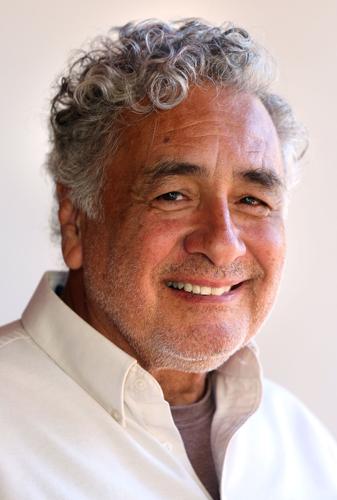
Araiza
Today, the Palo Verde Park Neighborhood covers a one square-mile area and includes more than 1,700 homes, 100 businesses and several schools and churches — all surrounding the city-owned park that gives the area its name.
‘We’re about the size of South Tucson,” Araiza said.
The neighborhood originally planned to host its ranch-style home tour in the spring of 2020, but the event was called off as a result of the COVID-19 pandemic.
The event on April 5 starts at 10 a.m. and lasts until 2 p.m. David Leighton, who writes the “Street Smarts” column for the Arizona Daily Star, will be one of the lecturers.
Araiza said they plan to serve Tang and other familiar refreshments and snacks from the 1950s and 1960s.
Tickets can be purchased online for $10, with the proceeds going to future events and projects in the neighborhood.
Take our latest video quiz to test your knowledge of Tucson history and facts.

