


Hearing about old bones found in the desert — brittle, sun stained and of an unknown age — is not an uncommon occurrence if you live in Tucson long enough.
Oftentimes, fingerprints have decayed away, and if DNA is obtained, it’s either too little or can’t be positively tied to anyone.
The round skull, which once bore a face and smile, is likely to become a permanent mystery — a John Doe.
That's when Jessica Romero chimes in.
Romero, a forensic artist and lead crime scene specialist with the Tucson Police Department, is determined to put a name to Tucson's John Doe.
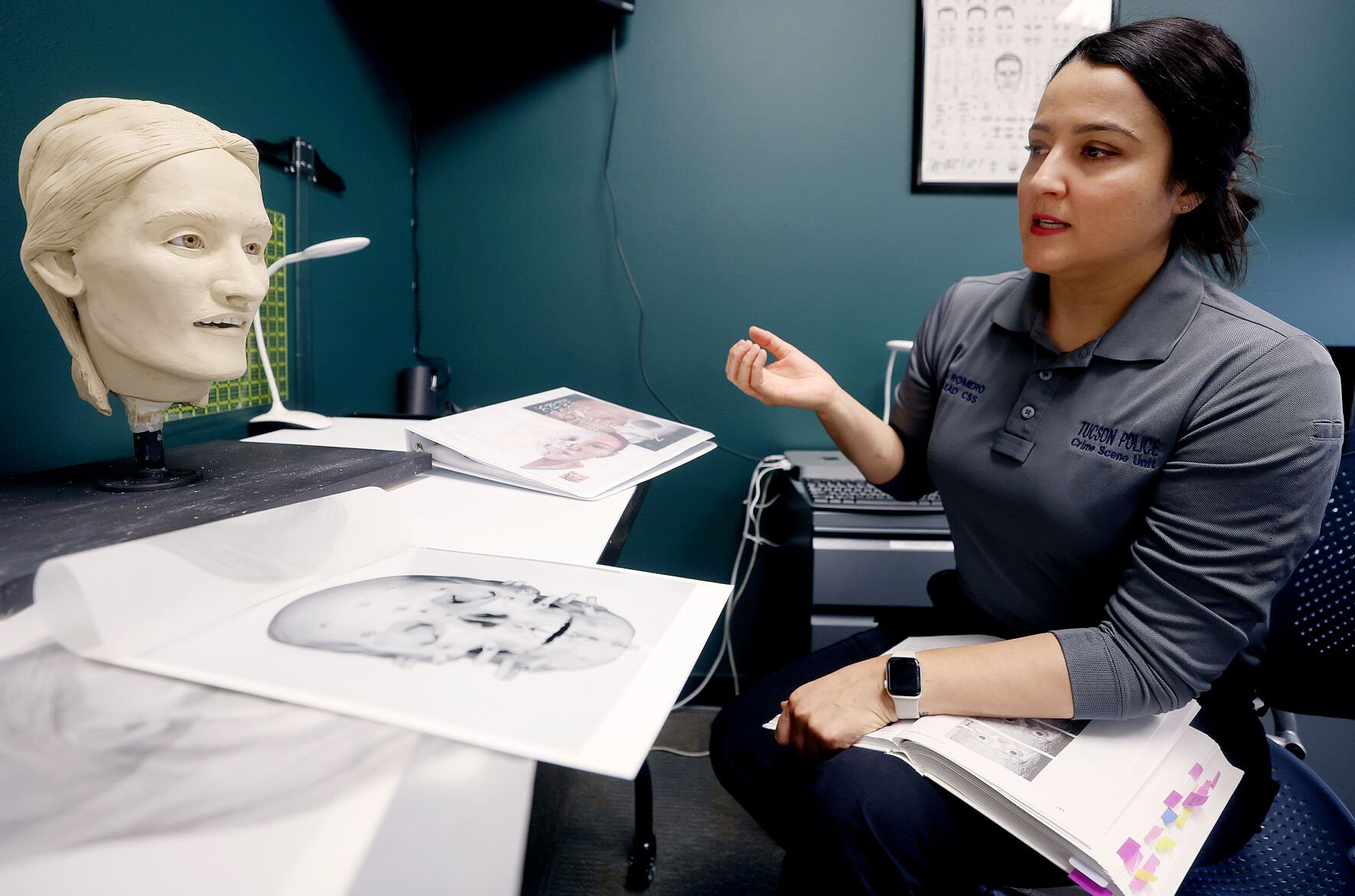
Jessica Romero, a Tucson Police Department forensic artist and lead crime scene specialist, sits in her office at a police facility near South Park Avenue near East Irvington Road.
Romero will reconstruct a nameless face using skills she’s been honing since graduating college with an art degree.
Romero didn’t know what she was going to use her art degree for, but it surely wasn’t in her plan to create sketches of suspects, make clay busts of unnamed loved ones, help sexual assault victims identify their attackers and help bring closure to families.
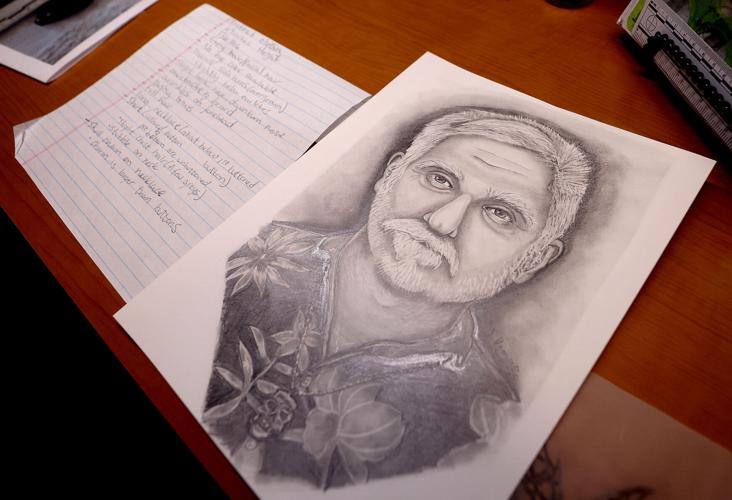
“We had a young guy who died here in Tucson, but he wasn’t from Tucson,” Romero explained. “His fingerprints didn’t come back and his DNA didn’t qualify. No one even knew we could do a post-mortem drawing.”
The police department put Romero's drawing on social media.
The victim's mom soon recognized the sketch was of her son.

A post-mortem drawing of a body found in July shows details like the shirt design and jewelry that could help identify the man.
“The family got closure instead of a body sitting at the (medical examiner’s) office. I’m glad that I can provide this service. It’s where art and science meet.”
This same idea can be utilized using artificial intelligence, plugging in qualities of the unidentified person into AI programs. The Pima County Sheriff’s Department did this recently, involving a John Doe they were attempting to name.
And while the family did come forward after recognizing that image, it was the initial artist rendering that they used to direct AI to create the face that went public.
“They can’t put photos of decomposing people into AI,” Romero said. “It doesn’t work that way.”
Which is how Romero knows her job is important, and worth her effort.
Romero is just one of 20 certified forensic artists with the International Association for Identification, the oldest and largest forensic association in the world. The training is grueling and the hands-on examination assures she's at the top of her game.

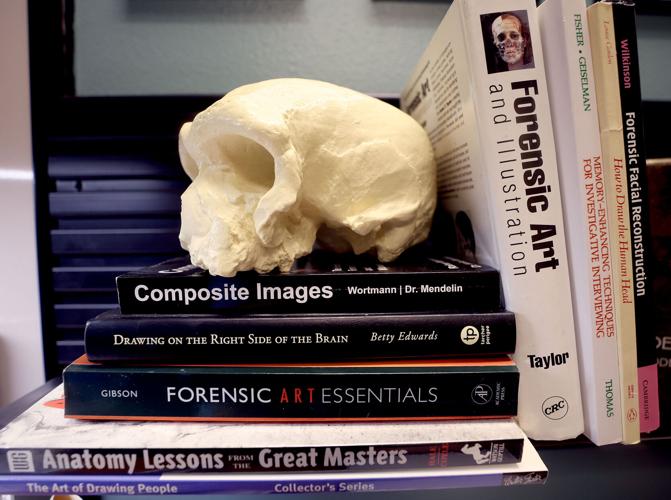
The workspace of Jessica Romero, a Tucson Police Department forensic artist and lead crime scene specialist, is filled with books about forensic art and anatomy.
She has a small, quiet room at a police building on Tucson's south side where she can focus and practice her skills.
Romero says she prefers working with graphite on paper, but will use whatever means necessary to help solve a case.
“You can help the community, too, with this,” Romero said. “If someone is committing crimes and we have a composite, it can help future victims," she said. “I think it’s neat and interesting that art can help in that way. I work on keeping my skill and the pressure to maintain my proficiency.”
Just like the families of many missing Jane and John Does waiting to be named, Romero also gets antsy after releasing a composite. The anxiety of wanting to know if her hard work will help a family find closure kicks in, and sometimes the letdown is just as great.
“Sometimes there are cases where you never have an ID, having to let that go is hard,” Romero lamented.
But, Romero’s services go beyond bones. She said there are many instances in which forensic art can help families and victims find peace, and that she’s lucky her superiors have supported her, her talents, and her determination.
“I think it’s important to know that there’s always one more thing to try,” Romero said. Whether it’s a cold case and the victim can still recall the suspect’s face, whether it’s a sexual assault suspect who got away with leaving no evidence, except his face seared into the mind of a victim, Romero can put a face together with ease.
“It’s a great service, and sometimes people forget it exists.”

